Archive for the 'Real Estate' Category
By Relocation.com
When you sign a lease agreement, most likely you’ll be signing on for a set period of time, such as six months or one year. That means you’ll have to stay on for this amount of time or risk breaking your lease.
While many people do intend to stay long-term in their apartments or homes (after all, moving all the time can be costly) there are some unforeseen circumstances where you might be forced to break your lease before it us up, such as illness, job loss or other emergencies. If you absolutely have to break your lease agreement, here are some of the things you should consider.
Alternatives:
Before you try breaking your lease, there may be other things you can do first. You can ask your landlord if you can transfer the lease to someone you know (and have them move in and pay off the remaining rent for the lease term) or find a sub letter, who will be your responsibility for the time of the lease. In many cases, landlords hate breaking lease agreements because they don’t want to lose the income from the rent and/or don’t want to be bothered with having to look for tenants. If you make it as easy as possible for them, you may be able to get out of your lease unscathed.
Circumstances When You Can Legally Break Your Lease
There are three main circumstance wherein you can break your lease without penalty:
1) If the apartment or whom suffers serious damage through natural disasters, crime or other instances through no fault of your own.
2) If you suffer serious health issues which require you to live in an assisted living facility.
3) If you are called into active military duty after you’ve signed your lease
In these three cases, you can legally break the lease and your landlord cannot go after you for penalties.
Landlord Deficiencies:
If your landlord has been deficient in his or her duties, then you can also break your lease since he or she is not keeping up their end of the bargain. For example, if you’ve repeatedly sent requests for repairs and they ignore you, or if they’re supposed to pay for the utilities but haven’t (or have been keeping the payment for themselves if you give it to them) then you have just cause to break your lease. Make sure you keep good records (like written or e-mailed requests for repairs, etc.) so you can make your case, in the event that you have to go to small claims court or have been served with other legal documents and actions.
If you just want to break your lease because you want to move somewhere else, because you can’t pay or perhaps going through a divorce or separation, you may find it harder to break your lease. However, first talk to your landlord and offer the aforementioned alternatives, that way you can have a peace of mind when you coordinate other aspects of your move like locating moving companies.
By Relocation.com
If moving is hard for adults, it can even be harder for children. If you’re moving with your family, it is important that you make your children understand why you have to move and why they shouldn’t feel bad about it. The most common worries of children whether moving just across the town or moving to a ‘never-heard’ place are not being able to find new friends, getting bullied or set aside in their new school, not seeing their peers and not being comfortable with the entire place, new faces and all.
Books about Moving for Children
It is always best to inform your kids about the upcoming move as soon as possible. You need to give them time to think and allow themselves to accept it. One way to do this is to give them books about moving. There are books about moving for children that are written creatively. For sure, they would appreciate it. Other than having something to do while waiting for the moving day, they will also get the chance to understand the reason why you all have to move. Furthermore, you might not have all the time to oversee your kids during the day of move as you will be very busy looking after your belongings and making sure everything is ready. Giving them something to read can help ease their boredom and at the same time, can help them stay put.
Some Great Books about Moving for Kids:
I’m Not Moving, Mama
This is a story about a little mouse who refuses to leave his room on the very day of moving. You never can tell whether your kids are hundred percent ready to move even if you have told them about it weeks or months ahead. When the moving day comes, everything can get overwhelming for children that they end up doing tantrums, begging the entire family to just stay. This book can help your child cope with the anxiety that moving might bring.
Who Will Be My Friends?
As mentioned, one of the fears of children when confronted with the thought of moving is not being able to make new friends. This book is a story of a boy named Freddy and his journey to find new friends in the new neighborhood. It was hard in the end but eventually, Freddy was able to meet new friends and he was very happy.
We’re moving!
This story is about a little girl named Amy who has moved with her family. This book explains to children that getting comfortable in a new place takes time and effort but as days went by and new adventures come, everything will become normal as usual.
A Tiger Called Thomas
During the first days and nights in your new home, things can get very difficult for your child. The absence of friends and playmates can really make them feel alone and lonesome. Just like what Thomas felt on his moving story. But after a night of trick-or-treat, Thomas realized it’s not really that lonely being a new kid on the block.
There are more books about moving out there that your children will love. Encouraging them to read such kind of books will take away the negative feelings they have towards moving.

By Relocation.com
Congratulations on your exciting moving experience. Having a roommate in an apartment can be a tough experience. Even before you figure out your situation with your movers, you need to establish some necessary rules directly. You also have to learn how to confront problems in a nice manner so that your household will be peaceful. It is better to live with someone peacefully. You have to make some effort to establish a good roommate relationship, especially if you live in a dorm. It will help you enhance your college life experience. These are some suggestions on how to get along with your roommate. You need to know you roommate. Do not create unjust judgments, but find time to essentially talk and mingle with your roommate so that you can know her or him better.
Start a conversation. You can express your own habits and preferences. It is also important to know your roommate’s preferences. If in case, you are used of staying up late and you usually get up in the morning late, and he sleeps at 9 p.m., you have to make sure that you both know this and you can find a compromise. You need to cooperate with your roommate. If he usually sleeps early and you usually sleep late, make a system that can allow each of you to feel as if your needs is the same. You need to respect the opinions of your roommate, including his needs and wants. If he has an important exam or event the other day, do not insist on staying up late at night with the radio blasting and the lights on.
Set up a schedule. In order for the two of you to establish things easier without hurting one another, you should set up the rules and a schedule for chore delegations and study hours. Sticking to and planning your schedule can avoid misunderstandings and conflicts along the way. It can ensure that chores and study needs are compatible. If there are conflicts, you have to resolve them quickly. Do not let any problem fester. It will just lead both of you to further problems or complications and eventually hurt feelings that can possibly be the reason for either of you to move out. You have to remember that you are each a separate individual, both of you have distinct living styles and tastes and you cannot expect that your roommate will automatically get use to the way and manner you desire to live. You have to be open minded and flexible. Being overly inflexible about bedtime, cleaning or noise issues will bring no good. It will just create a gap between the two of you.
Make an effort to create friendship. You can do things together. It does not mean you have to share bathroom at the same time. It means you have to interact with your roommate. Do something enjoyable together and try to know her or him well. By watching a movie together, you can learn more about your roommate. Your relationship with a person or with your roommate will depend on the effort you put in to share interests with her or him.
At the start having a roommate is really tough but if are able to establish a good relationship with him, it is fun. You have to go along with the situation, create a positive energy between both of you. It can be an opportunity for yourself to learn and possibly, to create long lasting friendship.
January 24th, 2012 by
Admin
Categories:
apartments,
condos,
foreclosures,
Home Improvement,
homeowners,
homes for sale,
Moving,
Real Estate,
rentals,
Roommates Comments:
No Comments » 
This guest post was provided by Central Austin homes maven, Allison Allen.
One of the most steps to selling your home is making it attractive to prospective buyers. Showing the house is one thing, but showing it well is a whole different ball game. Even the most seemingly insignificant adjustments can transform your cluttered clamor into the house of people’s dreams. Here are some tips to help you get started.
The first thing to do: remove clutter. Nothing hurts home showings worse than clutter and disorganization and there are plenty of easy ways to de-clutter.
Turn unsightly household objects into home buying appeal. If you have a bunch of old magazines and books lying around, organize them into a bookshelf, or use them to accent other home décor. Old books make great lamp stands when stacked. If you haven’t used the stuff lying around your house in a while, then get rid of it. Whatever attachment you felt towards those things will soon be replaced by a sense of relief for your clutter free household.
Clutter doesn’t just come from knick-knacks and other things lying around, it can also come from having too much furniture packed into your living rooms and bedrooms. Although it my have been a nice set up for you, the potential buyer will be distracted by the lack of space. The less furniture that you have, the bigger the house will look, and that’s a good thing when showing a house. The more space the buyer sees they are getting for their buck, the more willing they will be to meet with asking prices. Before you show your house, take some of your excess furniture and store it away until the move. It will let the house breath and make the space much more accessible to the potential buyer.
Once clutter is removed, and the house is looking nice and open, it is usually a good idea to replace fixtures just to give it that “new house” look. This is one of the easiest and cheapest ways to really give your home a visual kick
Just as important as the inside of the house, the outside must also make a great impression on the potential buyer. Basic steps are to landscape and touch up any blemishes on the exterior of the property. Mulch that flower bed and plant something! Got dirty gutters, clean them! Nothing will hurt a house showing more than a beautiful interior and the second they step into the backyard, there’s potholes, patchy grass, and dirty windows—another inexpensive, sure-fire way to help your For Sale by Owner experience.
But perhaps most importantly in the staging process is the first impression, or as we say in the real estate business, “curb appeal”. The entrance to your home will set the tone for the rest of the house. So, tidy up that entryway. Maybe even give that front door a nice bold coat of paint on it so that the entrance will be fresh and inviting.
When selling your home, the most important element of the selling process is how the home shows. No matter your price, an ugly, uninviting, cluttered home won’t sell and it won’t look good on the part of the seller. So remove that clutter, dust of that lampshade, polish that doorknob and present a respectable and asking-price-worthy home to the buyer. Hey, you never know–after you’re done staging, your home might look so good you’ll want to stay.

Spruce up your home with some curb appeal
By Relocation.com
Your front yard is one of the first things a homebuyer will notice. You may have brand new kitchen appliances, or have excellent hardwood floorings, but if you don’t have curb appeal, buyers may not be interested in checking out the interiors of your home. One of the best ways to reel in potential buyers is to curb appeal. Here are 10 ideas to make your curb look attractive.
1.) The exterior home: Before starting on your yard, check the physical appearance of your house. Take a look at the entire neighborhood and get a general idea about colors. Try and choose colors that stand out among other houses but are not very loud. Pressure washing bricks and curbs is also an excellent idea.
2.) Highlight your home: Make sure to accentuate the features of your home. If you have a drive way you could install lights or have decorative pillars that lead a way to your home. Having beautiful plants and shrubs will also add in curb appeal.
3.) Interior decorations shouldn’t hamper the exterior appeal: Several homeowners decorate their home such that they hamper the exterior beauty of the house. Your interior furniture and fittings should not be seen if you are standing on your curb. Your curb should be an extension of your interiors but it should have its own identity as well.
4.) Entry areas and walkway: Your entry areas and walkways are one of the most important factors of your home. You can improve the look of your sidewalk, driveway, and stairs around your house by removing all debris, weeds, and washing your pavement. If you park cars on your driveway, make sure you clean all oil and petrol stains.
5.) Keep unsightly items away: Curb appeal is associated with the way your family lives. Garbage cans, debris, trash bags, and gardening tools must be kept away from your curbs. These items will give your house an unkempt look, and help homebuyers form negative opinions about your home.
6.) Manicured gardens: Make sure your grass is cut and trimmed at regular intervals. If you have flower beds or shrubs, they must be watered and cared for. For dead and dry spots on your garden, you can buy garden fixtures and hide them.
7.) Constant care is essential: Caring for your home must be a part of your daily routine. If you start caring for your house because buyers are coming, the effects may not have the same impact as maintaining it.
8.) Replace old items: Things like mailboxes, number plates and hardware that are installed in around your house have a major impression on the buyers. Buy new elements to replace the older ones.
9.) Spice up your outdoor furnishings: The appearance of your outdoor and patio furniture should be fresh and clean. These are considered leisure areas and should always appeal homebuyers.
10.) Add exciting colors: To get curb appeal, you must consider adding some color to your yard. Getting in colorful flowering plants and furniture will add additional color to the exterior section of your home.

Check out our tips before you move in with a roomie.
By Relocation.com
Living with a roommate is both exciting and daunting. You might have grown up having your own room, or sharing a room with a sibling, but living with a complete stranger is a task that should never be taken lightly. Conflicts arise only when things are unclear. Sometimes anything petty, like eating his or her food, or leaving dirty dishes in the sink can cause many fights. An important piece of advice: keep communication lines open and be clear about everything with your roommate from the very beginning. This helps to avoid such conflicts and misunderstandings.
Here are some areas where rules must be set so that you and your roommate can maintain a good relationship and keep peace and harmony around your shared apartment.
Personal and “public” stuff.
This must be clear between you and your roommate: which among your stuff is available for common use and which is restricted. Do you share your books and CDs? Will you allow your roommate to use your kitchen utensils? Are you sensitive about the use of your shaver? These are some of the issues that must be addressed.
Visiting hours.
Your apartment building may set their own time for this, but you and your roommate must also agree with regards to your own apartment. Issues to address include: What time is considered to be available as visiting hours? Who may be accepted as visitors? How long can guests stay over?
Entertainment.
Some people love loud music while others don’t. Some like TV, while some hate it. Be sure to have an agreement as to how loud s the music can be played inside the room at up to what time should the television turned on. You might have to battle on who takes control of the remote.
Housekeeping schedule.
If you don’t have any experience in housekeeping, it may be a pain. This time it’s a necessity for both of you to keep it clean. Your mother won’t be around to pick up after you. Make an agreement on the assignment of tasks and a schedule: Who deals with cleaning the floor, putting out the trash, dishes? The important thing is to be fair.
Lights out.
It is important to set a time for the lights out so both of you may properly manage the time. You may follow different timelines for your stuff, so plan your schedule. Say, activities that may need lighting should be done early on so that you will not need to go beyond your scheduled lights out time.
Bills payment.
There are cases where you may have to pay for some bills like water, electricity, as well as cable and internet. Since you might be sharing the use of these, be clear on how you would split the bill for each.
Kitchen and toilet supplies.
Have an agreement on how you will purchase or use your toilet or kitchen supplies. You may decide whether you should take care of buying your own supplies or just splitting the cost of those between each other.
It will save you a lot of trouble if you can arrive at a consensus on the areas enumerated above. Make sure that you always have an open line of communication with each other. Be proactive and take time to discuss problems with your roommate as soon as possible. Both of you should be able to live in peace and harmony.
Don’t forget to like us on Facebook and follow us on Twitter!
• Follow us on Twitter @Relocation_News
• Become a fan of Relocation.com on Facebook
By Relocation.com
When deciding to rent your home or apartment there are numerous questions and a screening process that potential tenants should have. Before you advertise your place you should know exactly what you want in a tenant, and what the rules will be.
Of course you are going to run a credit check and a background check on anyone who fills out your application. But before you even get to that point, there are questions you can ask any potential renter that may help you decide if you even want to get to an application. Get a feel for their answers, such as hesitations or just a gut feeling you may have that they are not being totally honest with you.
• Ask them their full names. If they just want you to call them by their first names, this might indicate they have something to hide.
• Ask them where they work, and if you can contact their employer. Obviously you want tenants that are employed, and if they are not willing to let you talk to their boss, maybe they don’t have one.
• How many people will be living in the apartment or house? Are there children and if so, how old are they? You don’t want a family of eight moving into your one bedroom apartment.
• Do they smoke? If they do, will they be smoking outside? Smoke can really mess up the walls and any furnishings you might have.
• Why are they moving? Does their answer sound reasonable?
• Explain that you will need to contact their landlord. If they have a bunch of excuses why that is not a good idea, that will be a huge red flag.
• Do they have any pets, and if so, what are they? If you have a no pet policy, this should be explained upfront.
• Ask for their social security number. They should have no trouble providing it.
You will probably want to think of some other questions on your own that pertain to issues you may have. Just remember that there are certain things you can’t ask. Be sure and check out the laws for the Fair Housing Act. The more information you can get upfront, the more time you will save screening out people who are just not right for your rental property.

Be sure to throughly check a house before you buy
By Maria Belgado
Special to Relocation.com
Buying a home for the first time doesn’t have to be a daunting task. Several sellers stage their houses to make their homes look attractive, but keep in mind that after their personal belongings are taken away, the house may seem bare. Here are some amenities that you should look for when buying your first home.
1. Kitchen appliances: Appliances are the most costly and important aspect of your kitchen. Some homes have them already built it. When looking at home ask about the age and condition of all appliances – especially the refrigerator and the oven.
2. Materials: After you learn the cost of the house, you should also know what materials were used in the construction. If you are buying less costly homes, be sure that you will receive materials, which are not really top class. Cheaper homes come with cheaper amenities.
3. Look at the ceiling: Check the ceiling for water marks, cracks and leaks. These are indicators of structural damage.
4. Outdoor areas: Look at the gutters, patio, downspouts, and examine the exterior conditions closely. If you are buying older homes, you must have a record of the past major repairs that have been carried out.
5. Research the neighborhood: Before you buy, research the crime rates and accessibility of the neighborhood. You don’t want to live in a neighborhood that is dangerous or has a bad history.
6. Bathroom amenities: Bathroom and plumbing fixtures are one of the most important amenities. If you are going for older homes, you must find out what renovations will be needed for the plumbing, as these can get very costly.
7. Important systems: Closely look at the heating and cooling systems. These systems are costly and repairing them will also take a lot out of your pockets.
8. Upgraded amenities: Several homeowners upgrade their homes. Find out the approximate cost of the upgrades and if there is any difference in the rates that the seller is offering. Do not pay for unnecessary upgrades that may seem attractive but are not useless.
9. The paperwork: If you are buying a house, be it your first or your last, you must take a look the paperwork closely. Do not go for houses that talk about ‘settling the paperwork later’ or ‘the paperwork will be done in a while.’ Always go for houses that have ready papers with a legal stamp on them. You may also do research about the house in local government bodies.
Looking for your first home seems to be exciting, but you must know all that you need to look for. House hunting requires you to have really strong nerves and analytical skills. Before you start looking at houses, you must have a rough idea of the amenities you are looking in your house. Make sure you make detailed lists and stick to lists. However, some flexibility may be required while you are short listing and selecting your home.

Donotrent.com integrates real estate rental reviews and through social networking features where they can search and post reviews of apartments, rental homes, student housing, vacation rentals and more. Donotrent.com is also a trusted partner of Relocation.com, a complete moving resource where consumers can receive competitive moving quotes.
The newest user review and social networking website donotrent.com went live late November 2010. The review platform is based on tenant experiences, past or present, renting apartments, on or off campus student housing, rental homes, vacation rentals and more. The site allows users to search and post reviews in every city in the United States. Users can also post pictures of the apartment and rate it using a unique 5-star rating system that ranges from “Not That Bad” to “Absolute Nightmare.” Although the name, donotrent.com, implies and actually encourages negative reviews, users can also post positive reviews. “The reviews that users post are meant to help future tenants become more aware of possible issues and ask the agent or landlord tough questions before they sign a lease,” says Cerny, a Chicago based real estate professional and co-founder of the site. Landlords are welcome to respond to posts about their properties if they believe a review is inaccurate or if a problem has been corrected.
It happens all too often, an interested party walks through a beautifully furnished unit with an agent or landlord and decides to sign a lease because everything looks perfect. It is very obvious that the agent or landlord is not going to mention that they receive numerous noise complaints about the neighbors throwing parties all the time or that the unit has a mold problem in the kitchen ceiling which they continue to simply paint over. Donotrent.com allows users to easily share their experiences in order to help future tenants make an informed decision about signing a lease after they read the apartment reviews. The goal is to make leasing agents, landlords and property managers more accountable by disclosing more information to prospective tenants.
Besides the review side of the website, it is built around a social networking core, which includes a conversation forum, public blog and a classified ads section. The main difference between donotrent.com and their competition is that they appeal to the next generation of internet users with numerous social networking features. Unlike the competition that has dated features and no social networking, donotrent.com uses Facebook connect along with the AddThis sharing service. Both of these features will allow users to stay connected with friends by sharing posts and messages instantly on their favorite social networking sites.
The layout and review system of donotrent.com is similar to the popular review site Yelp. The main difference is that its niche is rental property reviews and not reviews of every single business in the world. It will only be a matter of time before we start to see other review sites startups that focus on niche markets since quality on a specific topic, business or interest will always trump quantity.
For more information regarding this website, please visit http://www.donotrent.com.
Don’t forget to like us on Facebook and follow us on Twitter!
• Follow us on Twitter @Relocation_News
• Become a fan of Relocation.com on Facebook

By Maria Paulia Belgado
Special to Relocation.com
The United States has had a lot of trouble in attaining a healthy lifestyle. In fact, according to the World Health Organization, the U.S. is considered the 9th fattest country in the world! Although we are packing on the pounds, there are some places in the U.S. that focus on healthy living, exercise and eating. When looking to relocate for health purposes here are the top 5 cities that have tons of health programs and fitness gyms, focus on eating healthy and feature activities that have a good impact on an areas overall well-being and lifestyle.
Salt Lake City, Utah
Salt Lake City is renowned for their love of sports. They continually rank as one of the fittest city in the U.S. for years as residents have access to wide plains and the great outdoors. Residents love to stay healthy by walking and biking and enjoying healthy eating like vegan and vegetarian restaurants.
Colorado Springs, Colorado
Colorado Springs is best known for hiking and backpacking, which puts this city to the second spot of this list. With regards to a healthy environment, pollution is held to a minimum thanks to numerous environmental programs. The city also offers a wide variety of clinics and shops and access to the outdoors that keeps its residents active and engaged.
Minneapolis, Minnesota
When the going gets tough and the cold gets colder, Minnesota still, never dwindles far from being healthy. Residents can look forward to number of great indoor and outdoor activities as well as excellent hospitals.
Denver, Colorado
Denver has no problems in being healthy. Residents can look forward to a enjoying a number of health assessment programs and great activities that help keep their citizens in shape. Their interest in health has gotten stronger over time and projected to stay in the top of the fittest cities. Programs are still being promoted among its citizens to encourage them in participating activities and events regarding health awareness.
Albuquerque, New Mexico
Albuquerque has continued to spread the love among its people and by doing so has increased their status in the fit cities of the U.S. Caring for their old and having to deal with promoting health to their young is their unique way of getting healthy and toned.
Don’t forget to like us on Facebook and follow us on Twitter!
• Follow us on Twitter @Relocation_News
• Become a fan of Relocation.com on Facebook

Home swapping is a great way to check out a new destination without having to deal with expensive hotel fees
By Relocation.com
Have you always wanted to go on an international holiday, but cannot do so because of the traveling and hotel costs? If budget is a major constraint, then home swaps are best option for you. Home swaps are extremely popular these days. These are some points that explain how home swap works.
The Fundamentals:
You can use online services to search people who live in holiday destinations that you choose. E-mail them and offer to swap homes for a frame of time. Using this method, both of you will cut down the charges of vacation lodging. Some home swaps are also available with cars, bicycles or subway passes. However, it is not compulsory to include vehicles or passes in your home swap.
This will help you save the money that you would have spent on hotels. Home swaps are extremely useful as they make your vacations more intimate, and it lets you stay there as locals. These private houses are more comfortable than hotels. A house will also give you a complete kitchen, along with additional amenities. With this, you will be able to save a great deal when it comes to food and laundry.
Where To Swap?
People who live in posh beachfront houses or luxury condos are likely to get more offers than the ones living in quiet suburbs. At times, swappers also choose places that are close to their relatives, hospitals, or business areas. Before you jump on the deal, you must do some research and find out the kinds of options available for you. If you have a house in the countryside and you are swapping it with someone who owns an apartment in the city, it’s a great deal.
Get Started:
Home swapping services are widely available on the Internet. You may have to pay a nominal membership fee to see the listings of the available houses. You can search for houses on the basis of amenities or location. For instance, you can look for beachfront condos or a house that has a hot tub. You can also look at user feedback and ratings about the houses. Few websites also offer to mediate in cases of disagreements.
Realistic Considerations:
Certainly, there are few realistic considerations while swapping homes. Follow these simple precautions while swapping homes:
• Know the person you are swapping your house with. Keep touch via calls and mails. If you find anything fishy, feel free to cancel your swap.
• Keep all your valuable and fragile items away while swapping homes.
• Get relevant information about the area and the address. Do not mingle with people who are not willing to provide addresses well in advance.
• Find insurance companies that cover home swaps.
• Mention and find out about the presence of pets in the house. This should be discussed well in advance.
• Several swapping services provide contracts. Make sure you read them well and beforehand.
Swapping your home can be really easy. When you realize how convenient, easy and frugal home swapping can be – you’ll never want to stay in a hotel during your holidays every again.
Don’t forget to like us on Facebook and follow us on Twitter!
• Follow us on Twitter @Relocation_News
• Become a fan of Relocation.com on Facebook

Before you rent, make sure to check out our pre-rental checklist
By Relocation.com Staff
Is it safe? Is it clean? Are the essentials located nearby? Those are the types of questions to ask before you pick a new place to rent and before selecting moving companies. Here a list of things to watch for when you’re looking at apartments for rent or homes for rent.
Outside the Apartment:
Do you feel safe in the neighborhood and the surrounding area? That’s the first and most important question by far, and is always the first question to ask yourself.
If you visit the apartment during the day, think about how will feel coming home late at night, or early in the morning. If the thought makes you scared, move on. No amenities or cheap rent can compensate for the feeling of insecurity.
As part of this, ask your neighbors about safety, and check in with the local police about crime statistics.
Is the building close to major roads and public transportation? Do trial runs for how long it would take to reach your work, your daycare, or other frequently visited placed.
Is the building clean and well-kept? Are entryways and hallways well lit? Are unsavory types hanging about? How the building is kept up is a pretty good indicator of the vigilance of the apartment manager.
Is the laundry nearby? If you don’t have a car, it better be close, preferably in your building. Picture yourself trudging there every week or so and ask yourself how you feel about that.
Where are gas stations, supermarkets, restaurants, banks, drug stores, dentists and gyms – is the distance friendly or far away? If you’re on public transit, figure out how long it will take to get to these various places that you might visit often.
Inside the Apartment:
Before signing a lease and moving, make a quick check of the apartment, not only the appearance and cleanliness, but see that things actually work. Don’t take anything for granted – something that doesn’t work now you’ll have to deal with right away when you move.
Bathroom: Check the water pressure in the sink and shower, and flush the toilet to make sure it operates properly. Also, make sure the hot water works.
Walls: If the building’s near a road, can you hear the traffic? Can you hear the neighbors next door? If near an airport, how is that noise?
Appliances: Check the fridge, the heating and air conditioning, the stove and oven and any other appliances that might be in the apartment.
Windows: Make sure they open and close easily, and make sure there are no holes or cracks in the glass.
Electricity: With any switch you see, try it out to make sure it works.
Don’t forget to like us on Facebook and follow us on Twitter!
• Follow us on Twitter @Relocation_News
• Become a fan of Relocation.com on Facebook

Be sure to do your research before moving to a new neighborhood.
Moving is a big step in your life that you really want the location you choose to be the very best for you and your family. Here are some things to consider when you are searching for the right neighborhood.
Check on the schools. If you have children, you are going to want to closely check on the area schools. You can start by reading online what ratings schools receive as well as online forums my parents. If you can, visit the schools and spend some time with teachers and observe how the school appears. Do they have after school programs? Do they appear to have supplies? Talk, if you can, to some parents and get a good idea of how they feel about the school.
Visit the local parks. Again, if you have children, check out the local parks. Are they well kept? Are there any activities held there? Do they appear to be safe, both during the daytime and at night?
Observe the neighborhood. Is your neighborhood well lit at night? How safe does it appear to be? Is there a neighborhood watch program? How noisy is it at night? And how is the traffic in the area? Is there adequate parking?
Check out the hospitals in the area. Are they close? Are they well established? How long is the average emergency room wait? You can find out a lot about local medical care by checking online. You might want to also look at pharmacies in the area, and perhaps check out urgent cares as well.
What types of stores are in the neighborhood? Do they open early (if you are a morning person) and what time do they close at night (if you are a night owl)? How convenient is shopping going to be for you? Is there parking available?
Check out the public transportation. Is it convenient to your home or apartment? How expensive is it? How late/early does it run? If you needed to use it to get to work, are you sure that it will be running when you need it? How about if you want to go shopping using it, or go visit a relative? How clean is it and does it appear to be safe and well-maintained?
Research the crime rates. You can usually find this information out online as well. What are police response times? Are there any sex offenders living close by? Look online for forums or message boards about your neighborhood. Many times, residents will complain about problems in the area that you will certainly never hear from a realtor. You may be able to find out a lot about things like local ordinances, property taxes or other problems.
Moving to a new neighborhood is a huge change in your life. Make sure to do your research so that you know you know you made the right choose when deciding on a new location.

Be sure to refer to our checklist before you move into your new apartment!
By Relocation.com Staff
Congratulations on your exciting new apartment! Before you start calling moving companies, it’s important that you make a thorough check of your apartment before moving in. To help you, we’ve put together the following easy and quick safety checklist of the things to look for.
• Look for the nearest fire extinguishers. One should be centrally located for you to access; know where it is. If you can’t find them ask your landlord where they are.
• Check for smoke alarms. Go through the apartment and do a smoke alarm inventory. Do they have one in each room and hallway? If you’re missing any, ask the landlord about them. If they’re there, talk to the landlord about when the batteries were last replaced, and test them every month.
• Before moving day, ask about having the locks re-keyed.
• Install deadbolts on exterior doors.
• Consider renters insurance to protect your belongings and your personal liability.
• Is the oven and broiler clean? This can be a fire hazard if not.
• If you have a balcony with sliding doors, that’s an easy way for burglars to break in. Ask your landlord about installing anti-lift and anti-slide devices on them, especially if you live on the ground floor.
• Check the paint. Is it chipped? Broken? Worn down? Ask about the paint and whether you can re-paint the walls, add pictures, etc?
• Look for the outlets. See how many there are and test to see if they work.
• Test the water. Turn on the water in the kitchen and bathroom and perform a simple test to determine that hot is hot and cold is cold. This is also a great way to test out the water pressure.
• Open the fridge and freezer to determine the level of coldness.
• Be especially careful with basement windows. They should have extra protection, such as metal bars or be made of burglar-resistant glazing to discourage intruders. For fire safety, however, they should have quick-release mechanisms to allow for a quick escape in case of fire.
• Make sure your windows have keyed locks or security pins or nails in addition to standard locks.
• Don’t place anything valuable items near windows or glass doors; it’s much easier to break into by simply breaking the glass.
Don’t forget to like us on Facebook and follow us on Twitter!
• Follow us on Twitter @Relocation_News
• Become a fan of Relocation.com on Facebook
April 4th, 2011 by
Admin
Categories:
Celebrity Real Estate,
condos,
family moving,
foreclosures,
homes for sale,
House Swap,
Moving,
Moving Day,
Moving Industry,
Real Estate,
Relocation,
rentals Comments:
No Comments » 
The Kentucky Versailles Castle - Listed for $30 million. (Image Credit: Kentucky.com)
This week we are loving the gorgeous pictures of the castle Kentucky that is currently on the market. Constructed by Rex and Caroline Martin after their trip to France the home was left unfinished after the couple divorced a few years later. Now listed for $30 million, the massive castle is currently run as an inn and bed-and-breakfast that is being looked at by several interested buyers. On the rest of the Beat we featured celebrity homes for sale in California. Molly Sims recently listed her Hollywood Hills home as did Meatloaf and Burt Reynolds. As we get into spring, we are excited to check out what new properties will be featured on the Beat. Until next time…

Shot of the Kentucky Versailles Castle - (Image Credit: Zillow.com)
• Kentucky’s Versailles Castle for Sale
After a trip to Versailles, France in 1968 Rex and Caroline Martin were inspired to create their own castle right in Kentucky. They later divorced in 1975 and the uncompleted castle was left unused until Rex’s death in 2003. According to Zillow.com, it was later sold for $1.8 to Thomas Post who rebuilt it as a bed-and-breakfast/inn that has since been open for rentals and special events like weddings and fundraisers. Located on Versailles Road between Lexington and Frankfort, the stunning 50-room castle is now on the market for $30 million, according to Kentucky.com. There are talks that at least two people from South America are interested in purchasing the castle and if they do they can look forward to a 50-acre estate with stone walls, gardens, fountains, a tennis court and a huge pool. The new buyer can also look forward to having a game room, a library, a dining room as well as opulent window and home furnishings.

Molly Sims' modern kitchen - Listed for $2.8 million. (Image Credit: Zillow.com)
• Molly Sims Listed Her Hollywood Hills Home for $2.8 Million
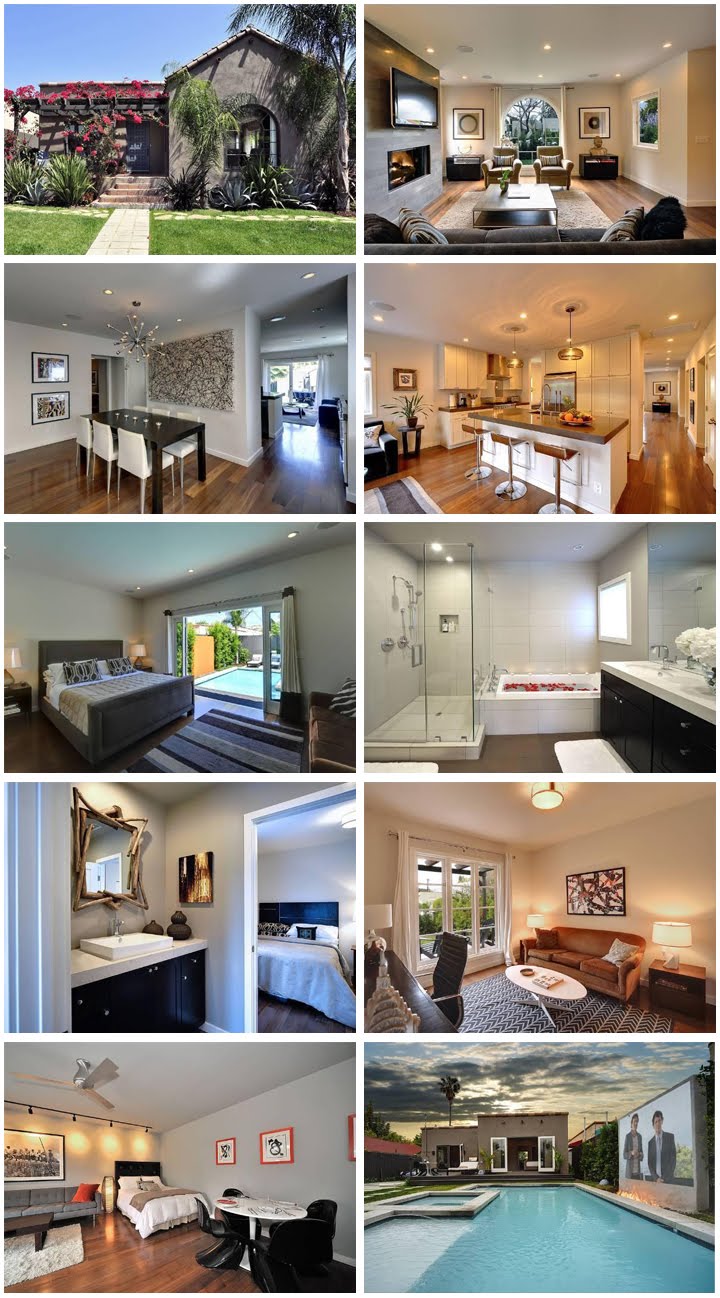
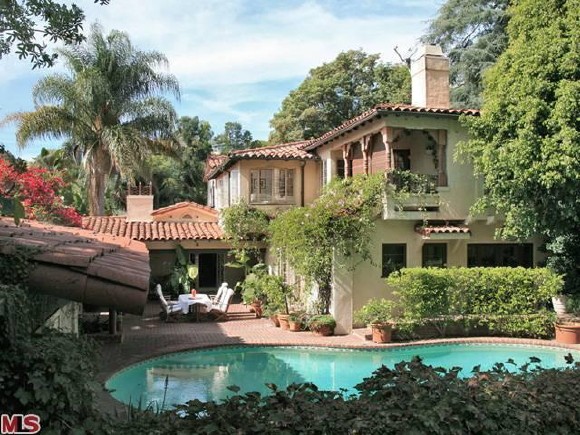
Model and actress Molly Sims recently placed her gorgeous Hollywood Hills home on the market for $2.8 million. The Spanish-style home, built in the 1930s, includes three bedrooms, 3.5 bathrooms, and a modern kitchen with Viking appliances. The immaculately-styled home was also featured in InStyle magazine.

Pics of Kourtney Kardashian's new home - Purchased for $1.7 million. (Image Credit: The RealEstalker)
•
Kourtney Kardashian Buys a New Home
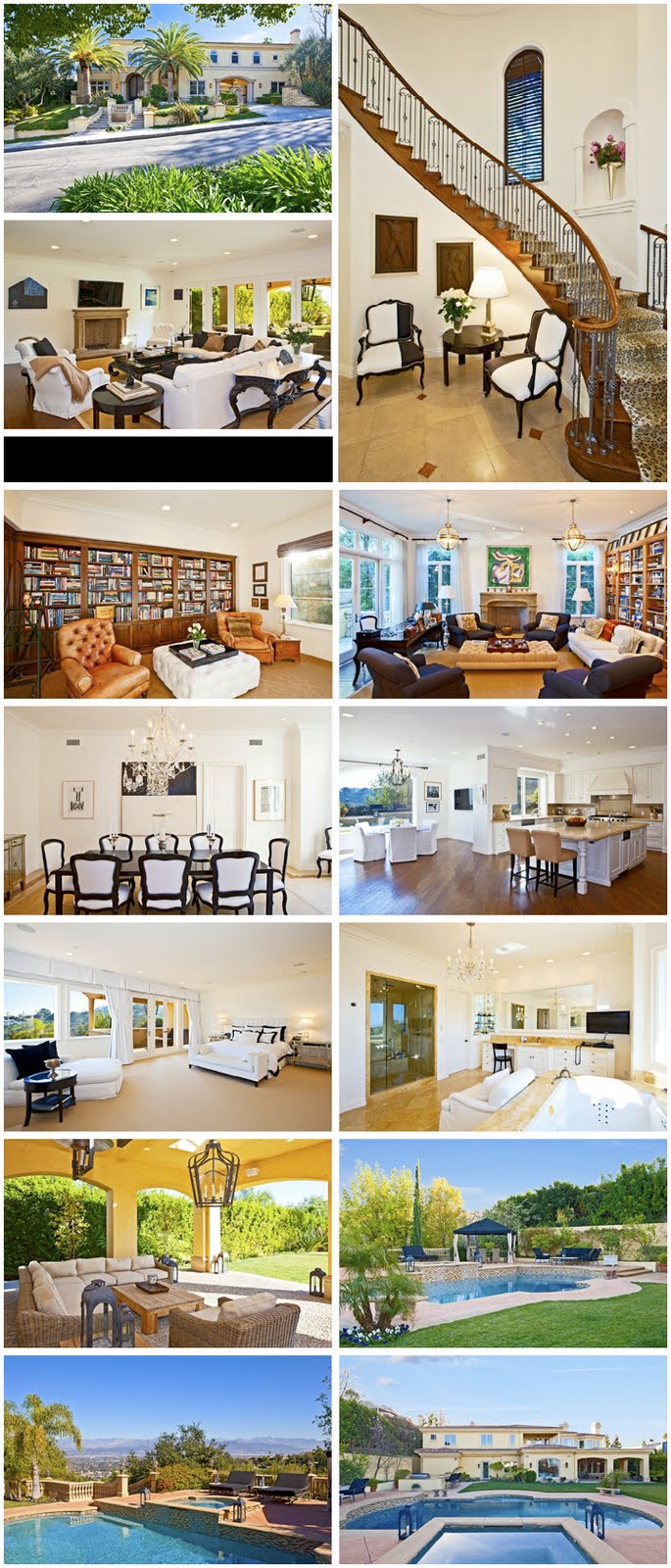
Kourtney Kardashian of “Keeping up with the Kardashian” fame recently purchased a new home for $1.7 million. Located in Calabasas, California, the four bedroom, 4.5 bathroom room also includes an office, library, guest room, fitness room and a media lounge. The 5,334-square-foot home also includes a wine cellar, a fireplace, a game room, and a modern kitchen with stainless steel appliances and a breakfast nook as well as gorgeous views of the hills.

Pics of Meat Loaf's home - Listed for $3.2 million. (Image Credit: The Real Estalker)
•
Meat Loaf is Selling his California Estate
Singer and current participant of “The Celebrity Apprentice” is currently moving from his Calabasas, California estate. Listed for $3.2 million, the 7,142 square foot estate includes seven bedrooms and seven bathrooms that once featured in
Architectural Digest for its impressive décor. The new owner can also look forward to a three-car garage, a formal living room, a fireplace, a media room, and a custom-made kitchen.

Burt Reynolds home - Listed for sale at $10.9 million. (Image Credit: Zillow.com)
• Burt Reynolds’ Home for Sale at $10.9 Million
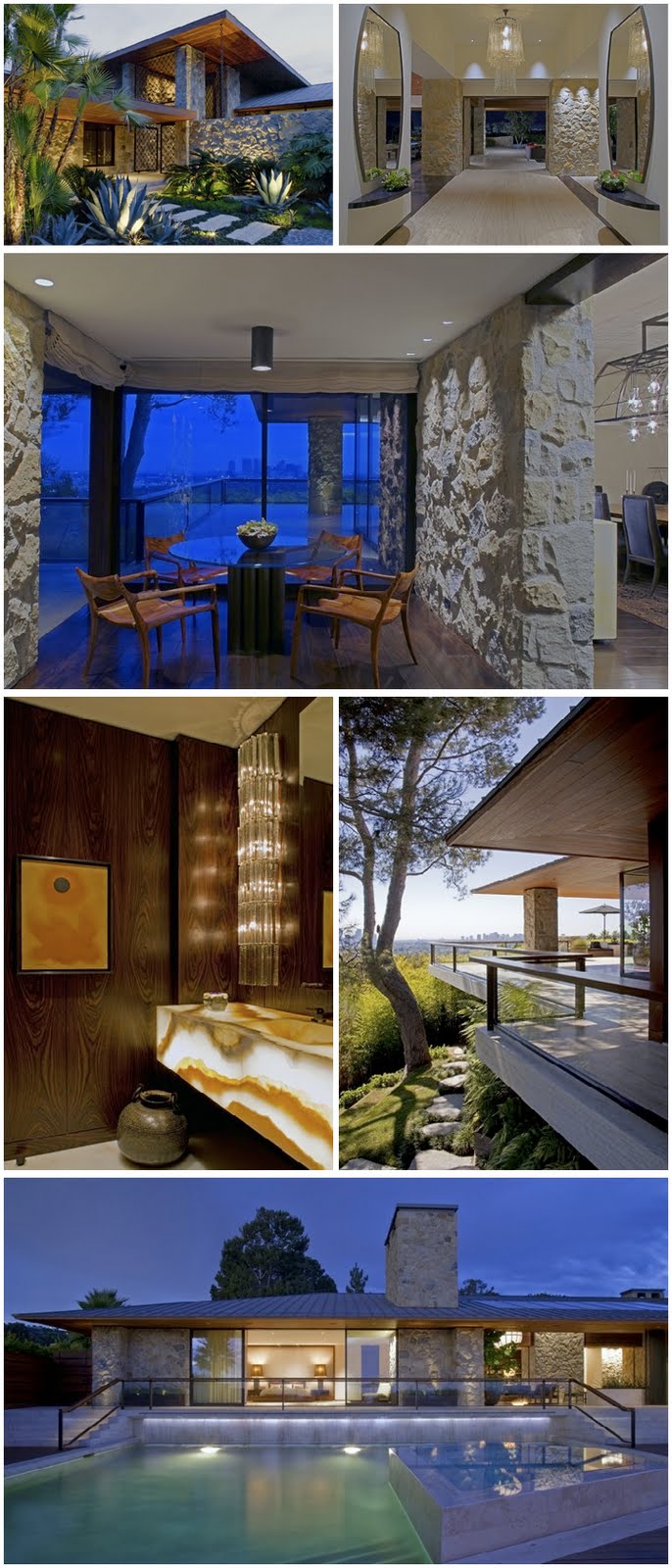
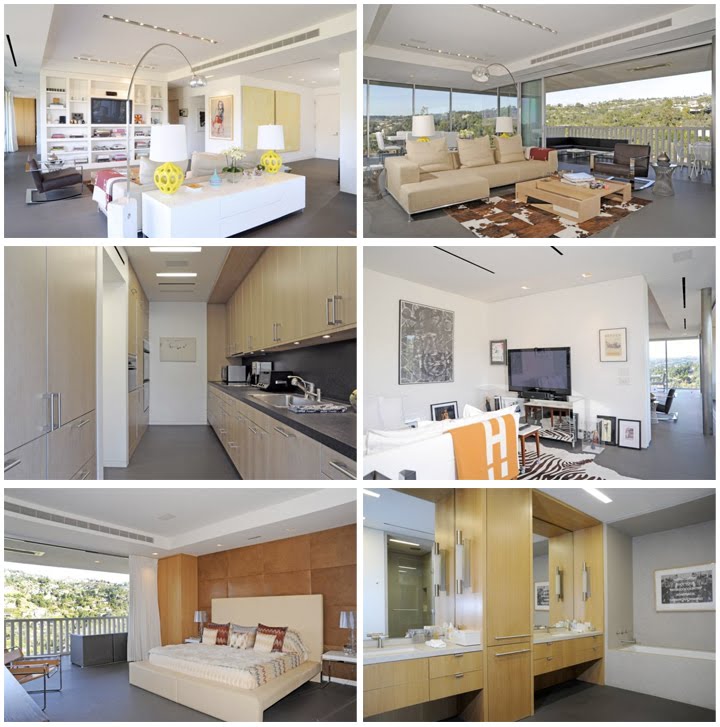
Burt Reynolds recently listed his Los Angeles home for sale for $10.9 million. His modern 20,580-square-foot glass home features stunning views of the city and the ocean. The home was recently designed by Steve Hermann who updated the home to feature numerous amenities such as a state-of-the-art kitchen and a large family room. The home also has four bedrooms and four bathrooms.
Don’t forget to like us on Facebook and follow us on Twitter!
• Follow us on Twitter @Relocation_News
• Become a fan of Relocation.com on Facebook
March 16th, 2011 by
Admin
Categories:
Celebrity Real Estate,
condos,
family moving,
foreclosures,
Home Improvement,
homes for sale,
House Swap,
International Moving,
Mortgages,
Moving,
Moving Day,
Moving Industry,
Plan Your Move,
Real Estate,
Relocation,
rentals Comments:
No Comments » By Serena Norr
This week ended up being an all-homes-for sale edition of the Beat, and boy, were there some interesting ones on the market. Starting in NYC, we featured the $90 million dollar estate that was once owned by the Woolworth family. The mansion, now owned by Lucille Roberts’ family, includes 10 bedrooms and 11.5 bathrooms. For a smaller amount (and not much), you can purchase Dennis Quaid’s home in the Pacific Palisades, Mary J. Blige’s home in New Jersey or Christine Aguilera’s home in Beverly Hills. Kelsey Grammer is also selling his Avon, Colorado home this week for $7.9 million. Still too rich for our blood, we’ll simply admire this luxurious real estate eye candy. Until next week…

View of the $90 million dollar Woolworth mansion. (Image Credit: Curbed NY)
• Woolworth Mansion for Sale at $90 Million
The former Gothic-style townhouse once owned by Frank Woolworth (of the nickel and dime store) has recently been place on the market for the staggering asking price of $90 million dollars! Located on East 80th Street in NYC, the 18,000-square-foot mansion, now owned by Lucille Roberts (the fitness mogul), includes lavish amenities such as three kitchens, 10 bedrooms, an elevator, a library and 11.5 bathrooms. The massive complex, designed by famed architect Charles Pierpont Henry Gilbert, also includes 14-foot ceilings, seven floors, eight fireplaces, a gym and a suite for staff members. Roberts purchased the home in 1995 for $6 million but passed away in 2003 – which is why her family is looking to sell the opulent mansion. For those that can’t fork over the $90 million dollars, the home is also available as a rental for $210,000/month.
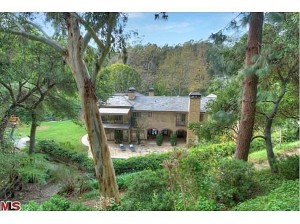
Exterior Shot of Dennis Quaid's Home - Listed for Sale at $16.9 Million. (Image Credit: Zillow.com)
• Dennis Quaid Lists Pacific Palisades Home for $16.9 Million
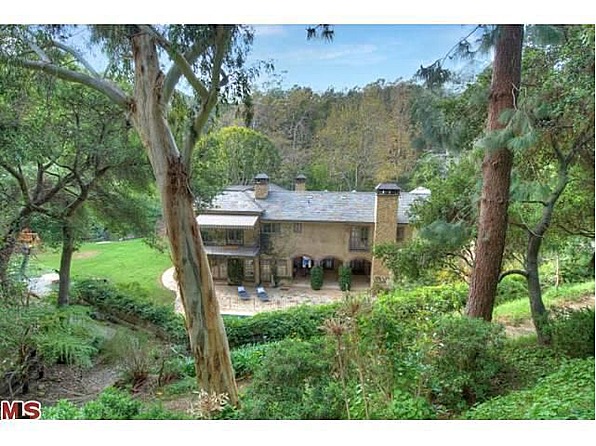
Famed actor and musician Dennis Quaid is reportedly selling his Pacific Palisades home for $16.9 million in order to relocate to Texas. The French-style home, purchased in 1999, has been completely renovated by Quaid and includes a guest house, three bedrooms, three bathrooms and a huge barn for several horses. The two-acre home also includes 8,400-square-feet of living space, a modern kitchen, an office, a pool and a wine cellar that is situated amidst a backdrop of sprawling trees and luscious greenery. If sold at $16.9 million, the home would average a profit of about 823.5 percent, according to Zillow.com.

Pictures of Mary J. Blige's New Jersey Mansion - Listed for Sale at $13.9 Million. (Image Credit: Housing Watch)
• Mary J. Blige Lists New Jersey Mansion for $13.9 Million
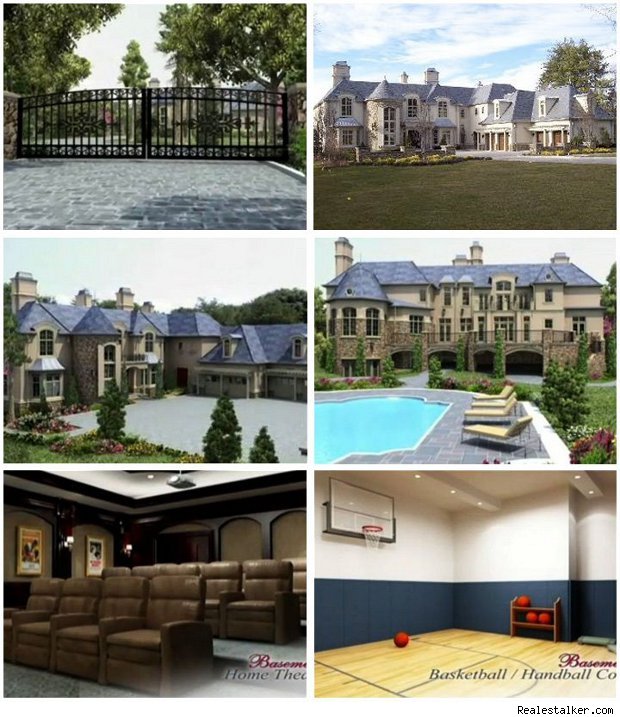
Hip-hop mogul Mary J. Blige is reportedly looking to sell her New Jersey mansion for $13.9 million dollars. Located in Saddle River, New Jersey, the 25-room mansion features a gourmet kitchen, a movie theatre with 14 seats, a wine cellar, an indoor basketball court, a six-car garage and 18,250-square-feet of living space. The 4.2 acre house was originally listed at $17 million in 2008 and recently dropped to the current asking price.

Christina Aguilera's Beverly Hills Mansion - Listed for Sale at $13.5 Million. (Image Credit: The Real Estalker)
• Christina Aguilera Places Beverly Hills Home on the Market for $13.5 Million
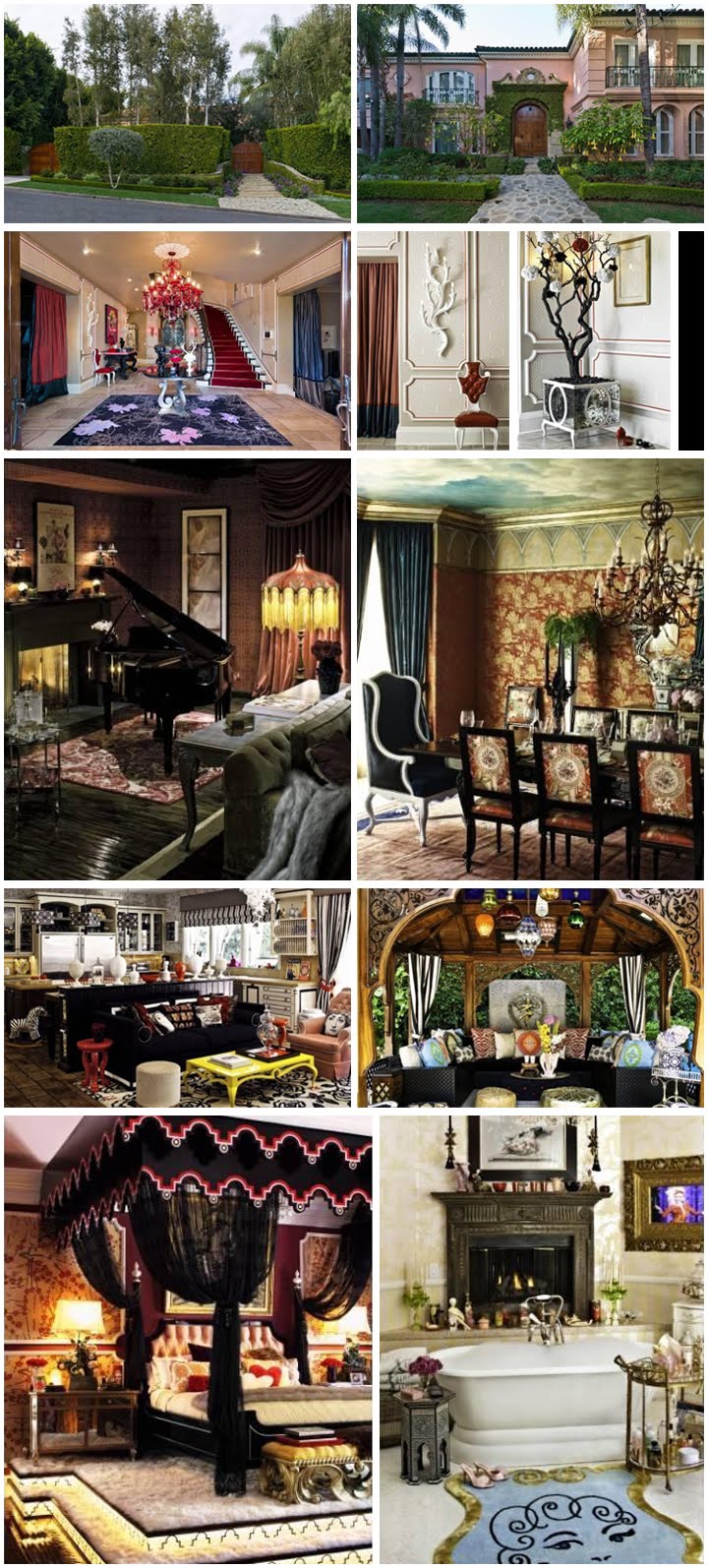
Pop singing sensation Christina Aguilera recently listed her Beverly Hills estate for $13.5 million. The 10,000-square-f00t home (once owned by the Osborne’s) includes six bedrooms, nine bathrooms, a formal living room, a home theater, a library, a recording studio and an in-home hair salon. The home also includes a massive backyard equipped with a pool, lounge and built-in barbeque area.

Kelsey Grammer's Colorado Ski Home - Listed for Sale at $7.9 million. (Image Credit: The Real Estalker)
• Kelsey Grammer Lists Colorado Ski Home for $7.9 Million
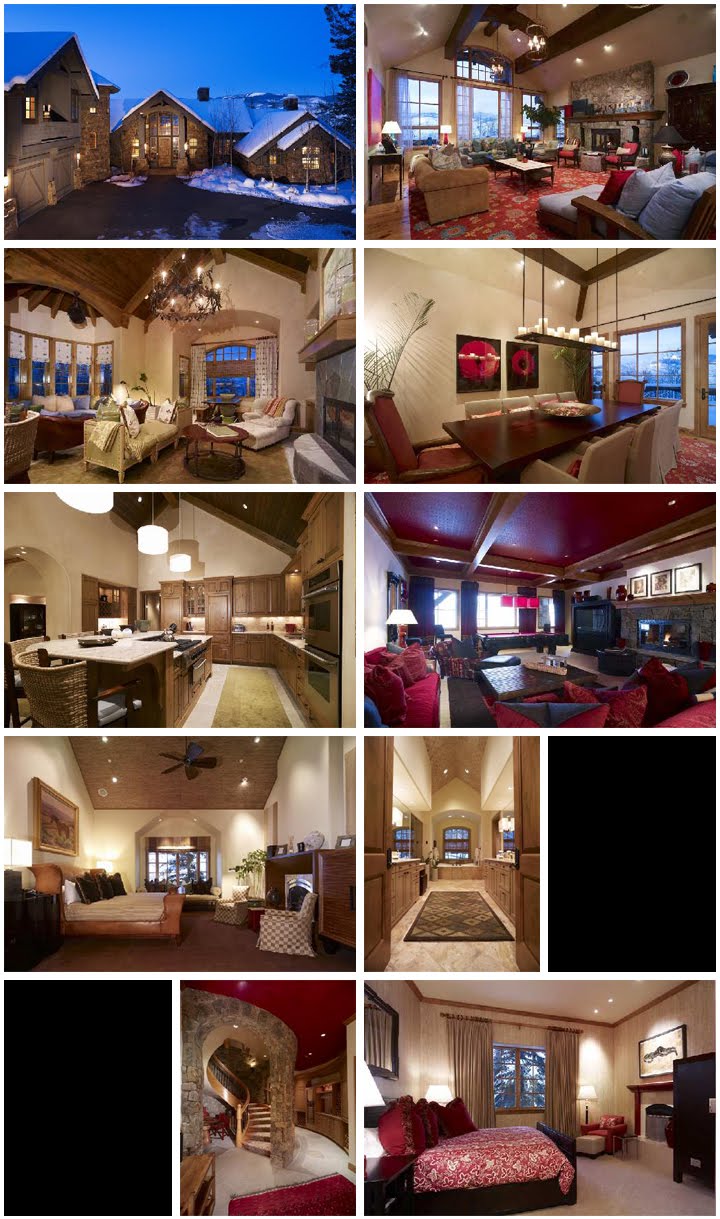
Kelsey Grammer of the hit shows “Cheers” and “Fraiser” recently listed his Avon, Colorado ski estate for $7.9 million. The recently divorced and remarried TV star is looking to sell this 8,230-square-f00t home as part of his settlement with Camille Grammer (of “The Real Housewives” fame). The gorgeous three-story vacation home includes six bedrooms, 7.5 bathrooms, stone fireplaces, a gourmet kitchen and a wine tasting room that is situated on 1.67 acres.
Don’t forget to like us on Facebook and follow us on Twitter!
• Follow us on Twitter @Relocation_News
• Become a fan of Relocation.com on Facebook
March 7th, 2011 by
Admin
Categories:
Celebrity Real Estate,
condos,
family moving,
foreclosures,
homes for sale,
House Swap,
International Moving,
Mortgages,
Moving,
Moving Day,
Moving Industry,
Moving with Kids,
Moving with Pets,
Packing,
Plan Your Move,
Plan Your Relocation,
Real Estate,
Relocation,
rentals Comments:
No Comments » The wacky and wild world of celebrity real estate did not disappoint this week. First, we have Charlie Sheen and his never-ending media circus has once again made the news – except this time it is within the real estate segment. He recently purchased a 9,020-square-foot mansion in Sherman Oaks, California that is reportedly for his ex-wife and their two children. On the rest of the Beat you will find homes listed on the market – ranging from Jennifer Aniston’s $42 million mansion to Julianne Moore’s $12.5 million dollar NYC townhouse. Those amounts are a bit out of our price range but we look forward to reporting on who the lucky buyers are. Stay tuned…

Charlie Sheen's New Mansion. (Image Credit: The Real Estalker)
• Charlie Sheen Buying a New Mansion
Much has been said about the drama involved around Charlie Sheen and his media circus and now he is making news within the real estate market with his recent purchase of a mansion in Sherman Oaks, California. Purchased for his ex-wife Denise Richards, the $7,495,000, 9,020-square-foot estate includes an elevator, six bedrooms, nine bathrooms, a library, a formal living room and a gourmet kitchen. The two-story gated home also includes a formal backyard with a swimming pool and spa.

Jennifer Aniston Lists Beverly Hills Home. (Image Credit: The Real Estalker)
• Jennifer Aniston Lists Beverly Hills Mansion for $42 Million
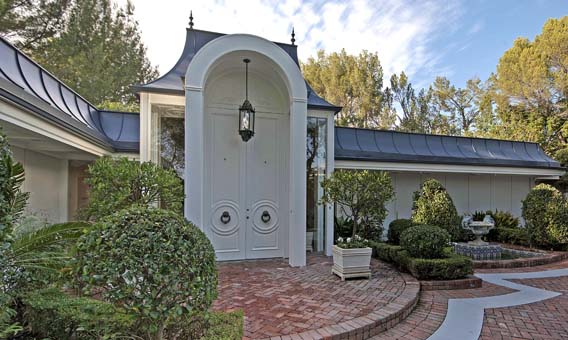
Jennifer Aniston has recently been featured on the Beat as she has been scouring NYC for a new condo. No word yet on whether a home has been picked but there is news this week that she placed her Beverly Hills estate on the market. Listed at a whopping $42 million, the 10,000-square-foot Asian and Balinese-inspired home includes five bedrooms, 7.5 bathrooms, two living rooms, a gourmet kitchen and a home gym. The home is also said to include state-of-the-art smart house technology, an extensive security system, tons of storage space, a three-car garage and an outdoor swimming pool. Originally purchased in 2006 for $13,500,000, we’ll be sure to let you know who buys this luxurious (and expensive) property.
• Julianne Moore’s West Village Home is on the Market
Actress and children’s book author Julianne Moore originally listed her five-floor West Village townhouse for $11.995 million in 2009 – unable to find a buyer the home has been re-listed for $12.5 million. Built in the 1800s, the six-bedroom, 3 bathroom home, includes a gorgeous 49-foot garden, eat-in kitchen, a high-tech security system, a home office, media room and a laundry room.
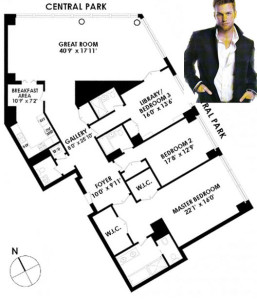
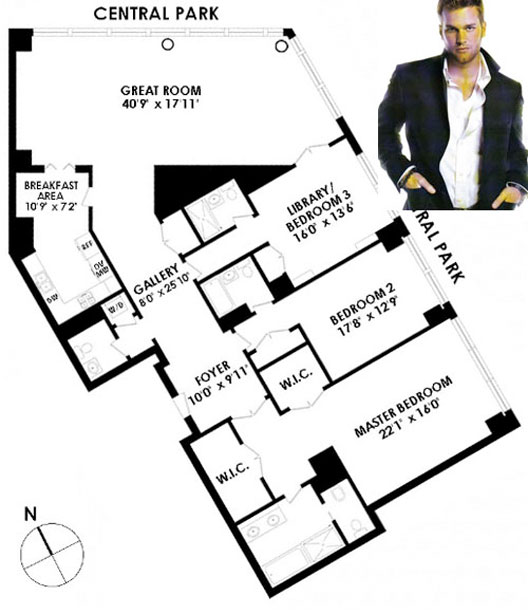
Tom Brady's floorplan. (Image Credit: Curbed NY)
• Tom Brady Selling Time Warner Center Condo
NFL star Tom Brady recently listed his three-bedroom condo for $14 million. Purchased in 2006, the condo, located in Time Warner Center, was then re-listed shortly after in 2007 where it has since been rented for $50,000/month. It has been reported by the Journal that the condo has a seller who is expected to enjoy a home with incredible light, oak flooring, a modern Chef’s kitchen with state-of-the art appliances, granite counter-tops and customized cabinetry.

Cher's former home. (Image Credit: The Real Deal)
• Cher’s Former Home Reduced to $10.2 Million
The Gorce Island mansion home formally owned by Cher in the 1990s has recently listed has recently been to $10.2 million. Located off of Miami Beach, the luxurious 11,460-square-foot mansion, owned by investor Armin Mattli, includes upgrades of about $1 million dollars, a 60-foot pool, and 158-feet or water front. The three-story home also has six bedrooms, seven bathrooms and a two-story hall embraced with double staircases. Originally listed for $16.9 million in 2008 and then for $11.5 in July – making this recent drop at least 40 percent below the market price.
Don’t forget to like us on Facebook and follow us on Twitter!
• Follow us on Twitter @Relocation_News
• Become a fan of Relocation.com on Facebook
March 3rd, 2011 by
Admin
Categories:
family moving,
Moving,
Moving Day,
Moving Industry,
Moving with Kids,
Moving with Pets,
Packing,
Plan Your Move,
Plan Your Relocation,
Real Estate,
Relocation,
Relocation Data Comments:
No Comments » 
Tips to Ease Moving Day Strain When Pregnant
By Serena Norr
Sometimes you have to move, regardless of whether you want to or not. One of those special situations occurs during pregnancy. With all of the ups and downs that occur during this time, adding moving to the mix can increase a mother-to-be’s level of stress and anxiety. No need to fret, Relocation.com is here to help you make this transition as smooth as possible; whether you are moving down the block or to another state or across the country.
1. Move in the Middle:
If you have any sort of flexibility, move during your second trimester. The nausea and tiredness from the first trimester will likely have passed, leaving you feeling energized and pretty good (in general). This will be beneficial when you move, especially since your day may involve long travels, organizing boxes and dealing with movers.
2. Prepare for the Move:
In general, a successful move is determined by how organized and prepared you are. This involves planning your move by locating movers (and picking individuals that you trust), as well as obtaining boxes, packing and locating a storage facility. When looking for moving companies, ask friends and family members for referrals. You can also locate reputable and local movers online through Relocation.com. When calling moving companies, never accept an offer over the phone and be sure to research and then invite at least two-three movers to your home for an in-house moving estimate. This is the best way for movers to actually see your belongings (thus determine the price) as well as a great opportunity to interview them and ask them specific questions pertaining to your needs.
Tip: Since you are with child, make sure that you pace yourself when completing these tasks. It is best to give yourself extra time to stay on top of everything that needs to be done (writing things down helps), which will also prevent you from getting too stressed out along the way.
3. Ask for Help:
You are going to need help with your move. Even if you have a small move, be sure to ask friends and family members for their assistance with anything from packing to calling movers to locating storage. If you can, assign your helpers specific tasks in order to stay organized – having efficient and step-by-step moving checklists are great for this. You can also have your moving company do all of the packing (for an additional fee).
4. Organize your Items:
Hopefully you have some very handy helpers to assist you with your packing, but if not you can stay organized by devising a packing systems for your belongings. Through this efficient plan, organize your items into three piles: pack, donate and toss. The items that don’t work or maybe have holes in them are likely items to toss. The donate pile may be items of clothing that you no longer like or those that don’t fit to be given to friends or charity; while the keep pile are items that will move with you to your new home and can be placed in boxes. This moving system is also a great way to start fresh and get rid of old junk before the new baby. Stay organized throughout the packing process by labeling all of your boxes based on what room the items will be placed. This is also a great way for the movers to know where your belongings should go.
5. Test your Home:
If you are moving into an older home be sure to have it tested for lead. Although you likely had a home inspection, make sure that this also included looking for metals, lead and asbestos. This problem is common in older homes and even in homes that have undergone renovations where walls were simply covered and not stripped of these hazardous materials.
6. Rest and Rest Some More:
It’s finally here; your moving day! This goes without saying but be sure that you get plenty of rest before your move. During the move, be sure to take breaks to rest and stretch, use the restroom, drink tons of fluids and don’t strain your body. This includes not getting stressed out when the inevitable problem happens on moving day. Also, be sure that you are comfortable by wearing comfy shoes and loose fitting clothing and don’t lift anything heavy. Luckily, you don’t have to prove you are supermom on moving day, especially since you are prepared, organized and have a few helping hands to assist you along the way.
Don’t forget to like us on Facebook and follow us on Twitter!
• Follow us on Twitter @Relocation_News
• Become a fan of Relocation.com on Facebook
February 28th, 2011 by
Admin
Categories:
Celebrity Real Estate,
condos,
foreclosures,
homes for sale,
House Swap,
Plan Your Relocation,
Real Estate,
Relocation,
Relocation Data,
rentals Comments:
1 Comment » By Serena Norr
This week the sports media was buzzing with the trade of Carmelo Anthony from the Denver Nuggets to the NY Knicks. Now that Anthony is back in the Big Apple he now needs a place to live and has reportedly been looking for a high-priced NYC rental for about $30,000 a month. We aren’t sure what he will choose but there is buzz that he has been eying the uber luxurious Soho Mews and 158 Mercer (the same building where Bon Jovi lives). The rest of the Beat takes us to California where reigning pop queen Britney Spears and celebrity stylist Rachel Zoe both recently purchased new mansions. There were also homes listed on the market in California by TV stars Dave Coulier and Mischa Baron whose home is described as a “modern villa.” Until next week…
• Carmelo Anthony Looking to Rent
Much has been said about trade of Carmelo Anthony from the Denver Nuggets to the NY Knicks. With everything in place, Carmelo and his family are now looking to rent in NYC for about $30,000 a month. He has been reportedly scouting 158 Mercer St., the same building where Jon Bon Jovi lives and SoHo Mews where Justin Timberlake has a place.
Britney Spears' New Hollywood Hills Home. (Image Credit: The Real Estalker)
• Britney Spears Buys in Hollywood Hills
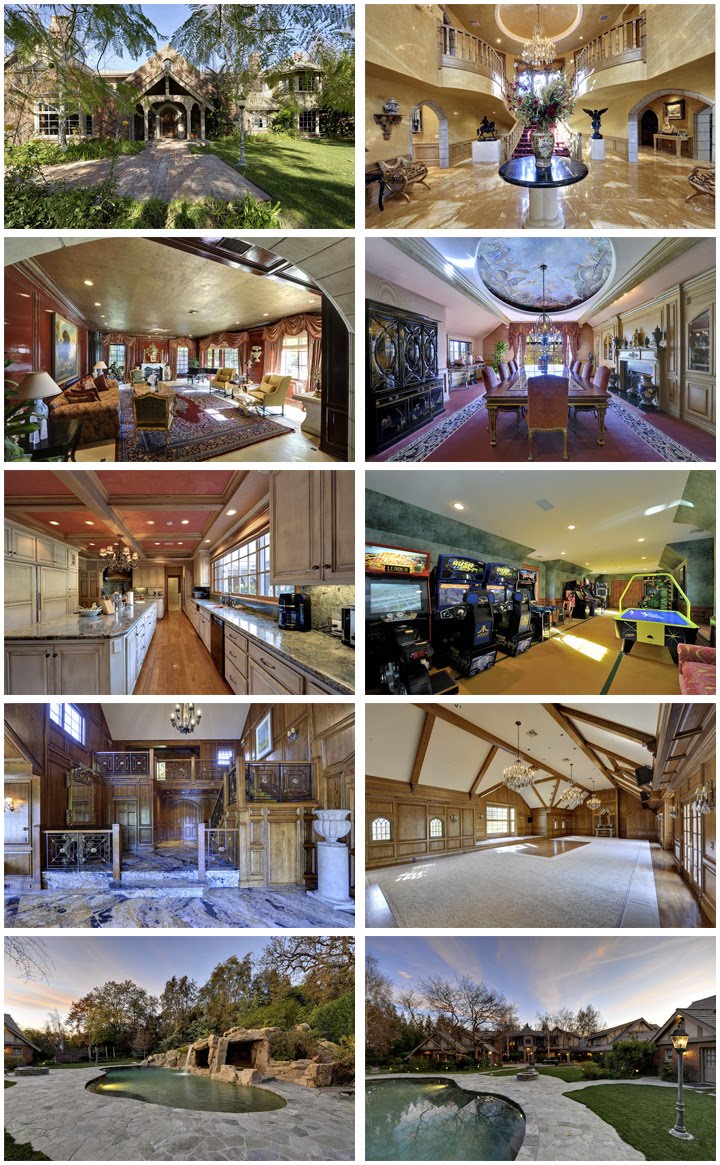
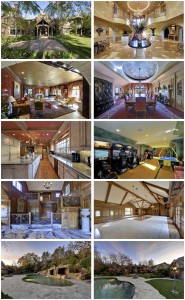
Oops she did it again but this time it is an expensive real estate property. Purchased for $12,900,000, the Hollywood Hills home includes 19,107-square-feet of living space, 10 bedrooms and 13 bathrooms that is situated on a 3.39-acre village-like estate. The gated Tudor-style home also includes an arcade, a modern kitchen, a fitness center, a poker playing room, guest quarters, a swimming pool and spa.
Rachel Zoe's New Beverly Hills Home. (Image Credit: The Real Estalker)
• Rachel Zoe Moves to Beverly Hills Mansion
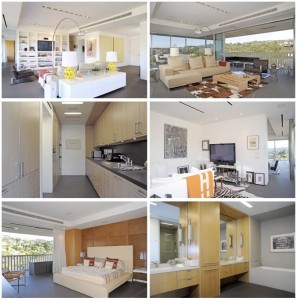
Celebrity stylist Rachel Zoe is on the move. The pregnant Zoe and her husband recently left their one-bedroom apartment and relocated to a huge 7,185-square-foot mansion in Beverly Hills. The two-story contemporary mansion includes five bedrooms, 6.5 bathrooms and two walk-in closets. The complex also includes a formal living room with a fireplace, a private terrace, private facilities, a well-lit kitchen and a two-car garage. The property also includes a backyard with luscious greenery, a swimming pool and spa. It was also reported that Zoe paid $8,250,000 for the property.

Deck View from Mischa Barton's Home. (Image Credit: Zillow.com)
• Mischa Barton Looking to Sell Beverly Hills Estate
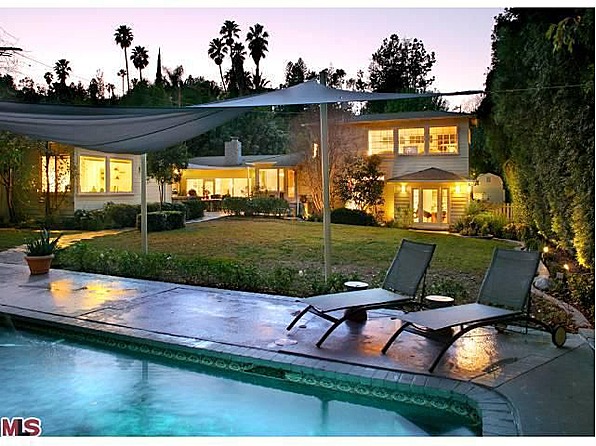
Former “OC” actress Mischa Baron is looking to sell her gorgeous Beverly Hills estate for $8,695,000, or for lease at $30,000/month. Located in the gated Beverly Glen community of Bowmont Estates, the home includes an ivy-draped main house, 8 bedrooms, 10 bathrooms, and 9,800-square-feet of living space. There is also a modern kitchen, guest houses, an outdoor swimming pool, and spa. According to listing information, the main house and three guesthouses total 8 bedrooms.
Exterior View of Dave Coulier's Home. (Image Credit: Zillow.com)
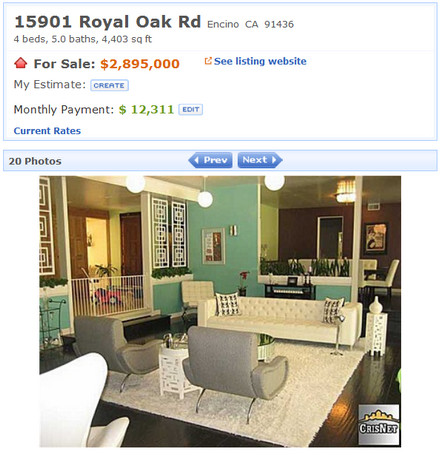
• Dave Coulier Places Encino, California Home on the Market for $1.65 Million
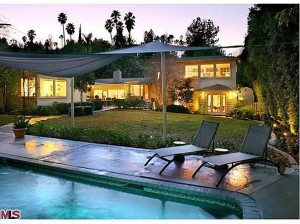
Dave Coulier, better known as Uncle Joey on the popular show “Full House,” has recently placed his Encino, California home on the market for $1.65 million. The remodeled and gated home includes 4,000-square-feet of living space, six bedrooms, three bathrooms, an office, living room and dining room, and an outdoor space with a patio and a swimming pool.
February 22nd, 2011 by
Admin
Categories:
condos,
DIY Move,
family moving,
foreclosures,
homes for sale,
House Swap,
Moving,
Moving Day,
Plan Your Move,
Plan Your Relocation,
Real Estate,
Relocation,
rentals,
Travel Comments:
No Comments »
Looking to buy a home in Hawaii? Whether you’re relocating to the islands or thinking of buying an investment property, finding the right piece of Hawaii real estate requires time, effort, and yes, an island visit — or two! Though you can easily narrow down prospective island properties with a myriad of online tools, virtual house hunting can only take you so far. There’s no substitute for the real thing.
Visiting Hawaii isn’t exactly a hard sell, but if you’re new to the islands; it can still be daunting. Here are some quick tips to keep in mind before you book your trip.
1. You don’t have to splurge on a hotel.
There are two versions of Hawaii: the one you see as a tourist, and the one you see as a resident. Though there is a massive amount of resources and services available to tourists, things work very differently for locals. While you’ll probably have to stay in a hotel, keep it simple. Forget the ocean view or the upgrade to a suite, and don’t rule out discount chains. After all, the point of visiting Hawaii is to spend as little time as possible in your hotel room. And you don’t want to mistake tourist luxury for day-to-day reality. You might even want to consider a Hawaii vacation rental… though be careful: these are tightly regulated, and not all of them are legal operations.
2. Be flexible on transportation.
For the most freedom and flexibility, you’ll probably want to rent a car while in Hawaii. But if your budget is limited, or if you’re not comfortable driving in an unfamiliar place, you have other options. If your interest is Honolulu real estate, the island of Oahu boasts one of the best bus systems in the country. If you find a place to stay near Waikiki or Ala Moana Center, you can catch the bus just about anywhere for $2.50 each way (or $25 for a four-day pass). Otherwise, you can look for shuttle and taxi services (though these often require reservations, as you can’t “hail a cab” on the street). Finally, remember that there are many friendly and knowledgeable Realtors in Hawaii. They would know the best way to get around your future neighborhood, and often schedule caravans or gladly take clients around on their own dime.
3. Play early, work late.
Checking out Hawaii homes and Hawaii condos is hard work, but it’s hard to resist taking some time to play tourist. You should! But if you’re looking to see some of the most popular attractions — the Arizona Memorial at Pearl Harbor, Hanauma Bay, or Diamond Head on Oahu, or the Hawaii Volcanoes National Park on the Big Island — don’t waste your time in lines or fighting crowds. Start your day as early as possible to avoid the crunch, and to save more of your day for your property search. Hike Diamond Head at dawn, catch the first tour at Pearl Harbor, and be ready to get back to work by lunch. The afternoon and early evening is often the best time to meet with Realtors or sellers, anyway.
4. Eat different.
Hungry? Sure, Hawaii is a U.S. state, and has most of the brands and chains Americans love. But Hawaii is in many ways a whole other country, and overflows with unique dining options. Try to make it through your stay without visiting a single chain restaurant. Or at least stick to Hawaii-based chains: Zippy’s and L&L Hawaiian Barbecue restaurants are almost everywhere. Mom and pop diners and food trucks are great options as well. Remember that Hawaii has strong ties to the Pacific Rim and Asia, and explore those cuisines. You probably won’t be able to stick to your diet while in the islands, but you could quickly become an expert in sushi, or the local plate lunch.
5. Slow down, and take it easy.
If you’re used to the fast-paced, brisk and efficient pace of business in most American cities, landing in Hawaii can be a jarring experience. Bringing expectations from New York, Chicago or L.A. will only lead to frustration. Things in Hawaii move slowly, run late, and are usually very casual. (“Hawaiian Time” is an oft-used phrase that essentially means nothing starts or runs on time.) Leave your ties at home, don’t panic if you get a hug instead of a handshake, and expect to miss a few appointments. Rather than trying to squeeze in six visits or meetings, plan for three, then play it by ear.
Finally, don’t forget the basics. Wear sunscreen and carry water, as you can still get sunburned or dehydrated during “winter” in Hawaii. Don’t leave valuables in your rental car, and keep important documents safe. And most importantly, enjoy. You’re in Hawaii!
By Serena Norr
This is the first time on the Beat when an apartment was listed on the market that was NEVER lived in. The apartment in question is owned by the fashion maven Karl Langerfeld who recently listed his NYC penthouse for $5.5 million dollars. New York City is also the location where Jennifer Aniston is reportedly looking to buy. She allegedly placed an offer on a 2,950-square-foot complex in the West Village for $14,950,000 and is looking to sell her mansion in Beverly Hills. Another interesting property on the Beat is the Beverly Hills home of Elvis and Priscilla Presley that can now be rented out for $25,000 a month. Not a cheap rental by any means, this property is a one-of-a-kind listing where the new renter will shack up in same abode where The King lived for years. Do you know of a hot property on the market? Email me at serena.norr@relocation.com. Until next week…
• Karl Langerfeld Lists Never-Lived-In Apartment for $5.5 Million
Fashion maven Karl Lagerfeld recently placed his never-lived-in NYC apartment on the market for $5.5 million dollars. Located at 50 Gramercy Park North, the three-bedroom 3.5 bathroom co-op was originally purchased fin 2006 for $6.575 where Langerfeld was reportedly going to retire. The designer has since changed his tune and decided to stay in Paris – leaving an immaculate and untouched sixth-floor residence. The space includes custom bookcases personally designed by Lagerfeld, spacious closets, views of Central park and dramatic floor-to-ceiling windows. It is also reported by the NY Post that “Chanel will be doing an “installation of images” in the apartment, and closets will be filled with Chanel bags, shoeboxes and garment bags.”
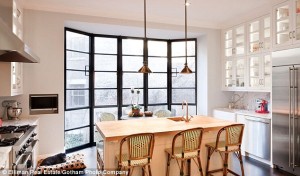
Katie Lee's cute eat-in kitchen - Sold for $11.65 Million. (Image Credit: http://www.dailymail.co.uk/)
• Katie Lee Sold New York Townhouse for $11.65 Million
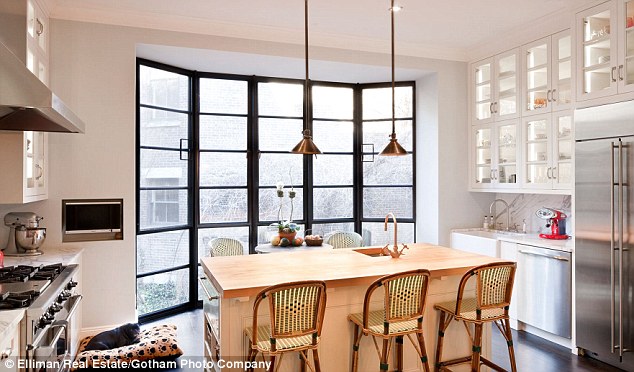
Lifestyle cook and Billy Joel’s third ex-wife Katie Lee recently sold the New York townhouse she received as part of her divorce. Purchased in 2006, Joel originally paid $5.9 million for the West Village home that was since renovated and redesigned by celebrity designer Nate Berkus. The massive 4,000-square-foot four-floor townhouse includes four bedrooms, four bathrooms, four fireplaces, a covered pool, a chef’s kitchen with a six-burner Wolf stove, custom cabinetry and wine storage an elevator and a landscaped garden. The undisclosed new owner paid $11.65million for the home.

You can rent Elvis' home for $25,000 a month. (Image Credit: Luxist.com)
• Elvis’ Beverly Hills Estate Available for Rent at $25,000/month
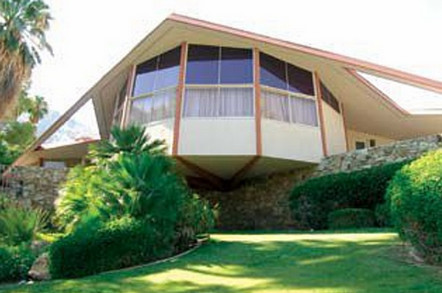
The LA Times recently reported that Elvis and Priscilla Presley’s gated compound in Beverly Hills is up for lease for $25,000 a month. Built in 1958, the recently remodeled estate sits on 1.18-acres of land that overlooks the city and ocean. The house also includes four bedrooms, five bathrooms, a family room, a dining room, a media room, a guesthouse, floor-to-ceiling windows, a new kitchen and laundry room, a pool and spa and 5,367-square-feet of living space.
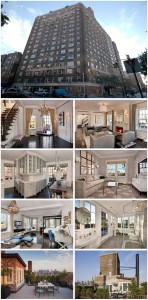
Pics of Jennifer Aniston's potential new penthouse. (Image Credit: The Real Estalker)
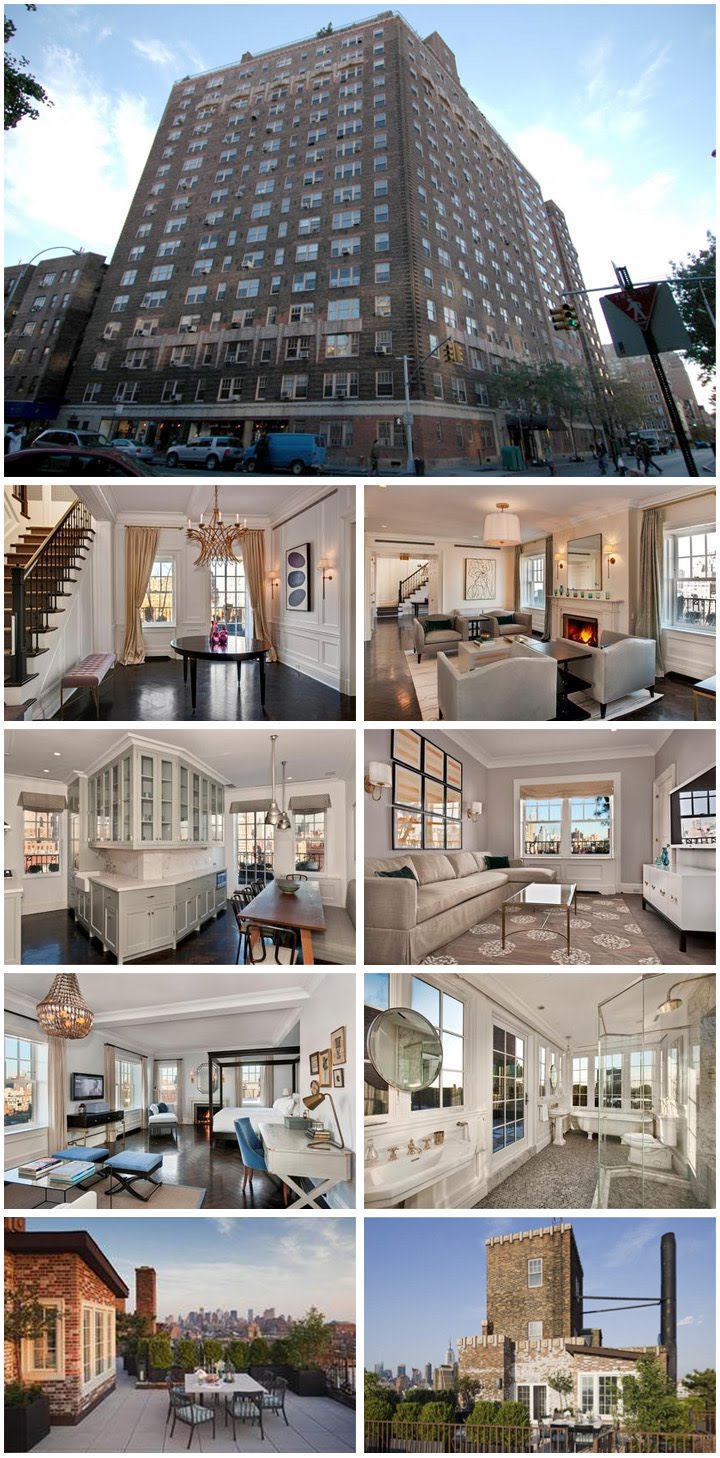
• Jennifer Aniston Might be Buying in NYC
Word on the street is that Jen Aniston might be looking to buy in NYC. She reportedly placed her 9,000+ square foot Beverly Hills mansion on the market and has placed an offer on a pre-war duplex penthouse in the West Village for $14,950,000. According to listing information, this 2,950-square-foot complex includes four bedrooms, 4.5 bathrooms, two fireplaces, two terraces and two floors. The apartment also recently underwent a huge renovation to include a contemporary eat-in kitchen, marble counter tops and hardwood flooring. Since this is all speculation, we eagerly await news on this breaking real estate story.
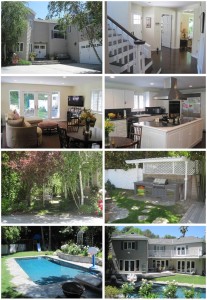
The new home of Neil Patrick Harris. (Image Credit: The Real Estalker)
• Neil Patrick Harris Buys a New Home in Sherman Oaks
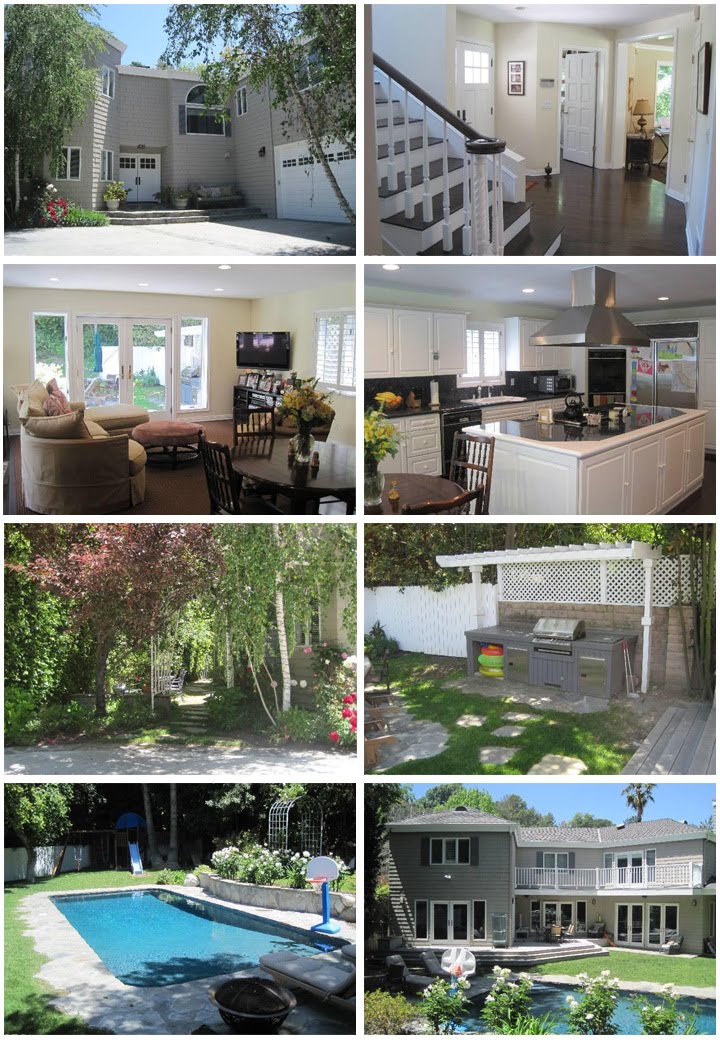
Neil Patrick Harris, star of “How I Met Your Mother” and “Doogie Howser, M.D.” recently purchased a suburban home in Sherman Oaks, California. The 4,286-square-foot home includes six bedrooms and 4.5 bathrooms for $2,100,000. Built in 1991, the home sits on one-third of an acre of land that includes a two-car garage, an eat-in kitchen, French doors and a spacious backyard with a spa and a swimming pool for Harris and his two new children.
Don’t forget to like us on Facebook and follow us on Twitter!
• Follow us on Twitter @Relocation_News
• Become a fan of Relocation.com on Facebook
February 2nd, 2011 by
Admin
Categories:
Celebrity Real Estate,
condos,
design and decorate,
Do It Yourself,
family moving,
foreclosures,
Home Improvement,
homes for sale,
House Swap,
Moving,
Moving Day,
Plan Your Relocation,
Real Estate,
Relocation,
Relocation Data,
rentals Comments:
No Comments » 
Gorgeous views from Katay Sagal's former home - sold for $3.77 million. (Image Credit: Housing Watch)
By Serena Norr
We saw some exciting properties listed on the celebrity real estate market this week. Starting with novelist Truman Capote whose Brooklyn Heights home was recently listed on the market for $15.9 million – a drop from its original listing of $18 million. Considered one of the most expensive homes for sale in Brooklyn, the gorgeous Greek Revival is said to be the home where Capote lived from 1955-1965 and where he also wrote “In Cold Blood” and “Breakfast at Tiffany’s.” Kate Moss, the professional waif was also on the Beat this week for purchasing an historic mansion in London. Once owned by several literary figures, the home is situated on Highgate Hill and includes seven bedrooms and seven fireplaces – among many other attributes of this four-floor mansion. There were also numerous homes placed on the market from Los Angeles such as Rose McGowan’s Spanish-style home and Kyle Richards’ (of the Real Housewife fame) Los Angeles cul-de-sac and we are eager to see who purchases these hot properties. Until next time…
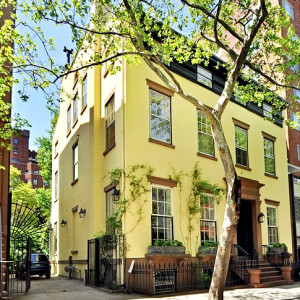
Exterior shot of Truman Capote's Brooklyn townhouse - Listed for $15.9 million. (Image Credit: Sotheby's International Realty)

Four flights of stairs in Truman's former townhouse
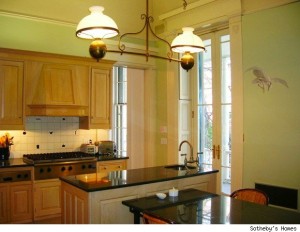
Kitchen in Truman Capote's former home. (Image Credit: Sotheby's International Realty)
• Truman Capote’s Brooklyn Home Drops to $15.9 Million
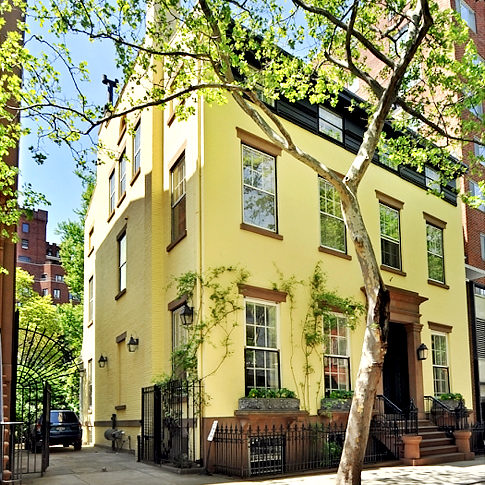
Truman Capote’s former Brooklyn Heights residence was recently placed on the market for $18 million – only to see a recent drop to $15.9 million. A Greek Revival townhouse, built in 1839, the 9,000- square-foot home includes 11 bedrooms, 11 fireplaces, columned porches, mahogany staircases, two kitchens, crystal chandeliers, an artist’s studio, a library and a gorgeous garden. The sale of the historic home is being maintained by Sotheby’s Realty that is said to be the most expensive townhouse for sale in Brooklyn. Capote lived in the home from 1955-1965 where he wrote “Breakfast at Tiffany’s” and “In Cold Blood.”
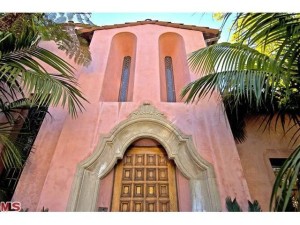
Exterior shot of Rosie McGowan's home - Listed for sale at $1.8 million. (Image Credit: The Luxist)
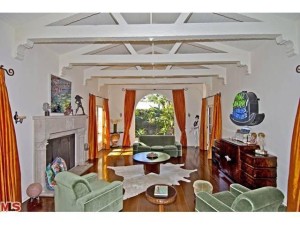
Rose McGowan's living room- Listed for sale at $1.8 million. (Image Credit: Housing Watch)
• Rose McGowan Lists Los Feliz-Area Home
Actress Rose McGowan recently listed her Los Feliz-area home for $1,849,000 million. Purchased in 2004, the home features both Spanish and Moroccan architectural elements that cover the four-bedroom with wood doors, three-bathroom home. The vintage-inspired home also includes a formal dining area, arched windows and 4,278-square-feet of living space. The home also includes a renovated kitchen and dining room and French doors that opens to a balcony on the second floor.
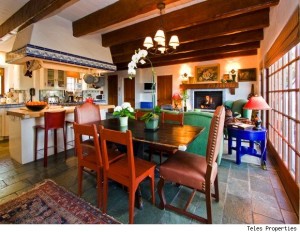
Katey Sagal's Kitchen - Sold for $3.77 million. (Image Credit: Housing Watch)

View from the pool of Katay Sagal's former home.
• Katey Sagal Sells Her Hollywood Hills Home for $3.77 Million
Actress Katey Sagal and her husband Kurt Sutter have recently sold their spacious Los Angeles home for $3.77 million to Rickey Minor, former music director of “American Idol.” Measuring at over 7,202-square-feet, this five-bedroom, eight-bathroom home is located on a gated property that leads up to the wooded hillside property. Built in 1962, the home is situated on 1.5 acres of land that also includes a dining room, a two-sided fireplace, a built-in contemporary breakfast area and an outdoor area with a basketball court, swimming pool and spa that also happen to overlook the gorgeous LA hills and the ocean.
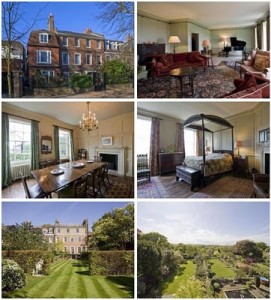
The new mansion Kate Moss purchased for £7,950,000. (Image Credit: The Real Estalker)
• Kate Moss Buys a Historic Literary Mansion in London
Model Kate Moss recently purchased a 6,728-square-foot home in London for £7,950,000. Situated on Highgate Hill, one of the highest points in London, the mansion is considered an historic home where numerous literary figures once lived. The historic four-floor home includes seven bedrooms, seven fireplaces, two kitchens and four full-sized bathrooms. There is also a wine cellar, boiler room, storage space and guest quarters that includes two bedrooms, two bathrooms, a laundry room and a kitchen/dining area. Moss also owns a 10-bedroom farmhouse in Little Faringdon and a property in St. John’s Wood/Primrose Hill area of London, which is expected to go on the market shortly.
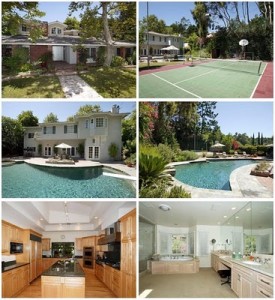
Kyle Richards' Hollywood estate - Listed for sale at $2.4 million. (Image Credit: The Real Estalker)
• Kyle Richards, a Real Housewife of Beverly Hills is Looking to Sell
Kyle Richards of the “Real Housewives of Beverly Hills” recently placed her four-bedroom, five-bathroom home on the market for $2,450,000. Located in Los Angeles, the 4,200-square-foot remodeled home also includes a formal dining area, an office and a resort-style back yard with a pool, barbecue area and a spa. The home, located at the end of a quiet cul-de-sac, was first listed for sale in 2009 for $3,450,000, which later dropped to its current listing price.
January 31st, 2011 by
Admin
Categories:
family moving,
Moving,
Moving Day,
Moving with Kids,
Packing,
Plan Your Move,
Plan Your Relocation,
Real Estate,
Relocation,
Schools,
Travel Comments:
No Comments » 
Research schools in Hawaii before you make the big move. (Image Credit: across.co.nz)
Guest Post by Aloha Living.com
In searching for the perfect Hawaii home, nearby schools are often as important a factor as the number of bedrooms or the view. Hawaii is unique in several ways, from its single statewide public school system to the prominence and size of private schools. Whether you have a family or are thinking of starting one, it pays to research your education options when buying Hawaii real estate.
Honolulu is home to the largest independent school: Punahou School. And Punahou’s alumni rolls are packed with notable leaders in business and politics. U.S. President Barack Obama is the school’s most famous graduate, but AOL founder Steve Case also went to Punahou, as did eBay founder Pierre Omidyar, and even Sun Yat-Sen, founder of the Republic of China.
Nestled in a valley amongst a mix of condos and historic single-family homes, Punahou houses over 3,500 students from grades K-12. Admission is fiercely competitive, with only one out of four applicants able to enroll. And the school’s prestige comes at a price: annual tuition is over $16,000.
Punahou’s closest rival is Iolani School, situated just across the way from Waikiki, perhaps the most famous stretch of Honolulu real estate. Also a private school, Iolani is known for its rigorous academics and emphasis on long-term, high-achieving career plans. If you can afford a Waikiki condo, you can probably afford to send your kids across the bridge to Iolani.
There are dozens of other good private schools in Honolulu, including the Mid-Pacific Institute in Manoa (not surprisingly, also home to some of the most expensive Hawaii real estate), and Kamehameha Schools, which focuses its efforts on benefiting students and families of native Hawaiian ancestry. Enrollment there is, obviously, pretty limited.
When it comes to public schools, choosing from among many varied Honolulu neighborhoods becomes even more important. Hawaii’s single, statewide Department of Education brings with it a few advantages, but many challenges, and compared to school systems in the rest of the U.S., it’s fair to say that Hawaii schools lag behind.
Fortunately, some Hawaii public schools have managed to distinguish themselves.
Locally, Honolulu Magazine publishes an annual ‘Grading the Public Schools’ issue that ranks all public schools in the state. And nationally, there are a number of education portals — such as GreatSchools.net — that apply their own scores and rankings to schools.
Three schools stand out in both the Honolulu Magazine and GreatSchools.net rankings.
Moanalua High School was the top-ranked public high school according to the latest report from Honolulu Magazine, and received a 10/10 rating from GreatSchools.net. Moanalua High School is located in Salt Lake, less than seven miles west of downtown. The area is among the most densely populated areas on Oahu, packed with a wide array of condo complexes.
Mililani High School also fared well in the school rankings, and it’s also one of the largest high schools in the state, with an enrollment of about 2,500. It’s located in Mililani in central O’ahu, the state’s largest planned community. Mililani is a large suburb widely known for being great for families, with thousands of single-family homes and townhomes. The commute into town is long, but the trip is often worth it to those seeking a safe community with great schools, parks, recreation centers and shopping.
Finally, there’s Kalani High School in East Honolulu, the last of the three public high schools to earn a 10/10 GreatSchools.net rating. In terms of enrollment, it’s half the size of Mililani. But because of its location near Kahala, its students generally come from more prosperous homes. East Honolulu real estate is among the state’s most coveted, and a Kahala home is often a sure sign of success.
When you’re ready to buy a Hawaii home, perhaps to start a new career or to retire, it pays to research what the area has to offer the next generation. AlohaLiving.com — a Hawaii real estate search portal powered by trusted MLS data — can help you start your search. The site includes a wide variety of neighborhood information, including school data from GreatSchools.net. Look up profiles on public and private schools, including test scores, reviews and more.
Don’t forget to like us on Facebook and follow us on Twitter!
• Follow us on Twitter @Relocation_News
• Become a fan of Relocation.com on Facebook
January 26th, 2011 by
Admin
Categories:
Celebrity Real Estate,
condos,
design and decorate,
Do It Yourself,
exterior projects,
foreclosures,
Home Improvement,
homes for sale,
House Swap,
interior projects,
Mortgages,
Moving,
Moving Industry,
Packing,
Real Estate,
Relocation,
rentals Comments:
No Comments » 
Moving to the city or the country? Read our detailed list about the pros and cons of both.
Transitioning Between the City and the Suburbs?: Here’s What You Need to Know about Making the Move
By Faith Teel
Special to Relocation.com
As the old saying goes, “The grass is always greener on the other side.” Whether you’re headed out to the wide-open spaces of the suburbs or moving into the exciting neighborhoods of the big city, you might find that you’ve gotten more than you’ve bargained for. Here are just a few examples of the things they don’t tell you in the advertisements.
Moving to the Suburbs
Long Commutes and Distant Stores – Many people move to the suburbs in search of more space to raise a family or grow a garden. Unfortunately, there is a flip side to having more space: everything is farther apart. Your commute will probably be longer, and you’ll have to drive, because most suburbs are too spread out to make public transportation cost-effective. In some places, it’s common to have an hour-long commute in each direction, which may mean 10 hours that have disappeared from your week.
The lack of public transport also means that you’re more likely to encounter the greatest terror to ever stalk the streets: the teenage driver. In cities, teens can often walk or catch the bus to socialize, but some suburbs are so spread out that a jog to the local coffee shop would be a three-hour marathon. Suburban teens usually get cars long before they get good judgment about driving them.
A Cultural Vacuum – One of the first things that urbanites miss when they move to the suburbs is the variety that cities offer. Many suburbs are extremely homogenous, with cookie-cutter houses and cookie-cutter restaurants. Even the people often seem the same, because few suburbs are economically or ethnically diverse. Don’t bother to look for museums, and feel lucky if a few of the chain restaurants offer take-out or delivery.
Where Are All the People? – The very privacy that you came looking for can also be your downfall in the ‘burbs,’ because everyone around you moved out here for privacy as well. With everyone so spread out, it can take a long time to meet new people.
Crime is Everywhere – Yes, there is usually more crime in the city, but the suburbs are not exempt from it. There’s lots of petty theft in suburbs, and there are still gangs and drug use in the high schools. Your kids are less likely to get mugged, but that doesn’t mean you should leave your doors unlocked at night.
The Grating Outdoors– One of the biggest surprises for ex-urbanites is the proximity of Mother Nature in the suburbs. If you’ve never had to mow a lawn or check the kids for ticks, you’re in for quite an experience.
Moving to the City
No Space – The city is an exciting place to be and a great place to find work, which is probably why you want to be there. Unfortunately, everyone else wants to be there too, and that drives up the price of real estate. If you want to live in a reasonably safe neighborhood, be prepared to pay through the nose for a tiny apartment.
For the same reasons, city parking is often impossible. People often sell their cars when moving to the city, which means you will have to rely on public transportation such as buses and cars.
Other People – Other people are everywhere in the city, and that can take some getting used to. Traffic is often worse, but the real nuisance is the noise, smells and constant crowds.
Goodbye, Mother Nature – It can be hard to get in tune with nature in the city. The parks are often crowded with other people (see above) and some may not even be located within a close distance to your home. If you manage to score a balcony or small yard with your apartment, keep in mind that the pollution can be hard on plants and trees. It’s also tough to keep animals in the city, especially big dogs that need room to roam.
School Roulette – In the city, it’s easy to get to know other parents, and you’ll need this advantage when it comes to getting your kids into a good school. In the suburbs, getting into the right school is usually a matter of buying a house in the best neighborhood. In the city, finding the right school is a combination of luck and strategy, and every city’s rules are different. You won’t even have to raise this topic at your kids’ next playdate, because it will be the first thing on every parent’s mind.
Abrupt Changes in Neighborhoods – With everything in the city so packed together, it can be hard to tell at first glance which neighborhoods are safe and which aren’t. In some cities, the transition from slum to swank can happen in just one block. The transient nature of a community’s character becomes more obvious over time. One day, you could wake up to discover that your edgy, artistic neighborhood has become a slum or a yuppie’s paradise.
Whether you’re searching for greener grass in Levittown or the Big Apple, one thing is certain: you’re sure to need some time to adjust. Before you make the jump, take a little bit of extra time to explore the community that you’re moving to. No two cities are alike, and the same is true for suburbs, so if you don’t like what you see, look elsewhere. The quality of your life depends on it.
January 12th, 2011 by
Admin
Categories:
Celebrity Real Estate,
condos,
foreclosures,
homes for sale,
House Swap,
Mortgages,
Moving,
Real Estate,
Relocation,
rentals Comments:
No Comments » By Serena Norr
California was a hot real estate destination on this weeks Beat. From Jack Black to Lindsay Lohan to Orlando Bloom to Drew Barrymore it seems that everyone was either buying or selling or placing their homes up for rent in Cali. Not only homes, this week it was reported that a massive yacht – 193-feet to be exact – was purchased by Google’s co-founder Larry Page. According to the New Zealand Herald, Page reportedly spent $45 million for his luxury liner that comes equipped with a fitness and massage room, on-deck Jacuzzi and a helicopter landing pad. Until next week…
• Jack Black Purchases Home in California for $5.9 Million
According to the LA Times, actor Jack Black recently purchased Flea’s (from the Red Hot Chili Peppers) California home for $5.965 million. The Los Feliz-area home includes seven bedrooms and three bathrooms, along with solar panels, a pool, a motor home and 6,500-square-feet of living space.
Image of Orlando Bloom's Home - Renting for $18,000/a month. (Image Credit: The Luxist)
• Orlando Bloom List Hollywood Home for Lease
English actor Orlando Bloom recently placed his Hollywood Hills Home up for rent for $18,000 a month. The private and gated estate, situated on a hill includes 3/4 of an acre of gardens, an outdoor pool, spa and a gourmet kitchen fitted with custom cabinets. The home, purchased for $2.75 million in 2007, also includes four bedrooms, four bedrooms, including a master suite with a large walk-in closet that overlooks the pool and 3,200-square-feet of living space that sits on a spacious three-quarter-acre lot.

Exterior shot of Drew Barrymore's new home - Purchased for$5.7 million.
• Drew Barrymore Buys Home New Home in California
Actress Drew Barrymore recently purchased a two-plus acre estate in Montecito, California for $5,705,000 (originally listed for $6.9 million). The Monterey Colonial style mansion includes six full-sized and two half bathrooms, five bedrooms, three fireplaces, a two-car attached garage and a guesthouse. Encompassing 6,000-square-feet, the traditional L-shaped mansion also includes a formal dining room with walnut flooring, a library and an outdoor area with a gorgeous garden and backyard terrace.

Massive yacht purchased by Larry Page for $45 million. (Image Credit: Housing Watch)
• Google Co-Founder Larry Page Buys 193-Foot Yacht
According to the New Zealand Herald, Larry Page, the co-founder of Google recently purchased a 193-foot yacht called the Senses for $45 million. The massive white boat or what some may call a ‘floating mansion,’ includes indoor and outdoor dining areas, an office, a fitness and massage room and an on-deck Jacuzzi. The Senses can also fit 14 crew members and 10 guests and includes a helicopter landing pad. Page, who lives in Palo Alto, also owns a 8,149-square-foot mansion with six bedrooms and four full-sized bathrooms that he purchased for $6,800,000.

Images of Lindsay Lohan's new Venice rental - Listed at $17,000/a month. (Image Credit: The Real Estalker)
• Lindsay Lohan Rents at the Beach
Actress Lindsay Lohan (who was also recently released from the Betty Ford clinic), scored a new rental in Venice for $7,100 per month. The modern 3,100-square-foot high-rise home includes four bedrooms and 3.5 bathrooms that also includes a steel fireplace, huge windows and a modern kitchen with mahogany cabinets.
Don’t forget to like us on Facebook and follow us on Twitter!
• Follow us on Twitter @Relocation_News
• Become a fan of Relocation.com on Facebook
December 29th, 2010 by
Admin
Categories:
Celebrity Real Estate,
condos,
foreclosures,
Holidays,
Home Improvement,
homes for sale,
Moving,
Moving Day,
Real Estate,
rentals Comments:
No Comments » By Serena Norr
As 2010 comes to an end, we are optimistic that the housing market will improve – whether that means more families that are able to buy homes or those that don’t have to go through the foreclosure process. One way we escape is by perusing at celebrity real estate as a way to escape as well as send positive real estate vibes for those that need them. This week there were many sales including Pink who purchased a lovely estate in Malibu complete with a pool, gourmet kitchen and stone fireplaces. Michael Jordan also purchased a new home this week, actually two condos, for $3.2 million. It was also reported that President Barack Obama’s Hawaiian vacation home will soon be available for rent. Most of us, though, probably can’t afford the $3,500/per night rental fee. Although these home purchases and listings are extreme, we wish everyone a prosperous New Year in real estate – whether that means scoring your first apartment or buying your first home. Happy New Year!
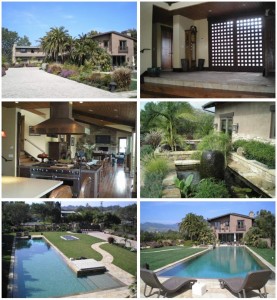
Pink's New Home - Purchased for $11.85 Million. (Image Credit: The Real Estalker)
• Pink and Cary Hart Buy New Home in Malibu for $11,850,000
It was recently reported that pop singer Pink and her motorcycle riding hubby are expanding their family with the addition of a new a baby. The couple also recently purchased a new six-bedroom home in Malibu, California for $11,850,000. Enough to fit several children, this 6,800 square feet abode also includes seven bathrooms, stone fireplaces, wood-beamed ceilings, a gourmet kitchen complete with a breakfast room overlooking the sprawling Point Dume cliffs and one acre of land. The property, built in 2005, also includes their own aquatic sanctuary with a 25-yard swimming pool, outdoor pond and fountains.
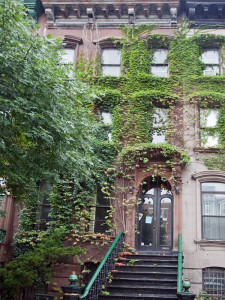
Former Home of Poet Langston Hughes - Listed for Sale at $1 Million (Photo Credit: Sotheby's)
• Former Harlem Home of Langston Hughes on the Market for $1 Million
The former town house of poet and writer Langston Hughes was recently placed on the market for $1 million. Located in East Harlem, measuring 20×45 feet, includes four floors and a basement as well as five bedrooms and four bedrooms. Property listings from Sotheby’s describe the property as “needing a total renovation” with “plenty of room to design your dream home.” The historic home also includes eight marble wood fireplaces and original molding along with hardwood flooring and a 20×100 deep garden, which adds extra light to the home.

Michael Jordan's Swanky New Kitchen - Sold for $3.2 Million (Photo Credit: The Luxist)
• Michael Jordan Buys a $3.2 Million Dollar Penthouse in Charlotte
Michael Jordan, basketball Legend and owner of the Charlotte Bobcats recently purchased a 7,000-square-foot home in Charlotte, North Carolina. The two-floor penthouse (Jordan combined two units) comes equipped with its own private elevator, gourmet kitchen and outdoor space equipped with areas for grilling and gas fireplaces. The condo, located at The Trust, is also conventionally located within walking distance to the Time Warner Cable Arena where most of the Bobcats games are held.

Hawaiian Rental Where Obama Stays - Currently Listed for $3,500/Per Night. (Photo Credit: AOL Real Estate)
• Obama’s Hawaiian Vacation Resort Available for Rent
President Barack Obama’s Hawaiian vacation home, located in Kailua, is soon to be available for rent – that is, if you can afford the $3,500/per night fee. This private Oceanside resort (where Obama is staying until January 2nd) includes five bedrooms, 5.5 bathrooms and 4,951-square-feet of living space. Available for rent starting on March 20th, 2011, the scenic property also includes a three-car garage, a media room, a pool, and stained glasses and African mahogany fixtures throughout the home. Those interested in this rental should also know that there is a one-week minimum whose listing states that it could fit up to 10 people.
Don’t forget to like us on Facebook and follow us on Twitter!
• Follow us on Twitter @Relocation_News
• Become a fan of Relocation.com on Facebook

Win a copy of "The Holiday" and more goodies by commenting below.

Taking part in a house swap may include staying in a cozy place like this - as seen in the popular movie "The Holiday."
Have you ever dreamt of getting away from all of the hustle and bustle of the holiday season? Wishing you could celebrate the season in sunny Southern California or finally experience a white Christmas? That’s exactly what Iris Simpkins (Kate Winslet) and Amanda Woods (Cameron Diaz) did in the film “The Holiday.”
Two women, looking to leave their troubles at home behind, initiated a house swap only to find themselves falling in love with local guys in each other’s countries. For most of us, the romance part of that story may not happen quite the same, but taking part in a house swap can be a simple and fun way to explore another city or country – not to mention a cheaper alternative to a hotel.
For some expert advice, we connected with house swap veterans, Sushma Dwivedi and Natalia Eude, who swapped homes with each other earlier this year. They’ve given us a lot to think about after their international (New York City and Paris) house swap. Based on their insight we created this list of Dos and Don’ts that will hopefully be helpful to you as you prepare for your first house swap!
• Do your research before initiating a house swap. Ensure that the house swap is being done with someone who has a similar lifestyle to you and similar expectations about this experience.
• Don’t be shy! Ask your swapper to introduce you to their friends and/or neighbors and provide you with key phrases to know in case there is any sort of language barrier.
• Do leave your swapper guidelines and tips that could help in his/her transition like maps, directions to the local supermarket, bank, shopping center, etc.
• Don’t be afraid to ask questions, you want to be as prepared as possible before traveling to an unfamiliar location.
• Do have an open mind and understand that things may operate differently so be prepared to allow time to adjust.
Have you ever done a house swap before? If so, is there anything you’d recommend we add to our list of Do’s and Don’ts?
The Giveaway:
To help you get in the house swapping spirit we are giving away a holiday gift package complete with “The Holiday” DVD, popcorn, hot chocolate mix and sweet treats!
The Rules:
• Leave a comment below telling us if you’d ever do a house swap and where would you want to go (one comment per person, additional entries will be disqualified).
• Please enter your email address in the appropriate field when leaving your comment (it will not be visible to anyone but us and will only be used to contact you if you should be selected as the winner).
• One winner will be randomly selected on Friday, December 17th at 11:59PM EST and announced by Monday, December 20th.
• Winner will be notified via email and will have 72 hours to respond before another participant is chosen.
• Contest open to U.S. and Canada Residents only.
Don’t forget to like us on Facebook and follow us on Twitter!
• Follow us on Twitter @Relocation_News
• Become a fan of Relocation.com on Facebook

EasyRoommate.com's new iPhone App - Designed to make searching for roommates even easier.
By EasyRoommate.com
In the past, they always said that technology would make our lives easier and give us more time for the simply things in life. Unfortunately, it seems as the more advanced we get, the less time we have for ourselves, with most of us becoming accustomed to the fast paced world that is our lives. In the past, looking for a new place to live meant picking up a newspaper, opening the classifieds and making phone calls. Now, the classified sections of most newspapers are not as packed as they used to be, where most renters are relying on online advertisements to get their rooms rented. So instead of having to pick up a newspaper, you now have to be in front of a computer to find your new room to rent.
Handheld devices like the iPhone and others have taken the search on the go with you, so you do not need to find the time to sit in front of your computer to search for a roommate anymore. You can search through online classifieds, as well as online roommate services while sitting on the bus, or waiting for your lunch to be served. Some companies are taking this step further, actually providing specific apps to assist you in your search, like the EasyRoommate iPhone app, which puts all tools of the main search directly in your hand, with a few additional options the site doesn’t even provide.
In the end, the argument can be made that technology has actually made our lives move faster than we like. Although, no one can argue that it hasn’t given us the tools to keep pace with it.
November 30th, 2010 by
Admin
Categories:
homes for sale,
Moving,
Moving Day,
Moving Industry,
Plan Your Relocation,
Real Estate,
Relocation,
Relocation Data,
Relocation.com Survey,
rentals Comments:
No Comments » 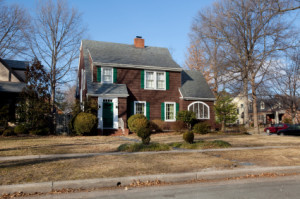
Home Sweet Small Home - More Americans Prefer Smaller Homes in the Suburbs, According to a New Relocation.com Survey
Could it be true? Has the “McMansion Era” finally come to an end? Surprisingly, recent survey results reveal that a majority of Americans prefer smaller homes.
During the 80s and 90s, large, opulent homes, dubbed “McMansions,” were what many U.S. homebuyers wanted. However, in our recent consumer lifestyle survey of nearly 1,500 Americans between the ages of 18 and 60, 48 percent indicated that their ideal home size would range from 1,000 to 1,999 square feet, while less than a third said they’d want a 2,000 to 2,999-square-foot home.
What do you think – have the days of the 3,000+ square-foot McMansions come and gone?
Additionally, the survey found that cost of a residence is NOT the #1 deciding factor when purchasing a home. In fact, only 29 percent of respondents stated that living costs was the most important reason when relocating. We also found that Americans prefer to live in the suburbs (54 percent of respondents) and only 24 percent of those who responded preferred to live in an urban area.
Are you as surprised by these findings as we were? What do you think this means for Americans and real estate in the next five to 10 years?
(Click here for full survey results)
November 24th, 2010 by
Admin
Categories:
Celebrity Real Estate,
condos,
foreclosures,
Home Improvement,
homes for sale,
Mortgages,
Moving,
Plan Your Move,
Plan Your Relocation,
Real Estate,
Relocation,
rentals Comments:
No Comments » 
Nicole Kidman's Living Room - Listed for Rent at $45,000/month. (Image Credit: Luxist)
By Serena Norr
Although T-Day has been on our brain, the real estate industry isn’t far behind – especially within the exciting world of celebrity real estate. This week, Nicole Kidman listed her NYC penthouse for rent at a whopping $45,000/month. For those that fork over the bucks, you can look forward to leasing a glass-filled living room and a space with three bedrooms, 3.5 bathrooms and 3,785-square-feet of living space. Fashion director, Nina Garcia, is also on the Beat this week for placing her NYC condo on the market for $8.5 million dollars. This pre-war two-unit duplex includes 3.5 bathrooms, 12-foot-tall windows and a washer and dryer. Chelsea Handler and Jonah Hill also made an appearance on the Beat for buying homes in California with price tags of $6 million and $ 2 million, respectively. Whether you live a McMansion or an apartment, your home is only as important as those you enjoy it with you. Happy Thanksgiving!

Nicole Kidman's Living Room - Listed for Rent at $45,000/month. (Image Credit: Luxist)
• Nicole Kidman Renting Her NYC Pad
Actress Nicole Kidman recently placed her Perry Street apartment up for rent. Asking price? $45,000 per month, which even for NYC is a bit ridiculous! Kidman and her husband, Keith Urban, won’t have to worry about their real estate issues that long – they recently purchased a new luxury penthouse at 200 11th Avenue that comes complete with a sky garage – a car elevator that is accessible by a lift to one’s apartment complex. For anyone that can afford the rental on the Perry Street, they can look forward to having 3,785-square-feet, three bedrooms and 3.5 bathrooms – not to mention a glass-filled living room (designed by Richard Meier) that stretches the full width of the apartment, including views of the West Side Highway and the Hudson River. Kidman and Urban also own homes in Sydney, Nashville and in Beverly Hills.
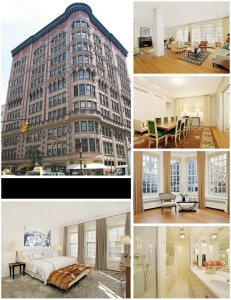
Nina Garcia's NYC Condo for Sale - Listed at $8.5 Million. (Image Credit: The RealEstalker)
• Fashion Director Nina Garcia Lists NYC Condo for $8.5 Million
Nina Garcia, fashion director and “Project Runway” judge recently listed her four-bedroom NYC two-unit condo for sale at $8.5 million. Located on East 66th street, the condo was originally purchased for $3,700,000 for one-unit and then $1,221,900 for an adjacent unit to create a two-unit condo. Located in a pre-war building, interested buyers will have to put down 50 percent of the asking price and expect to pay $4,080 in monthly maintenance charges. The condo also includes 3.5 bathrooms, 12-foot-tall windows, 11.5-foot tall ceilings, a large living room, a doorman, chandeliers, a washer/dryer and a kitchen with modern appliances such as the brands Subzero and Gaggenau appliances.
• Martha Stewart Drops Price on Home from $15.9 Million to $13.9 Million
According to Housing Watch.com, Martha Stewart recently lowered the price of her Perry Street penthouse from $15.9 million to $13.9 million. Another Richard Meier-designed apartment, Martha Stewart’s lower Manhattan pad includes 5,000-square-feet of living space, an on-site fitness center and 11-foot-high windows.

Chelsea Handler's New Home - Purchased for $6 Million. (Image Credit: The RealEstalker)
• Chelsea Handler Buys $6 Million Dollar Home
Chelsea Handler, host of “Chelsea Lately” and author recently purchased a 5,600-square-foot home in Bel Air, California for almost $6 million (she paid $5,942,500). Her electronically-controlled gated home includes 5,572-square-feet of living space, an outdoor kitchen with Viking appliances, a gym, six bedrooms and seven bathrooms. There is also two family rooms, a den and a backyard with a 50-foot pool, a raised spa and an outdoor fireplace.

Jonah Hill's New Hollywood Compound - Purchased for $2 Million. (Image Credit: The RealEstalker)
• Jonah Hills Buys Los Angeles Compound for Under $2 million
Jonah Hill of “Superbad” and “Get Him to the Greek” recently purchased a new home in Los Angeles for $1,865,000. The new estate, built in 1959, includes 3,660-square-feet of living space, four bedrooms, 4.5 bathrooms, a storage room, a children’s playhouse and a detached guest house with a private bathroom. Other amenities include a fireplace, a sky lit kitchen with modern appliances and a modern suite that overlooks the swimming pool.
November 17th, 2010 by
Admin
Categories:
condos,
foreclosures,
homes for sale,
Moving,
Moving Day,
Plan Your Move,
Plan Your Relocation,
Real Estate,
Relocation,
rentals,
Travel Comments:
No Comments » 
The gorgeous beaches of Hawaii. (Photo Credit: Ryan Kawailani Ozawa)
Guest Bloggers: Aloha Living
Try as you might, but you can’t drive from Waikiki to check out the volcanic eruption at Kilauea. Hollywood is partially to blame for the widespread impression that all the many wonders of Hawaii can be found on a single island. In fact, there are actually eight major islands (and countless smaller islands and atolls) that make up the Hawaiian Islands.
Each island is very different. Whether you’re trying to decide where to visit on your next island vacation, or looking to buy your first Hawaii property or picking a place to buy a home in Hawaii, here’s a quick guide to islands of Hawaii.
Oahu
The most populated Hawaiian Island is probably the one most people are familiar with, home to the bustling tourist mecca of Waikiki, the historic World War II sites of Pearl Harbor, the world famous surf on the North Shore, and much more. There are over 870,000 people living on Oahu, most living and working in the capital city of Honolulu along the south shore of the island.
For the first-time visitor or home buyer, Oahu is usually your safest bet. On the tourist side, the island offers everything from unspoiled natural beauty to a modest nightlife, from high-end stores to a huge variety of one-of-a-kind boutique shops. You can also strike out on your own, or take advantage of countless organized activities and managed attractions.
When it comes to real estate, Oahu has $80,000 condos, $80 million estates, and truly everything in between. Whether you want to live in a high rise, on the beach, on a mountain ridge or deep in a valley, there’s plenty to choose from. Honolulu real estate offers the widest selection and largest inventory of any island. (As a result, it also has the most Hawaii foreclosures.)
Oahu has the most developed infrastructure, with solid public transportation, fairly ubiquitous Internet connectivity, low unemployment and a wide range of industries (though tourism and the military still dominate). Everything in Hawaii is expensive, but often less expensive in Honolulu, as most things shipped to the state comes through its airport and ports.
You get all the comforts of any American city, but of course, that means Honolulu is also the most crowded, has the worst traffic, and – by sheer math – has the most crime. But don’t panic. In 2010, Forbes magazine still named Honolulu the country’s third safest city.
The Big Island
The largest and youngest Hawaiian Island is the island of Hawaii. Of course, that’s also the name of the state, so most people refer to it as The Big Island. It’s the second most populous island, but that population is spread out over a much larger area. How big is it? All of the other Hawaiian Islands could fit on top of it, with a little room to spare. That’s a lot of Hawaii real estate!
Thanks to all that space, the Big Island offers the widest variety of climates and topographies. There are vast barren deserts, lush tropical rainforests, white sand beaches and snow-capped mountains. (Yes, snow in Hawaii.) Many locals roughly divide the Big Island into East Hawaii and West Hawaii, though of course there’s endless variety in between.
East Hawaii is the green, rainy, slower-paced side of the island. Hilo is the main city, situated on Hilo Bay, and it’s the second largest city in Hawaii. Even so, it feels like a small town. This side of the island is home to Hawaii Volcanoes National Park, perhaps the main attraction on the island. As far as real estate, it offers everything from affordable but empty and remote lots to multi-million dollar ocean-view estates.
West Hawaii is the sunny, dry, resort side of the island. It’s got the blue skies you expect from Hawaii postcards, and is home to several high-end resorts and resort communities. Kailua-Kona is a bustling commercial and tourist town, and further up the coast, huge developments offer a wide range of condos – popular as vacation or investment properties.
Maui
Once considered a runner-up to Oahu, Maui and its many amenities has – in many ways – surpassed the capital city in both appeal and value to both tourists and real estate investors alike. It’s the second largest of the Hawaiian Islands, and has the third largest population.
In terms of visitor attractions, Maui may very well be growing the next Waikiki. There are several resort areas, from Kihei, Wailea and Makena to the south, to Lahaina, Kaanapali and Kapalua to the west. All offer the great escape at moderate to high prices, with gorgeous beaches, and great scenery. The whole island has a lot to offer ocean lovers, shoppers, and sightseers. The infamous road to Hana and the summit of Haleakala are unique ways to get away from it all.
For those that want to call Maui home, the island’s real estate market is strong, with median prices below but easily comparable to those on Oahu. Maui sees as much activity in condos as it does in single family homes, with continuing high-end resort development bumping up property values in many neighborhoods. There is an abundance of vacation rental properties on Maui, even though they are heavily regulated.
Maui also has among the highest numbers of Realtors per capita of any island, let alone any region in the country. With as many as three percent of Maui residents carrying real estate licenses, you’ll either have a lot of options, or a lot of competition.
Kauai
Kauai is the oldest and among the smallest of the main Hawaiian Islands. Essentially a round dot on a map, the island is about 70 miles around, with one main highway wrapping most of the way around (though the Na Pali coast on the northwestern rim of the island is undeveloped).
Home to one of the wettest spots on earth, its lush green landscape is cut with deep valleys and tall waterfalls. Kauai also has some of the longest and widest stretches of white sand beaches in the state. Some of the most dramatic mountain vistas can be found on Kauai, towering over the many small and diverse towns scattered along its rim.
A popular destination for people looking to get away from the typical tourist traps, Kauai is more rural but nonetheless has an economy that relies largely on tourism. Indeed, Kauai has the most pronounced love-hate relationship with development. On one hand, many people are flocking to nab their piece of paradise, mostly in gleaming resort condos along the north ends of the island. On the other, strict regulations and occasional protests often stop construction and commerce in its tracks.
Island real estate on Kauai is always in flux, because there’s so little of it. The most active properties are condos, ranging from modest apartments to luxury oceanfront resorts. Nonetheless there is a healthy range of single-family homes, as well as more than a few multimillion dollar estates.
Molokai
There isn’t a single stoplight on Molokai, and what few businesses there are often close up shop before sunset. With a population of about 7,000 people, it’s just about the most rural main island you can easily visit, and it is often described as the most Hawaiian island as well.
Much of the island is inaccessible, or accessible only by boat, small plane, or donkey. But the island’s largely untouched natural beauty is second to none. As on Kauai, the few permanent residents on Molokai have long resisted large-scale developments, turning away planned resorts and offering instead small hotels, and condo and vacation home rentals.
There isn’t much to do on Molokai, but that’s the point. You can admire the striking sea cliffs and tall waterfalls, or make a pilgrimage to the historic town of Kalaupapa (where Saint Damien tended to the sick). You can go hiking, biking, swimming or sunbathing. But generally the less you do, the happier you’ll probably be.
In terms of real estate, the market is very small, and fairly slow moving. There are usually fewer than 200 active listings at any given time, most clustered at the remote and dry west end of Molokai or along the central south shore. Considering the deliberately slow pace of growth, you probably wouldn’t buy a Molokai property as an investment. And you really shouldn’t consider living there without spending a lot of quality time experiencing the place.
Lanai
Like Molokai, Lanai also boasts of its lack of traffic lights. Its population hovers below 3,000. But Lanai is also the home to two incredibly luxurious world-class resorts.
The island has been privately owned for much of modern history, much of it serving as the world’s largest pineapple plantation for much of the 20th century under James Dole (of the Dole Food Company), and now as a world-class getaway under billionaire David Murdock.
Apart from condos within the resort complexes, most of the properties available for sale on Lanai are single family homes, many in Lanai City. Prices range from a quarter of a million dollars for a modest cottage to nearly three million dollars for a custom oceanview home. There are also luxury homes clustered around the resorts in Koele and Manele.
Niihau
The smallest of the inhabited Hawaiian Islands, Niihau has been wholly owned by the Robinson Family since 1864. Most of its 130 or so residents speak Hawaiian as their first and only language, and very few people outside the family ever get to visit.
Kahoolawe
The smallest of the eight main Hawaiian Islands, Kahoolawe is uninhabited. For more than 50 years, the U.S. military used the island for target practice, hitting it with bombs, missiles, and massive test explosions. In 1994, the U.S. military formally handed control of Kahoolawe back to the state of Hawaii, and modest efforts are now underway to recover and restore what remains of its historic, cultural and natural resources.
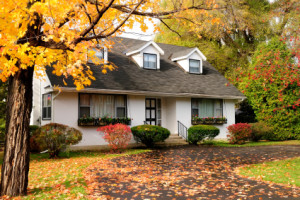
According to Relocation.com's latest lifestyle survey, respondents believe that a well-manicured lawn indicates a safe neighborhood.
How many times have you heard that before? Well, last month we conducted a lifestyle survey where we asked 1,492 Americans between the ages 18 and 60 to determine what lifestyle factors play a key role in moving and relocation decisions in the U.S. As it turns out, most Americans do judge a book by its cover or at least judge a neighborhood by its general appearance!
The survey found that 75 percent of respondents believe that the most important factor in determining a neighborhood’s safety is the up-keep of surrounding homes and the general appearance of a home’s front lawn.
Could this mean that Americans will start to take better care of their lawns knowing that they’re being judged for their landscape? Furthermore, do you think this could possibly encourage members of the community to help their neighbors out by helping with their gardening in order to keep their neighborhoods presentable?
It also seems that less Americans prefer to pay attention to local crime reports and crime statistics as reported in the local media to select a neighborhood based on its safety record. Furthermore, ranked number two in importance based on the respondent’s answers indicated that they would select a neighborhood based on “word-of-mouth” or its local reputation over any other factor.
What do you think – are you surprised by these finds and how do you think this could impact U.S. neighborhoods in the near future?
(Click here for full survey results)

The gorgeous beaches of Kailua - One of the many Hawaiian neighborhoods that await you when you relocate to Hawaii. (Photo Credit: Ryan Kawailani Ozawa)
Guest Bloggers: Aloha Living.com
Although there are dozens of fantastic neighborhoods in the Aloha State, there’s no single best place for everyone that is considering moving to Hawaii. After all, everyone is looking for different things. Nightlife? Good schools? Rugged natural beauty? Nonetheless, to help you get a feel for the many flavors of Hawaii living, here are five very different local towns worth considering.
1. Kailua on the island of Oahu.
When people imagine small town life in Hawaii, they’re probably thinking of a town like Kailua. Downtown Honolulu is a mere 20 minutes away, just over and through the Ko’olau mountain range, but Kailua feels like part of an entirely different island. This green, breezy, fiercely preserved historic neighborhood is the heart of the Windward Side of Oahu.
Kailua is the third largest city in the state, but it doesn’t feel like it, making it one of the most sought after areas in island real estate. It’s a residential neighborhood that’s home to a mix of local families, military families and many recent island transplants. Long-time residents work hard to preserve Kailua’s distinct character, choosing small and quirky boutique stores and restaurants over megamarts and mainland chains. Its farmers market is said to be the best on the island.
Kailua is green, clean, safe and friendly, surrounded by the natural beauty that postcards are made of. There’s Kailua Beach, wide and welcoming, and nearby Lanikai Beach, a world-famous stretch of sand tucked behind some of the most coveted real estate on the island. And the nearby mountains and hills offer great hiking, and great views.
Kailua is one of the more bike friendly towns in Hawaii, and is developing a reputation for being pet friendly as well. The big city is a 20 minute drive (or bus ride) over the Pali Highway, but if you’re lucky, you’ll never want to make the trip.
2. Lahaina on the island of Maui.
For those seeking to live somewhere that offers something closer to a permanent vacation, there’s Maui’s crown jewel: Lahaina. Nestled against the breathtaking West Maui mountains, Lahaina has all the amenities of the perfect vacation, but still retains a distinctly Hawaiian history and personality.
Lahaina hosts a myriad of great activities, from land tours to ocean cruises, surfing and snorkeling, as well as being the location of several galleries, great restaurants and countless shops. There’s not much nightlife anywhere in Hawaii, but Lahaina has a good share of it, with bustling Front Street still serving as Maui’s after-hours hotspot.
Lahaina is located near Kaanapali, the quintessential resort town with high-end luxury hotels and huge golf courses, but is also a short drive away from pristine natural areas, including the imposing majesty of Haleakala, the largest dormant volcano in the world.
You can find everything from condos right on the beach, to single family homes, to multimillion dollar estates in Lahaina. If you’ve been looking to buy a Hawaii condo, Lahaina and nearby Kaanapali are great places to start your search. Lush and green and full of history, this former Hawaiian whaling village has something for everyone who wants to call Maui home.
3. Kapaa on the island of Kauai
On the tiny island of Kauai, Kapaa doesn’t capture the headlines and buzz that surrounds other Garden Island neighborhoods. Neither a quaint rural enclave nor a glistening resort town, Kapaa nonetheless has a lot to offer.
Kapaa feels like a smaller town than it is, with a great mix of small shops, boutique stores, restaurants and coffee shops lining its main avenues. For the artistically inclined, Kapaa shines, with museums galleries, and cultural exhibits galore. It’s also home to the island’s largest shopping center – which actually isn’t very large.
Nature lovers can explore the Makaleha mountains, admire Opaekaa Falls, or relax at nearby Kapaa Beach, a popular surf spot that’s renown for picture perfect sunrises. Families can enjoy several great parks, as well as the Kauai Children’s Discovery Museum.
Kapaa is centrally located, with world famous resorts to the north, and the airport and county center Lihue to the south. Kapaa also offers the widest range of housing options. More middle class than high class, it’s home to a great mix of people, from long-time working families to Hawaii newcomers.
And since it’s Kauai, if you’re still looking for something else, it’s no more than a 20-minute drive away.
4. Hilo on the Big Island
At a glance, Hilo would probably not be anyone’s first choice in choosing a tropical paradise. Instead of sunny skies, this East Hawaii town is known for its almost constant rainfall. Instead of four-star resorts with glistening swimming pools, Hilo is a sleepy residential community where most people work for a living.
But if you want a taste of the real Hawaii, of old Hawaii, Hilo fits the bill. To be sure, there’s a Wal-Mart and a shopping center and a modest rush hour every morning and evening. But the pace of life is slower, the people are friendlier, and the vibe is unmistakably local. Hilo is the second largest city in Hawaii behind Honolulu, but couldn’t be more different.
Hilo is the government seat of the Big Island, and also home to the University of Hawaii at Hilo, one of only two four-year college campuses in the state. With a population of over 40,000 people, Hilo is home to a wide variety of businesses and industries, from agriculture to astronomy to heavy industry. Though the economy is weak, the city’s character is strong, and whatever your specialty, you’ll likely find a niche to fill.
The East Side of the Big Island offers some of the lushest rainforests and tallest waterfalls in the state, although beaches are practically nonexistent. What the area lacks in sand it makes up for in lava, as Hawaii Volcanoes National Park is just south of Hilo on Highway 11.
Best of all, Hilo real estate is affordable. At least compared to almost anywhere else in Hawaii. There are no towering condos in Hilo, however, mostly single family homes ranging from brand new to historic. They fill the sweet spot between cheap empty lots and overpriced resort condos.
5. Mililani on the island of Oahu
Mililani is the largest planned community in the state. With its countless cul de sacs and manicured medians, it could probably pass for a middle-class suburb anywhere else in the U.S. But what it lacks in personality, it makes up in amenities — particularly for families with kids.
Mililani is a relatively young city, established in 1968 but really coming into its own in the late ‘80s. It received the All-American City Award from the National Civic League in 1986, and has continued to grow and thrive ever since. Located near the center of Oahu, Mililani is a long drive from downtown Honolulu. But if you don’t have to commute, you can find everything you need in the neighborhood.
This master planned community was designed to have it all. It’s filled to the brim with parks, playgrounds, and sports fields, and has several community recreation centers with pools and gyms. There are three bustling shopping centers, strong schools, movie theaters, and a golf course. Mililani is ideal for families, and is where many local professionals find their first home. Situated near major military installations, the neighborhood is also popular with military families that want to live off base.
Mililani offers mostly single-family homes, some with huge yards but others clustered tightly together. But there are also hundreds of townhomes, and a few low-rise apartment buildings for more affordable options. For home buyers, it’s a great microcosm of Honolulu real estate.
Many urban Honolulu dwellers still see Mililani as too far away from the city, but compared to newer developments now sprawling across the west side of the island, its an increasingly popular neighborhood even for those who work in town. Served by both the Interstate H-2 freeway and Kamehameha Highway, residents are as close to Waikiki as they are the pristine beaches of the North Shore.
If you need more than one bedroom, crave the pride of homeownership, or want your kids to have room to grow and play, Mililani may be your best bet.
November 2nd, 2010 by
Admin
Categories:
Celebrity Real Estate,
condos,
foreclosures,
Home Improvement,
homes for sale,
Moving,
Plan Your Relocation,
Real Estate,
Relocation,
Relocation Data,
rentals Comments:
No Comments » 
Val Kilmer's Ranch - Listed for sale at $23 million (Photo Credit: Santa Fe Realty Partners)
By Serena Norr
Grandiose properties – in both price and size – are on this week’s Beat. Although this is no different from any week on the Beat, we were particularity intrigued by Val Kilmer’s massive Rowe, New Mexico ranch that encompasses 5,328-acres and 11, 573-square-feet of living space. The new property owners (whomever they may be) will also enjoy seven bedrooms and eight bedrooms as well as 10 springs and 10 miles of hiking and biking trails. This is, of course, for the reduce price of $23 million – guess a luxury ranch isn’t in our future. The Donald is also selling one of his many properties. This one, located in Rancho Palos, California, includes a 18-hole golf course, ocean views, five bedrooms and 11,000-square-feet of living space. We also heard that Bill and Giulania Rancic purchased a luxurious Chicago mansion this week as did Toni Collette who purchased a Spanish-style home in California for $1,300,000. Until next week…

Donald Trump's Rancho Palos Estate - Listed for $12 Million (Photo Credit: Housing Watch)
• Donald Trumps Puts California Estate on the Market
Real estate maven, Donald Trump, recently placed one of his zillion-plus properties on the market. A bit of an overstatement, but as we all know the name Trump equals real estate. This latest property on the market, located in Rancho Palos, California (a community outside of Los Angeles) is situated on 300 acres of land and includes 11,000-square-feet of living space. Listed for sale at $12 million, the Mediterranean-style property was purchased for $27 million and includes five bedrooms, several fireplaces, a 18-hole golf course an outdoor area with an infinity pool and gorgeous views of the ocean due to its location on the bluffs of the Pacific Ocean. The house also includes a glass wine room, a game room and a master bath with a spa and a double shower.

Bill and Giulania Rancic's New Mansion - Purchased for$1,560,000. (Photo Credit: Laura Rubin Dresner)
• Bill and Giulania Rancic Purchase Mansion for $1,560,000
Bill Rancic, winner of the first season of “The Apprentice” and his wife, Giuliana Rancic, recently purchased a mansion in Hinsdale – a suburb outside Chicago – for $1,560,000. As a seasoned real estate flipper, Bill Rancic is no stranger to real estate purchases with homes in both Chicago and Los Angeles. This latest home, calculating at 12,000-square-feet, includes seven bedrooms, 9.5 bathrooms, a 1.5 car garage and a state-of-the art security system.

Pics of Toni Collette's New Home - Purchased for $1,330,000. (Photo Credit: The RealEstalker)
• Toni Collette Buys a Hollywood Home for $1,330,000
Actress Toni Collette, “United States of Tara” and her partner recently purchased a new home in Los Angeles for $1,330,000. Encompassing 2,236-square-feet, the home also includes three bedrooms, 3.5 bathrooms (including one bathroom in the pool house) and a wide front porch. The Spanish-style home is also gated and fenced and features walnut-flooring, a fireplace, an arched doorway, and a modern kitchen with stainless steel appliances. Collette and her partner also own properties in Australia and Ireland.
• Actress Amanda Seyfried Buys at Devonshire House
Mean Girl Amanda Seyfried recently purchased a luxury condo in NYC for $1.875 million. Located in Central Village’s Devonshire House, a pre-war condominium designed by architect Emery Roth, Seyfried’s unit includes two-bedrooms, two-bathrooms and 1,585-square-feet of living space. The building itself also includes interesting amenities such as a 24-hour doorman, a courtyard garden, a rooftop terrace, an on-site gym and storage, a children’s play room and a cold storage unit for groceries.
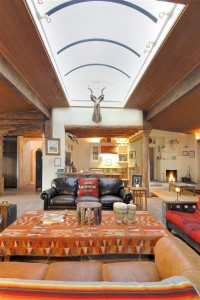
Val Kilmer's Ranch - Listed for $23 million (Photo Credit: Santa Fe Realty Partners)
• Val Kilmer Re-lists Rowe, New Mexico Ranch
Much as been publicized about Val Kilmer and his attempts to sell his 5,328-acre ranch located in Rowe, New Mexico. Originally listed for $33 million, the price was recently reduced to $22 million (a substantial price jump) that Kilmer, at one point, wanted to turn into a lodge. According to the listing, the property, located in the the wilderness, is situated near 10 natural springs with six miles of the Pecos River and 10 miles of hiking and biking trails. The house itself includes seven bedrooms, eight bathrooms and 11,573-square-feet of living space.

Explore your new town on your bike.
By Vance Stevens
Special to Relocation.com
Whether you are moving across town or across the country, relocating can quickly become a trying and overwhelming task. Luckily, the difficult part is behind you: the furniture is in place, boxes are unpacked and all the pictures hung. All that is left now is to settle in and get acquainted with your new community. Here are a few tips to help you do just that.
Get lost.
One of the best ways to learn a new town is simply to get lost. Hop in the car (or grab a bike) and hit the streets. There is no need to map out the trip or worry about how long you will be gone – just go. Explore the area, stopping at interesting spots and taking in the local scenery. Keep your eyes peeled for landmarks and even take a note or two on places you may want to visit later. Getting lost will bring you closer to your new home, while getting you familiar with the town’s layout and street names.
Shop locally.
Maybe the most enjoyable way to get to know the people in your community is to do a little shopping. Visit a few local shopping areas and talk with local sales reps and small business owners. This is a wonderful to get the pulse of your community as well as an opportunity to meet people who reliable on the local economy for employment. Ask for suggestions on best places to visit and where in town to go for the best cheeseburger.
Join a club.
Look around town for different clubs or organizations to join. My communities have neighborhood watch programs, offering the opportunity to meet new people and to do your part in keeping the neighborhood safe. Health clubs or gyms are another way to meet people in your town with similar interest. Look for local sport clubs such as walking, yoga or hiking groups and be sure to check the local paper for community events looking for volunteers.
Have a yard sale.
If you were not able to bring yourself to get rid of unneeded possessions before your move, here the perfect opportunity to make some additional room in your new home and meet a few neighbors while you’re at it. Putting together a yard sale is the perfect way to bring the neighborhood to you. Gather the things you won’t be using at your new home, pick a Saturday or Sunday (or both) and spend the day with your family getting to know your neighbors and ridding yourself of all those excess possessions.
Classes.
Sign up for a class at a local university or community college. Many schools offer night or weekend classes for those who work or have other obligations during the day. This is the perfect way to get know people in your area that share similar interest and, most likely, share in a similar schedule as you do. Take this opportunity to make new contacts through group projects and to connect with local professional who may be able to suggest popular social gatherings. Take a glance at campus message boards where students and facility will post information on upcoming community events.
If you have any questions, comments or inquires, please contact me at editorial@relocation.com.

Shot of Winona Ryder's Home and Pool - Listed at $4.095 million. (Image Credit: The Luxist)
By Serena Norr
After a brief break to bring you the spooky Haunted Beat, we are back with the latest hot properties from La La Land. Troubled starlet Winona Ryder recently placed her vintage-inspired Los Angeles home on the market for $4.095 million. The Spanish-style home, purchased in 1998, includes a rustic kitchen, a personal gym, four bedrooms and four bathrooms. Andy Roddick, Kelly Clarkson and Flea (of the Red Hot Chili Peppers) also placed their homes on the market with the only buyer this week being Julia Roberts who purchased a $3.89 million-dollar penthouse in the West Village. Let us know if you have a real estate tip or some insight about any of these properties in the comments section.
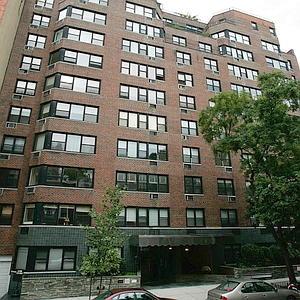
Julia Roberts' New West Village Co-op - Sold for $3.89 Million. (Image Credit: the NY Post)
• Julia Roberts Buys Penthouse for $3.89 Million
Julia Roberts recently purchased a co-op penthouse in Greenwich Village for $3.895 million. According to the NY Post, the building was built in 1958 and includes a rooftop terrace. Roberts is no stranger to real estate deals and owns properties in California, New Mexico as well as another NYC home in Gramercy Park.

Winona Ryder's Kitchen - Listed for$4.095. (Image Credit: The Luxist)
• Winona Ryder Selling Her Los Angeles Home
Winona Ryder recently placed her Los Angeles home on the market for $4.095 million. Purchased in 1998 for $2.6 million, the Spanish-style property comes with four bedrooms and four bathrooms – one of which includes vintage-inspired pink and blue tile work. Additional features in the home include a rustic-looking kitchen with an eat-in breakfast area, an indoor gym, a formal living room and French doors leading to an outdoor area with a kidney-shaped pool, a built-in wet bar and 3,765-square-feet of living space. Ryder also owns a 3,436-square-foot single family home in the Cow Hollow neighborhood in San Francisco.

Andy Roddick's Texas home - Listed at$3.6 Million. (Photo Credit: The RealEstalker)
• Andy Roddick Lists Lake Austin Home
Andrew “Stephen” Andy Roddick and his wife Brooklyn Decker have recently placed their 5,558-square-foot home in Austin for $3.6 million. Located on a Cul de Sac, the private and gated home (that overlooks Lake Austin) features .71 acres of land, four bedrooms, three bathrooms, high ceilings and huge closets. The home also includes a personal gym, a game room, a media room and a state-of-the-art kitchen with granite countertops, a breakfast bar and stainless steel appliances. Purchased in 2003 for $2,149,500, there is no word on where the couple wants to relocate.
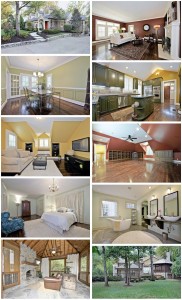
Kelly Clarkson's Home for Sale - Listed at $1,449,000. (Photo Credit: The RealEstalker)
• Kelly Clarkson Lists Nashville Home
“American Idol” Kelly Clarkson recently listed her five-bedroom, six-bathroom Nashville, Tennessee home for $1,449,000. Purchased in 1007, the 4,900-square-foot residence also includes a media room, a formal living and dining room, hardwood flooring, den, recreation room and a fireplace. The kitchen has also been upgraded and now includes stainless steel appliances and honey-colored cabinets. Clarkson also owns a gated home in Fort Worth, Texas.

Flea's Ocean Front Home - Listed at $13,676,000. (Photo Credit: The Real Estalker)
• Flea Selling His Home in Malibu
Michael Balzary aka Flea of the popular band Red Hot Chili Peppers recently listed his Malibu estate for $13,676,000. Encompassing 2,731-square-feet, the ocean front home includes four bedrooms and four bathrooms located on two acres on Encinal Bluffs – which overlooks the beach at every angle. The home also includes unique architectural details such as soaring ceilings, an open floor plan and walls of glass. There are also two separate guest homes, two garages, a private spa terrace and private beach access.
By Serena Norr
It’s a spooky edition of The Celebrity Beat. These famous haunted houses will thrill and shock you with their ghastly tales. Don’t be too scared, after all these are just homes, right?
The Amityville House - (Photo Credit: Zillow.com)
1. The Amityville Horror House
Location: 108 Ocean Avenue, Amityville, New York
This haunted abode inspired by a book of the same name and five movies is often considered one of the scariest houses in America. Though we can’t say if it is haunted or not, the home located in Amityville, New York, was the scene of the horrific murder where Ronald DeFeo Jr. shot his parents and four siblings in 1974. Later sold to the Lutz family in 1975 who left after only living in the house for 28 days citing that they saw “slime oozing down walls, furniture moving, swarms of flies in the dead of winter and slamming doors,” as stated on Zillow.com. It was recently sold again (after only being on the market for 70 days!) for $1.15 million to a retired couple who states that the scariest thing about the house is the onlookers that visit it.
The Haunting in Connecticut House - (Photo Credit: AP Photo/Jessica Hill)
2. The Haunting in Connecticut House
Location: 208 Meriden Ave, Southington, Connecticut
Dubbed the Amityville of Connecticut, this former funeral parlor, located in Southington, was converted into multiple family apartments in the 1980s. In 1986, a New York family called the Snedeker’s moved into the house and began seeing demons — “one with high cheekbones, long black hair and pitch black eyes and another that wore a pinstriped tuxedo whose feet were constantly in motion,” according to the Daily Beast. The family also reportedly noticed foul smells, heard unexplained noises and personality changes in their eldest son, Philip, who started dressing and talking differently. The Snedeker’s later recruited Ed and Lorraine Warren (also involved in researching the Amityville). They reportedly had an exorcism that cleared the home of its ghosts in 1988. This story was later adapted into a movie in 2009 called The Haunting in Connecticut.
The Kresiher Mansion - (Photo Credit: http://prodigalborough.com)
3. The Kreischer Mansion
Location: 4500 Arthur Kill Road, Staten Island, New York
A prolific brick-supplier in the 1800s, the Kreischer family built two Victorian-style homes in Staten Island for the family- one home for the parents and the second, located on a secluded hilltop, was for their son. Shortly after the second home was built, the son, Edward Kreischer, shot himself and the house later mysteriously buried down. It is believed that the home is haunted by the son and his wife where guests have heard noises and doors banging. In 1996, the home was converted into a restaurant where guests and workers heard noises and doors slamming.
The Franklin Castle - (Photo Credit: www.prairieghosts.com)
4. The Franklin Castle
Location: 4308 Franklin Boulevard, Cleveland, Ohio
Considered the most haunted house in Ohio, the Franklin Castle, the home was built in 1865 by Hannes Tiedemann for his family. Over three years in the house, three of Tiedemann’s children died as well as well as his mother. Since his wife, Luise, was haunted by the family tragedies Tiedemann decided to expand the home to take her mind of the strange deaths. The additions included secret passageways, secret rooms, and hidden doors. Following Tiedemann’s death in 1908, it was reported that these secret rooms were not only a clever construction project. Here, he reportedly killed his niece by hanging her and is believed to have murdered a young servant girl. Additionally, a future homeowner found dozens of human baby skeletons in some of the secret rooms. Those that have lived or stayed in the home reported that they have heard strange sounds in the home like a women chocking, babies crying, organ music and footsteps. Currently, the home is dormant but it is reportedly being converted into a tourist attraction.
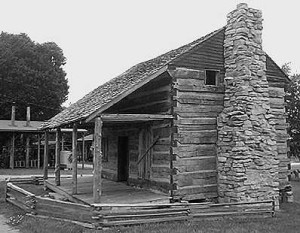
The mysterious Bell Witch Cabin - (Photo Credit: www.bellwitch.org)
5. Bell Witch House
Location: Adams, Tennessee
It is reported that the Bell family resided in this home in the early 1800s and started to hear strange noises. The youngest daughter, Betsy, also began to feel a gnawing like an invisible rat and the parents said they started having their blankets pulled over their heads. The Bell children also woke up with bruises on their face when the father decided to seek help. The community soon learned about the haunting and wanted to talk to the “witch” where it was reported that something from the house spoke in a husky whisper who said she was Kate Batts. As the years went on the Bell family continued to live at the house – where the witch apparently continuously beat and caused havoc to the Bell’s. Charles Bell, one of the brothers, even wrote a record of the haunting called in 1935 The Bell Witch: A Mysterious Spirit, or Our Family Troubles.
If you have any questions, comments or inquires, please contact me at editorial@relocation.com.
October 14th, 2010 by
Admin
Categories:
Celebrity Real Estate,
condos,
foreclosures,
Home Improvement,
homes for sale,
Moving,
Plan Your Relocation,
Real Estate,
Relocation,
Relocation Data,
rentals Comments:
No Comments » 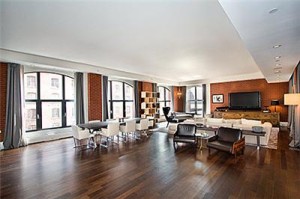
Justin Timerlake's NYC Loft - Listed for sale at $5.25 million. (Photo Credit: Modlin Group)
By Serena Norr
Mr. Sexy Back aka Justin Timberlake seems to have no real estate or financial issues in sight. Before the sale of his current NYC loft-style condo was completed (listed at $5.25) Timberlake purchased a new NYC penthouse for $7.65 (at the Soho Mews). Citing lack of privacy as the reason for the move, the new penthouse includes three-bedrooms, an ultra-luxe 4,000-square-foot shared courtyard and private parking. We’re not sure how much privacy Timerlake will get – especially since the address has been published — but the new building does have a 24-hour security team as opposed to his current pad that only had a part-time security team. The Beat also reported that Patricia Cornwell (the crime novelist) recently purchased a luxurious two-floor penthouse at the Fairmont Battery Wharf for $6.5 million. A quasi-hotel – the condo features 24-hour cleaning services and an on-site gym and restaurant. Stay tuned for next week’s Beat — we have a special haunted house edition in the works…

Pics from Lenny Kravitz's New Orleans home - Listed at $775,000 (Photo Credit: The Real Estalker)
• Lenny Kravitz’s New Orleans Cottage for Sale
Lenny Kravitz recently placed his New Orleans cottage on the market. Purchased in 1994, the 220-year-old French Quarter cottage with its weathered exterior was originally purchased for $360,000 that is now listed at $775,000. Many of the design elements are created by Kravitz including an enhanced and dramatic main living space with gleaming hardwood floors and silvered wallpaper. The modestly-sized and narrow 1,725-square-foot home also includes sleeping loft for guests, sleek marble counters, central air, a small courtyard that is described as “metro chic,” two bathrooms and one bedroom. Kravitz likely did not live solely in this property since he owns properties in the Bahamas, Paris and Brazil.
• Michael Douglas and Catherine Zeta-Jones Purchase a Colonial Mansion
Michael Douglas and Catherine Zeta-Jones recently purchased a Colonial mansion in Bedford, New York. Sold to the couple for $5.25 million, the Westchester mansion includes five-bedrooms, 5½-bathrooms, a pond, pool, guesthouse and three-car garage that is situated on 5.7 acres. The couple reportedly rented out the 6,300-square-foot home before they decided to purchase it.
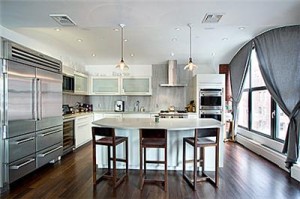
Justin Timberlake's kitchen - Loft listed for sale at $5.25 million. (Photo Credit: Modlin Group)
• Justin Timberlake Lists NYC Apartment and Buys Another
Justin Timberlake recently purchased a new penthouse from the new building Soho Mews – a pair of buildings designed by architects Gwathmey Siegel & Associates – before he completed the sale on his Tribeca loft. Located in the heart of Soho, the 2,598-square-foot penthouse, purchased for $7.65 million, includes three-bedrooms, parking and a 4,000-square-foot private garden. The reason for the quick sale? Timberlake reportedly wanted more privacy from the paparazzi that frequently set up camp outside of his home. The Tribeca 3,000-square-foot loft still on the market is located in the Pearline Soap Factory and is listed at $5.25 million. The listing through the Modlin Group states the loft has 11-foot ceilings, plenty of light and an open kitchen with “restaurant quality appliances by Wolf, Sub-Zero, and Miele.” The Pearline Soap Factory is also noted for having one apartment per floor and key-locked elevators.

Patricia Cornwell's new home - Purchased for $6.5 million. (Photo Credit: The Real Estalker)
• Author Patricia Cornwell Buys Boston Penthouse for $6.5 Million
Crime novelist Patricia Cornwell recently purchased a 4,553-square-foot penthouse in the North End area of Boston. The modern four bedroom, 4.5 bathroom condo, located at the Fairmont Battery Wharf development includes on-site security, 24-hour housekeeping services, valet parking, an on-site gym and a restaurant located on the lower level of the complex. The duplex-style penthouse itself has a circular staircase, fireplace, hardwood flooring, large windows, stainless steel appliances and granite countertops. The property was sold to Cornwell and her partner for $6,500,000. It was also reported that Cornwell purchased another two-bedroom property for $1,650,000 in another area in Boston.
Jesse James' Kitchen - Condo recently reduced to $999,999
• Jesse James Reduces Price of Condo
In June, we reported on this Sunset Beach home that Jesse James placed on the market following his quickie divorce from Sandra Bullock. And now it seems that property is still on the market but for a reduced price. This three-bedroom, 3.5-bath condo was originally listed for $1,290,000 – that is now listed for a little under a million for $999,999. The Mediterranean home itself, encompassing 2,634-square feet and two floors, is actually quite gorgeous. There an elevator, a rooftop deck, a quaint kitchen with modern appliances, a media/game room, an office, a guest room, a fireplace, a modern kitchen, an island bar and a three-car garage with a built-in space for tools and storage – not to mention being located right next to the beach!
If you have any questions, comments or inquires, please contact me at editorial@relocation.com.
October 6th, 2010 by
Admin
Categories:
Celebrity Real Estate,
condos,
design and decorate,
Do It Yourself,
foreclosures,
Home Improvement,
homes for sale,
Insurance,
Mortgages,
Moving,
Moving Industry,
Packing,
Real Estate,
Relocation,
rentals Comments:
No Comments » By Serena Norr
We never know what to expect when we research the celebrity housing market for the Beat. This week we were excited to learn that Steve Jobs was finally given the go-head to start the demolition of the historic property he owns called the Jackling House. The demolition, which took six years to approve, will involve the construction of a smaller and more contemporary space — simplifying the home and tearing down its 30 rooms that will reportedly cost Jobs $8.45 million to complete. This week, we also discovered that Larry the Cable Guy’s home was placed on the market. Listed for $1.55 million and developed by the “Git-r-done” comedian, the Florida log-style home includes a “man cave” with a pool table, TV, mini-bar and bar signs as well as a pool and a spa. Acting couple, Naomi Watts and Liev Schreiber are also on the Beat this week. They placed their 4,410-square-foot Los Angeles home on the market that includes an on-site gym, a two-story guest house and six-bedrooms. We look forward to what next week brings…and the (unexpected) real estate news that follows.

Floor plan of Steve Jobs' new home -Expected construction costs: $8.45 million. (Photo Credit: Gizmodo)
• Steve Jobs’ Construction Plans Revealed
Steve Jobs, the multi-billionaire and CEO of Apple finally received the go-ahead to renovate the historic Jackling House. The 17,000-square foot, 30-room Spanish Colonial home, built for copper baron Daniel Jackling, is owned by Jobs but he has been unable to complete or even start his plans for a full-on demolition and remodel. Architectural preservationists stated that the home was an historic piece of real estate and shouldn’t be demolished. Finally in July of 2010, the preservationists’ dropped their case but some elements of the house such as an organ, flag pole and decorative tiles are being removed and preserved. The newer and more contemporary home plans was reveled on Gizmodo – showing the elaborate floor plan created by Bohlin Cywinski Jackson – the design firm responsible for several Apple stores. The new floor plan indicates a smaller home – measuring at 4,190-square-feet – that will include five bedrooms and 3.5 bathrooms. The new design also indicates that there are plans to build a three-car garage, a pool with a pool house and a third building for an office. Additionally, among the six acres of land there are plans to add various plants and flowers, stone walkways and a private vegetable garden – a diminutively simpler home than the former grandiose estate. It is estimated that the home will be completed in 22 months.

Naomi Watts and Liev Schreiber's home - listed for $5,995,000. (Photo Credit: The Real Estalker)
• Naomi Watts and Liev Schreiber List Brentwood Home
Actor couple Naomi Watts and Liev Schreiber recently placed their Los Angeles home on the market for $5,995,000. The 4,410-square-foot, two-story home includes six bedrooms and 4.5 bathrooms; a two-story guest room; an on-site gym; a two-car garage and a gated and secured entry way. The European-inspired home also includes several fireplaces, an eat-in kitchen, formal dining room, a swimming pool and circular spa. The couple also owns a 2,900-square- foot condo in New York.

You, too, can have your own personal "man cave" if you buy Larry the Cable Guy's home - listed at $1.55 million. (Photo Credit: Housing Watch)
• Larry the Cable Guy Places Florida Home on the Market
Comedian Dan Whitney aka Larry the Cable Guy known for the catchphrase “Git-r-done” recently placed his Sanford, Florida home on the market for $1.55 million. The five-bedroom home, situated on 18.79 acres, includes a lot of interesting details that Whitney himself renovated. There is a “man cave” that includes a poker and pool table, mini-bar, TV and bar signs as well as an outdoor movie theater, a pool with a waterfall, an outdoor spa, detached gym and two children’s rooms with personal murals. Whitney sited outgrowing the home as the reason for the sale.
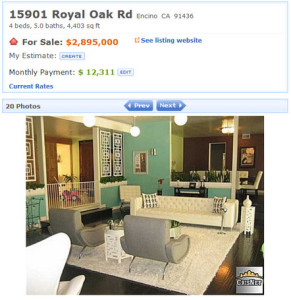
Scott Baio's home - sold for$2.5 million. (Photo Credit: Zillow.com)
• Scott Baio Sells Encino, California Home
Actor Scott Baio recently sold his “Spectacular Celebrity Owned Estate!” to an undisclosed buyer for $2.5 million. Built in 1964, the new buyer can look forward to enjoying 4,400-square-feet of living space, three fireplaces, four bedrooms and 4.5 bathrooms. The Encino, California home also includes a swimming pool with a hot tub, a tennis court, a koi pond, a formal living and dining room and a sprawling back yard with luscious greenery and gardens.

Considering relocating for coffee?
By Serena Norr
We are a caffeinated nation. We wake up craving coffee, need it to perk us up midday and even enjoy it as a treat at night. We know how we like it and choose to have it black or sweet or light or as a latte or a cappuccino. It is the center of our business meetings and friendly get-togethers; it warms us when we are cold and keeps us cool when we are hot. There are blogs about coffee and magazines dedicated to it – there are even those who relocate to a new town just be near their beloved brew. Some even say that it can prevent stroke, Parkinson’s Disease and some cancers. Although we don’t know much about that we can speak about the popular cities that fuel our desire for caffeine more than others. Thanks to data from Daily Beast and Share Ranks, we complied a list of the best cities to get your (caffeinated) buzz on.
Seattle, Washington:
Some may say that Seattle is the birthplace of the specialty coffee industry. The first Starbucks was built there in 1971 (across from the Pike Place market) and we all know what happened to that little company. Seattle, though, isn’t solely about this popular chain especially when there are endless options to get a decent cup of coffee. We love the single-estate coffees (beans purchased from individual farms) from the retailers Espresso Vivace, Caffe Vita, Louisa’s Café, Zoka and numerous other independent roasters through the city.
New Orleans, Louisiana:
According to Share Ranks, New Orleans (pronounced Nawlins) ranked number two as the go-to city for coffee. As a French Market area, you won’t be able (or want) to leave New Orleans without trying their signature chicory-infused coffee. This blend is infused with a chicory root from an endive plant that is roasted and ground with coffee – creating a rich flavor and enhanced body that also softens the bitterness (and acidity) of the dark blend. We suggest accompanying your café with a delicious fried fritter known as the beignet. Check out Café Du Monde for a coffee served Au Lait style (with half and half and milk) or PJ’s Coffee and Tea where you can choose from over 20 different blends of coffee.
Portland, Oregon:
Portland often parallels with Seattle has having the best coffee where it often said that Seattle led the way but Portland has taken over the crown [kuow.org]. The home base of World Cup Coffee and Tea, Urban Grind, and of course, the popular roaster Stumptown where you can try locally roasted blends from Latin America, Africa, Indonesia and more.
New York, New York:
New York has finally gotten around to the buzz surrounding the specialty coffee market [the New York Times]. Not that we are am knocking a 75 cent cup of coffee from a truck vendor or the bodega blends, but having Ninth Street Espresso, Gorilla Coffee, Think Coffee and Café Grumpy has now given us New Yorkers more peep in this fast-paced city that never sleeps.
Denver, Colorado:
One of Relocation.com’s top healthiest cities, the mountainous Denver, Colorado – also known as the “Mile High City” – is packed with coffee roasters and independent cafes. Check out Stella’s Coffee for a gourmet blend of coffee from Costa Rica, Panama, Guatemala, to name a few choices or Fluid Coffee Bar for a freshly roasted cup of Joe.
San Fransisco, California:
According to the Daily Beast, San Fransisco residents spend more than $30 bucks a month on coffee that we are sure is wisely spent at the historic Caffe Trieste or the organic roaster Blue Bottle Coffee. Ritual Coffee Roasters on Howard and Valencia streets is also a signature purveyor in this hilly city where you can try their signature sweet tooth espresso as well as delicious seasonal blends.
Chicago, Illinois:
Residents of the Windy City surely love to take refuge in a warm cuppa Joe. Intelligentsia Coffee and Tea is based here where you can try a single origin, blended coffee or reserve blend. Metropolis Coffee Company and Chicago Coffee Roastery are also excellent Chicago coffee roasters.
Kailua-Kona, Hawaii:
As the only state in the U.S. that grows coffee, Hawaiian coffee comes from several regions on this tropical state, but is probably better know for its varietals from Kona. Try Bad Ass Coffee or Maui Coffee Roasters. Even better, visit a coffee plantation to test a blend fresh from the source. If interested in visiting a coffee farm, be aware that the bulk of the harvest occurs from September through December. For more information, visit the Hawaii Coffee Association.
Other Popular Coffee-Friendly Cities:
• San Jose, California
• Houston, Texas
• Phoenix, Arizona
• Los Angeles, California
• Boston, Massachusetts
• Washington, D.C.
• San Diego, California
• Miami/Ft. Lauderdale, Florida
• Minneapolis/St. Paul, Minnesota


September 29th, 2010 by
Admin
Categories:
Celebrity Real Estate,
condos,
design and decorate,
foreclosures,
Home Improvement,
homes for sale,
Mortgages,
Moving,
Plan Your Relocation,
Real Estate,
Relocation,
Relocation Data,
rentals Comments:
No Comments » By Serena Norr
Pricey real estate listings seem to be theme in this edition of “the Celebrity Beat.” Starting with Candy Spelling’s mega-mansion — a 14-bedroom, 27-bathroom home that has been on the market since 2009 and recently placed on the multiple listing services (MLS). Asking price? A cool $150 million, which her lawyer recently stated “is not a lot for the home.” Another expensive property we noticed this week was the sale of the Olsen twins’ NYC penthouse. On the market since 2005, the home was listed for $11 million in 2007 that was finally sold to a property developer for $8.4 million. Meg Ryan is also in city, but as a renter. She is reportedly leasing an apartment in Soho for $25,000 a month while her home in California is on the market. Well, all of these millions are making us realize that we have a lot to save in our piggy banks before we can purchase a home – much less a million-dollar one. Until next week…
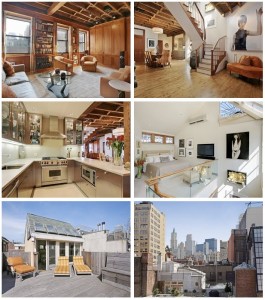
Katy Perry and Russell Brand's New Penthouse - Sold for $2.9 million. (Photo Credit: The RealEstalker)
• Katy Perry and Russell Brand Purchase Home in NYC for $2.9 Million
Pop singer Katy Perry and her fiancé comedian Russell Brand (of “Take Him to the Greek”) recently purchased a 1,500-square-foot duplex in TriBeCa. This luxurious and renovated two-bedroom, two-bathroom penthouse cost the pair $2.9 million that RealEstalker describes as an “oddly shaped.” The modern penthouse includes the standard real estate amenities like built-in bookcases, stainless steel appliances, large windows, exposed beams and high ceilings. The penthouse also includes a gorgeous cherry wood staircase that leads up to the master suite — that is lacking a closest. The lack of storage space probably doesn’t bother the couple that will spend most of their time in their recently purchased 4,706-square-foot house in Los Angeles.
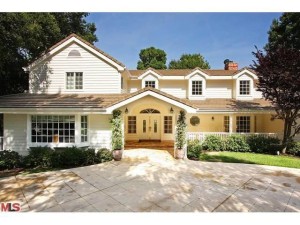
Angie Harmon and Jason Sehron's Home - Listed for $3.9 million. (Photo Credit: Zillow.com)
• Angie Harmon and Jason Sehron List Home for $3.9 Million
Actress Angie Harmon and her husband Jason Sehorn have recently placed their Hidden Hills, California home on the market for $3.9 million. The real estate listing describes this Cape-Cod style home as a “pastoral setting with no nearby sidewalks and street lights” that is also located near equestrian trails. Purchased in 2005, the 6,872-square-foot home sits on 1.5 acres of land that includes a pool, an office, hardwood flooring, five bedrooms and 4.5 bathrooms. To match its natural setting, the home includes a barn, a sprawling lawn and a tree-lined driveway.
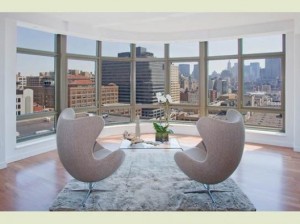
1 Morton Square - Former home of Mary Kate and Ashley Olsen - Sold for $8.45 million. (Photo Credit: Curbed NY)
• Olsen Twins Sell West Village Penthouse for $8.45 Million
Michelle Tanner better known as Mary Kate and Ashley Olsen recently sold their five-bedroom NYC penthouse for $8.45 million (that “Full House” franchise sure did them well.) The 5,700-square-foot penthouse – located at 1 Morton Square – has been on the market since 2005 that was listed in 2007 for $11,995,000 that has finally found a buyer with property developer Bruce Eichner for a lowered, but still expensive price tag.
• Meg Ryan Renting NYC Apartment for $25,000 a Month
According to Housing Watch, America’s former sweetheart, Meg Ryan, is now renting an apartment in Soho. This rental agreement will have Ryan paying $25,000 a month for a three-bedroom, 3.5 bathroom unit. This place, though, isn’t a typical rental – it includes 2,500-square-feet of living space, a private bar and lounge, an on-site pool, sauna that is housed in a glass building.

Candy Spelling's Mega-Mansion - Listed for $150 million. (Photo Credit: The RealEstalker)
• Candy Spelling Places Home on the Market for $150 Million
Candy Spelling, wife of the late Aaron Spelling, recently placed her California mega-mansion on the MLS for $150 million. Dubbed “the Manor,” the four-floor home, located in the posh Holmby Hills, includes 14 bedrooms, 27 bathrooms (!) and 56,500-square-feet of living space. On the market since 2009, Spelling recently placed it on MLS in hopes of a sale but did not lower the price — with a response from her lawyer stating that “this is not a lot for the home” [Wall Street Journal]. Of course for a $150 million-dollar home there has to be extras and this estate has plenty. Amenities like a billiard room, arcade room, doll museum, a bowling alley, an art studio, a tennis court, a personal gym and a 16-car garage are just some of the extras found in this mega mansion. Spelling also reportedly purchased a-yet-to-be-completed penthouse in Century City where she is looking to downsize, which to Spelling is a $47 million dollar condo with 16,500-square-feet of living space. Spelling will customize the condo with her own architects and designers that is expected to be completed in two years.

Try a house swap the next time you travel
By Faith Teel
Special to Relocation.com
Have you ever dreamed of taking an international vacation, but then stayed home after you calculated the cost of travel and lodging? Traveling isn’t always necessarily expensive, but the costs of housing often make or break ones decision. If you have “champagne” tastes but a “wine cooler” budget, then a housing or vacation swap might be the perfect option for you. These temporary living situations are growing in popularity where some people are even testing out a new city in someone else’s home in order to determine if moving is right for them. Here’s our guide on how to swap and get started for an exciting temporary relocation.
The Basics:
In a housing swap, you use an online service to find someone who lives in a vacation destination that you like. You write to them offering to swap houses for a period of time, so that each of you eliminate or reduce the cost of lodging during your vacations. Some housing swaps come with a car or (in cities) a bicycle or subway pass, but you don’t have to include your vehicle in the swap.
In addition to helping you save the money you would have otherwise spent on a hotel, a housing swap can offer other perks: it may make your vacation seem more intimate, because it allows you to live just like a local. Most private homes are more charming and comfortable than a hotel, and of course, you’ll have access to a full kitchen and other amenities. This means that you could also save money by cooking your own food and washing your own clothes.
Who Can Swap?
Obviously, if you live in a ritzy beachfront house in Los Angeles or a swanky New York condo, you are going to get more offers to swap than if you live in a quiet suburb, in say Michigan. On the other hand, many swappers are looking for places to be near to relatives, business conferences or specialized hospitals. If you’re not sure what your area has to offer, do a little research and find out why people visit your city right now.
If you live out in the country and life seems too quiet to be interesting to a tourist, remember that what seems dull to you may be a quaint and restful paradise to a busy businessman from the city.
How to Get Started:
The internet offers a wide variety of housing swap services. Many of them charge a membership fee in exchange for the ability to list their house. These websites often offer perks, such as databases search-able by locations or amenities. For example, you could search for a beachfront house, or a house with a hot tub, or a condominium in France.
Paid sites also offer a ratings system, which allows users to give feedback on the swaps that they have already tried. Some sites even offer to referee in the event of a disagreement.
Some classified ad sites (such as Craigslist) offer simple, no-frills listings. These may not offer the same perks as the paid sites, but they are free of charge.
Practical Considerations:
Of course, there are practical considerations with housing swaps. As you plan your swap, keep in mind these simple precautions:
• Get to know your swap mate as well as possible. Exchange photos, phone calls and emails. If possible, meet in person. Keep in mind that if anything seems strange, you can cancel the swap.
• According to popular vacation swap services, theft and vandalism are rare in housing swaps, but it never hurts to take precautions. Put away your most valuable items, and put fragile items out of harm’s way.
• Get the physical address of the residence you’re planning to visit. (Be wary of anyone who refuses to give the address.) Check it out online, using Google Maps or a similar service.
• Check with your insurance company to ensure that the swap is covered. Your swap mates are usually covered as “guests” in home insurance plans and “permitted drivers” in auto insurance plans, but may guidelines vary, so make sure.
• If possible, be on-site when your swap mates arrive, or have a friend show them around the house. If there are any pets to be cared for during the swap, this should be discussed beforehand.
• Many swap services offer simple contracts which can be signed beforehand, and which cover the most important legal aspects of swapping.
Once you get started with swapping, you’ll be addicted!
By Serena Norr
What would you do if you had $312 million dollars? Most people would invest or travel or save or buy a nice piece of real estate. But if you are Greek billionaire Constantine Alexander-Goulandris you wouldn’t use the money for all of those luxurious items, but rather, use it to purchase a penthouse in Monte Carlo. Dubbed as “the world’s most expensive penthouse,” Alexander-Goulandris’ new pad includes six bedrooms (three of which include a theater, kitchen, dressing room and two bathrooms) and a sprawling backyard that we are guessing would be ideal for late-night and opulent parties. Back in NYC, we learned that Kelsey Grammer and his new girlfriend took a peak at 200 Eleventh Avenue (the very building that Nicole Kidman and Keith Urban recently purchased). The $5.95 million-dollar property includes massive windows to view the Hudson and beyond, three bedrooms and the much talked about Sky Garage. We’ll keep you posted on that exciting sale. In NYC, Yankees star Derek Jeter is also on the Beat for listing his 70th floor condo for $20 million. Jeter’s pad is currently empty, but we are thinking that he little to worry about, especially since he has homes in Florida, New Jersey and Upstate NY.

View Grammer can take in daily if he purchases this Chelsea apartment - Listed at $5.95 million. (Photo Credit: Pudential Douglas Elliman Real Estate)
• Kelsey Grammer Eying Hudson River Property
Kelsey Grammer of “Cheers” and “Fraiser” fame has recently been making an appearance in the gossip columns for splitting with his wife, having a new (pregnant) girlfriend, and what we care about the most: his search for a new property with said girlfriend. Although, Grammer rents in the West Side of Manhattan it looks like he may be looking to settle down at 200 Eleventh Avenue (the very building where Nicole Kidman and Keith Urban reside). Overlooking the Hudson River, $5.95 million-dollar property includes three bedrooms with a master suite and 3.5 bathrooms as well as 2,364-square-feet of living space (more than enough for Grammer and his growing brood). The fifth-floor duplex also includes a private elevator that leads to the living room and a modern kitchen with stainless steel appliances. Also included with this hot property is the one-of-a-kind sky garage, an automatic car elevator that will go directly to Grammer’s swanky pad.
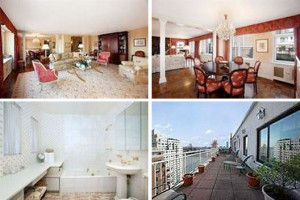
Judge Judy's home - sold for$2.25 million. (Photo Credit: CurbedNY)
• Judge Judy Sells Penthouse for $2.25 Million
Judy Sheindlin better known as the fearless Judge Judy recently sold her Sutton Place apartment. Originally listed a year ago at $3.15 million, the price was lowered to $3.15 million and finally sold for $2.25 million. The undisclosed buyer will enjoy quite the penthouse – which includes two floors, an outdoor terrace, a fireplace and three bedrooms with walk-in closets. The Judge and her husband won’t be without a home – it was reported that they already purchased a new two-bedroom co-op for $6.75 million dollars [City File].

Jerry Garcia's family room - home listed for$3.9 million. (Photo Credit: Zillow.com)
• Home of the Late Jerry Garcia for Sale
According to Zillow.com, the Marin County home of the late Jerry Garcia is on the market for $3,995,000. A very different home that what we would expect from Garcia, the five-bedroom, six bathroom home has a Mediterranean-feel, open floor plan and numerous windows. The 7,189-square-foot home also includes an outdoor swimming pool, a personal gym, a master suite with a sauna and a private deck. The new buyer will also enjoy views of the Berkeley Skyline and Mount Tamalpais and being near San Francisco.

Backyard of the most expensive penthouse - sold for $312 million. (Image Credit: Housing Watch)
• The Most Expensive Penthouse Sold for $312 Million
According to Housing Watch, the most expensive apartment was recently sold for $312 million in the equally opulent Monte Carlo. Greek billionaire Constantine Alexander-Goulandris purchased the property – dubbed La Belle Epoque – that includes six-bedrooms (three of which include a theater, kitchen, dressing room and two bathrooms), a library, spa and sprawling gardens. The home also features immaculate décor that underwent a $40 million-dollar remodeling project since the home damaged was damaged in a fire – where the previous owner, Edmond Safra, died.
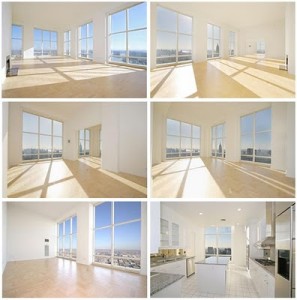
Derek Jeter's condo on the 70th floor - listed for $20 million (Photo Credit: The Real Estalker)
• Derek Jeter Lists Manhattan Penthouse for $20 Million
Just as DJ’s teammate, Alex Rodriquez, is looking for a new pad Derek Jeter is selling his luxurious home-in-the sky. Located on the 70th floor, the penthouse purchased in 2001 for $12,600,000 was recently listed on the market for $20 million. Now the elevation is a bit steep for us, but if you’re willing to live that high up (not to mention pay 20 million) you can look forward to 5,425-square-feet of living space, four bedrooms and 5.5 bathrooms; not to mention a bare apartment to decorate. The condo also includes 16-foot ceilings, an eat-in kitchen, a library, laundry facilities and an 84-square-foot storage facility which will also be sold to the new owner. Jeter is no stranger to real estate; he is building a mega mansion in Tampa, Florida, he owns a mansion in Marlboro, New Jersey and an historic mansion in Greenwood Lake in New York.

San Francisco -- One of the Top Towns for Vegetarians. (Image Credit: www.nps.org)
By Joann Pan
These days being a vegetarian isn’t as hard as it used to be, but we say that from a big city standpoint. We’re not quite sure how it is for folks in small towns. Here in NYC, instead of getting a burger, there’s always an option for pizza or salad. Instead of having a sausage sandwich for breakfast, there’s always an option to get some sweetly caked waffles from a food truck. With a plethora of stands, kiosks and restaurants in New York City [average rent for a two-bedroom apartment $5,286: Figure provided by www.mynewplace.com]that seem to take up every nook and cranny of our beloved city, it’s actually hard to eat meat every day (and not that hard to eat meat ever again) when there’s so much vegetarian food around—from the cheap and delicious falafel sandwiches on St. Marks, avocado rolls in Midtown, to the meat-shaped tofu Asian place that we enjoy when we visit the beloved borough of Queens. Our vegetarian food tours of our hometown have inspired us to see what’s available in other hometowns across the U.S. This is for you current veggies or wannabe vegetarians out there: Relocation.com’s Guide to the Best Vegetarian Towns in the U.S.
Austin, Texas [average rent for a two-bedroom apartment $1,239: Figure provided by www.mynewplace.com]
Wow—who knew that there was such a big vegetarian metropolis in the southern state of Texas where the beef and poultry are abundant. Personally, without having taken a trip to out West, I only know of Texas from the old-time cowboy movies and from trying out a Texas-style steakhouse in Queens (pre-veggie days). From doing vast research online; we found out that Austin vegetarians love living animal-friendly in their city. They are really proud of the fact that they can ride their bicycles (Austin is also one of the greenest cities in the U.S., according to USAToday.com) to get to a dozen vegan trailers and cafes with ease. Some of the mentionable restaurants are: Counter Culture (we hear that their Jackfruit Philly is delicious), Korean vegetarian restaurant Koriente and Casa de Luz (picture lush green decorations and pebbled paths leading to the most peaceful meal you’ve ever had).
Portland, Oregon [average rent for a two-bedroom apartment $1,626: Figure provided by www.mynewplace.com]
Goveg.com and Relocation.com love Portland, Oregon—who recently named it “America’s Best Vegetarian-Friendly Large City” and the top city people are relocating to (in respective order). They say Portland is a big city (much like NYC) that persuades people to eat vegetarian with convenient veggie meals on wheels, amazing animal-free meals at star restaurants and vegan desserts you can only have here. Such as something called a Voodoo Doughnut that sells many vegan options that includes the “Fruit Loop Donut,” which you can imagine looks like something out of your childhood breakfast bowl and the “Old Dirty Bastard,” which actually doesn’t look how it sounds—it’s a doughnut with chocolate frosting, crumbled Oreos and peanut butter drizzle. And when we looked up vegetarian places in Portland we came up with over 1,035 restaurants, carts and bistros that include popular digs such as Vita Café in Alberta Arts District, Paradox Café in Southeast Portland, and Swagat Indian Cuisine in Alphabet District.
San Francisco, California [average rent for a two-bedroom apartment $3,969: Figure provided by www.mynewplace.com]
San Francisco the city by the bay is a perfect location for vegetarians because of the plethora of vegan restaurants and organic food markets. I can even say that the vegetarian establishments can outnumber the city’s large number of cafes. PETA lists it in spot number seven on a list of “The Most Veg-Friendly Cities in North America.” I believe it should be higher on the list. There were over 2,777 restaurants that came up as vegetarian when we did our own search. Some of the most popular vegetarian/vegan restaurants we know of are: Weird Fish in the Mission neighborhood, Greens in Cow Hollow, Enjoy Vegetarian Restaurant in Inner Sunset, The Plant Café Organic in Cow Hollow (we seriously recommend the green curry) and Golden Era Vegetarian Restaurant in Civic Center.
Asheville, North Carolina [average rent for a two-bedroom apartment $827: Figure provided by www.mynewplace.com]
Asheville is different than the big vegetarian cities we’ve featured because it’s a small town nestled in the back woods of North Carolina. Asheville was once named “the Happiest City in America” by Self Magazine; probably because of all the vegetarian eateries and pleasant neighbors that the city has to offer. Asheville veggies love the Sunny Point Café and Bakery that serves amazing tofu chorizo, we hear, and the best mussels in town. After dinnertime, head over to the Crispycat, where you can buy and taste the very first candy bar of its kind made from fully organic ingredients. There is the chocolate sundae flavor, mint coconut flavor and the toasted almond bar, all made from real organic ingredients.
Of course, we have only skimmed the surface of the best vegetarian-friendly towns in the U.S. What are your favorite vegetarian cities? Let us know where you had the best vegetarian/vegan meal—we never pass up the opportunity for a good food story.
Here are other lists for the best vegetarian towns:
• North America’s Most Vegetarian-Friendly Cities [GoVeg.com]
• Top 16 Best Vegetarian Cities in the USA [Vegetarian-Restaurants.net]
• The Most Veg-Friendly Cities in North America [PETA]
Joann Pan is a freelance writer and photographer based in New York City. She has interned and contributed to Buffalo Spree Magazine and Racked NY.

Ricky Martin's luxurious living room - listed at $18.9 million. (Photo Credit: Zillow.com)
By Serena Norr
Part gossip report part real estate news, this week on the Beat we are reporting on Tiger Woods and his search for real estate in NYC as well as Alex Rodriguez and Cameron Diaz who are looking for a pad in the same city that never sleeps. In California, T.R. Knight (of “Grey’s Anatomy”) is also looking to relocate to NYC, but first he has to sell his 4,160-square-foot Los Angeles home. Amy Adams, though, is staying in LA and recently purchased a 3.5 bedroom home in Beverly Hills that is the perfect size for her and her new baby.

The Aldyn - the luxury condo that Diaz and Rodriquez are reportedly checking out. (Photo Credit: NYPost)
• A-Rod and Diaz Looking for a Pad in NYC
Alex Rodriguez and his main squeeze of the moment, Cameron Diaz, are currently looking for a luxurious apartment in NYC. According to the NY Post, Rodriguez and Diaz were reportedly spotted checking out a 5,600-square-foot duplex called the Aldyn. Situated along the West Side Highway, the six-bedroom condo includes a huge terrace overlooking the Hudson River, a private swimming pool, a hot tub, a squash court, bowling alley and climbing wall and a Kidsville, an indoor playground for children.
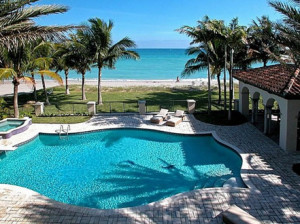
Ricky Martin's pool - this Golden Beach estate is listed at $18.9 million. (Photo Credit: Zillow.com)
• Ricky Martin’s Home on the Market
Ricky Martin, the 90’s pop sensation, has been trying to sell his this 9,882-square-foot Mediterranean-style estate since 2007 that is now back on the market for $18.9 million. This two-story Golden Beach, Florida estate is located on a private and secure beach community – about 12 miles north of Miami Beach – that includes five bedrooms with a master suite, seven bathrooms, a walk-in closet, a five-car garage, a media room and a terrace with views of the ocean.

Tiger Wood's new pad in NYC. (Photo Credit: Curbed NY)
• Tiger Woods Looking to Score (A New Apartment)
Infamous for his skills as a pro golfer and most recently for his well-publicized divorce, Tiger Woods is back in the news but this time it involves his search for an apartment in NYC. Woods is currently scouting out a condo on Hudson Street called the Printing House — a 19th-century commercial building that was converted into condos in the late 1970s. Described as an “Italian-Renaissance-palazzo-style” reports have been unclear as to which unit Woods is interested in, but a $5,200/month two bedroom, two bath unit was recently sold where reports have speculated that Woods was the buyer. This unit includes hardwood flooring, high ceilings, a walk-in closet, dishwasher, central air and a personal gym. Woods can also look forward to having a building with a doorman, a concierge, a pool, a sundeck, video security and valet service.

T.R. Knight's home - listed at $3.9 million. (Photo Credit: The Real Estalker)
• T.R. Knight’s Home on the Market for $3.9 Million
T.R. Knight of “Grey’s Anatomy” fame recently placed his 4,160-square-foot Los Angeles home on the market. The four-bedroom, 3.5 bathroom home has been T.R’s home since 2007, but now that he ended his stint on that show he is looking to relocate to NYC. The 1930s Tudor-style home is listed at $3,995,000 that includes gothic furnishings, exposed beams, parquet flooring and an outdoor area with a covered fireplace, terrace and landscaped grounds.

Amy Adams' new Beverly Hills home -- listed at$3,165,000. (Photo Credit: The Real Estalker)
• Amy Adams Buys Home in Beverly Hills
Two-time Oscar nominee Amy Adams recently purchased a home in Beverly Hills for $3,165.000. The four-bedroom, 3.5 bathroom home, described as a “Cape Cod estate,” includes 4,311-square-feet of living space, hardwood flooring, a fireplace, walk-in closets and a private patio with views of the ocean. The property is also protected by a secured gate and features contemporary glass panels, a den, built-in bookcases and French doors.

Be precise, your room and roommate search will be easier.
By EasyRoommate.com
Searching for a room or roommates is a bit more complicated than trying to find an apartment rental. Apartments are easy, you find a place you like, and if you qualify for it financially, it’s yours (most of the time). With room rentals, and when trying to find a roommate for your spare rooms, you have to deal with other issues like different personalities, sharing bills and groceries — all in a small space. Before any lease is signed, you will have to meet your new roommate. Here’s are some tips to find the house mate of your dreams.
Nice to Meet You:
The meeting phase is usually toward the end of the room/roommate search, so how do you get there efficiently? Your first step is to start searching on a roommate service that specializes on room and roommate matching. When you are entering your information on what and who you are looking for, be precise. When you’re looking for a room, if you are a smoker, enter it in your information as a smoker, if you have a pet that will come along with you, put that in as well. These specific attributes are important to note because they are not compatible with every person, however, there are people that would be a perfect match for you. Be sure not to leave any information unanswered; this will only waste your time and those of the renters.
Be Specific With What You Want/Don’t Want:
When renting a room out, the rules are the same, if you do not want a smoker, put down no smokers allowed if you don’t want pets, put that down as well. Of course, smokers and pets are the primary examples I am using, but this applies to any aspect of your search. Some people don’t believe in this, where they put a very broad search criteria or advertisement, and wait for people to contact them. Does this work, yes, if you are willing to get numerous phone calls and emails of people that don’t match what you really want. Would you rather get 50 people contacting you, but then have to spend the time to turn 40 of them down, or get 10 contacts in which they are all good possibilities? Think of the time you will save yourself, and those searching.
Make a Roommate Contract:
Now that you have narrowed down your possible rooms and roommates, what do you do now? You should establish some basic guidelines — much like a contract — that you will discuss with potential roommates. Discuss their work hours, how the bills/rent will be paid, who will clean and on what days, talk about guests and what time they can come over, appropriate noise levels, etc. Again, these are just examples, but the key point is to bring up anything that you would be against right upfront before you actually sign a lease. It is better to discover that you will not be compatible roommates before are actually living together.
For additional reading:

Home of DeShawn Snow (Real Housewife of Atlanta) -- listed at $4,998,000. (Photo Credit: Zillow.com)
By Serena Norr
Sometimes it takes awhile for a home to be sold and a few of the celebrities on this week’s Celebrity Beat certainly know about this. Take Christina Aguilera and the late Leona Helmsley (Queen of Mean to some) whose homes have been listed on the market since 2008 and 2007, respectively. Aguilera has recently reduced the price of her home by $2 million bucks in hopes to garner a sale while Helmsley’s estate has reportedly sold the property, but for less than $55 million dollars (almost half of the $125 asking price). But then again, sometimes home sales are quick. Liam Neeson recently listed his co-op for $1.375 million and it was sold only five days later for $1.352. Here’s hoping other celebs on the Beat — Andrew Dice Clay and DeShawn Snow (Real Housewife) — don’t have to wait that long to sell their recently listed properties.
• Liam Neeson Sells NYC Co-Op for $1.352 Million
Liam Nesson recently sold his Central Park West two-bedroom co-op that was only listed on the market for five days. Originally listed for $1.375, the co-op was sold for $1.352 to Alan Holtz, a corporate restructuring expert at Alix Partners. In addition to being right across the street from Central Park, the 2,300-square-foot corner apartment also includes two bathrooms, high-beamed ceilings and oversized windows that Nesson and his late wife Natasha Richardson lived in since 1994. Wouldn’t it be nice if all home sales were this easy?

Christina Aguilera's home for sale - listed at $5.995 million. (Photo Credit: LaTimesBlog)
• Christina Aguilera Drops Price of Home by $2 Million
Then again sometimes it takes time for a home to be sold. Take pop star Christina Aguilera who has been trying to sell her Hollywood Hills home since 2008. In an attempt to get it sold, she recently lowered her asking price to $5.995 million (a full $2 million dollar drop from the original asking price of $7.995). Purchased by Aguilera in 2003 for $5 million, the 1,200-square-foot home includes a master bedroom suite, four bedrooms, seven bathrooms, a professional screening room that seats 18, a personal gym, an outdoor pool, a spa fit for 12, a fireplace and gorgeous views of the beach and downtown Los Angeles. Currently, Aguilera resides in a Beverly Hills home that was once owned by Ozzy Osbourne.
• Leona Helmsley’s Mansion Sold for Less Than $55 Million
According to the NY Post, Leona Helmsley’s 40-acre mansion is rumored to have been sold this week for $55 million or less. Located in Greenwich, Connecticut, the home referred to as “Dullenellen Hall” has been on the market for three years following Helmsley’s death in 2007. It is reported that an undisclosed buyer was able to lower the price from $125 million, which is most likely due to its extensive repairs and damages ranging from leaky faucets to bad plumbing. The home, built in 1918, also comes with 26 rooms, an outdoor and outdoor pool, a koi pool, a wine cellar, a theater, tennis courts and two guest cottages. Proceeds of the sale will go to a Helmsley’s charitable trust.

Andrew Dice Clay's home for sale - listed at $1,399,00. (Photo Credit: The Real Estalker)
• Andrew Dice Clay Lists LA Home for $1,399,000
Long Island’s raunchiest insult comedian, Andrew Dice Clay, has recently placed his Los Angeles home on the market for $1,399,000. This 2,720-square-foot abode includes three bedrooms, 2.5 bathrooms, a fireplace, huge windows, a garden room and an eat-in kitchen with modern appliances. The exterior of the house is painted in mint green and is located on a huge luscious landscape. Clay also owns a home in Las Vegas.
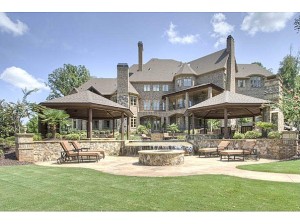
DeShawn Show's home -- listed at $4,998,000. (Photo Credit: Zillow.com)
• DeShawn Snow (Former Real Housewife of Atlanta) Selling Home for $4,998,000
While we are not so sure who this real housewife is, one thing is for certain: DeShawn Snow certainly know how to live large. Listed for $4.9 million, the 10,317-square-foot estate home, which was recently renovated in 2008, includes six bedrooms with a master bedroom, nine bedrooms, a gourmet kitchen, central air, seven fireplaces, a six-car garage, landscaped grounds and an outdoor pool with a fire pit. Located in Alpharetta, Georgia, the home also includes a “billiards room, card room, wine cellar, full bar, family room, dry sauna, exercise room and an on-site salon,” according to Zillow.com.
August 25th, 2010 by
Admin
Categories:
Celebrity Real Estate,
design and decorate,
Do It Yourself,
exterior projects,
foreclosures,
Home Improvement,
homes for sale,
interior projects,
Mortgages,
Moving,
Real Estate,
Relocation,
rentals Comments:
2 Comments »

Tyler Perry's new home - purchased for $7.6 million. (Photo Credit: Zillow.com)
By Serena Norr
The biggest home sale this week on the Beat – in both price and size – was the massive mansion purchased by Tyler Perry aka the man behind the sassy Madea. The mansion, called Dean Gardens, was created in the early 90s by software developer Larry Dean and his wife, Lynda, who certainly had their wild imagination come to life in this overly done 58-acre mansion. From a carousel-themed nursery to art deco-inspired bedrooms, the Deans personal taste is not for everyone, and some may even say that the home is more famous for the time it has been on the market. Listed on the market since 1993 (following the couples split), Perry plans to remodel and tear several rooms in order to create an environmentally-friendly home made out of concrete. To shift from extreme homes to an aesthetically pleasing one, Bradley Whitford and Jane Kaczmarek have placed their 6,769-square-foot Italian-inspired villa on the market. The couple, who also separated, is seeking $6.7 million for their six bath, six-bedroom home. Courtney Love’s public real estate plight has been reported on Curbed NY, the New York Post, and even here on Relocation.com. Searching for a home next to Anna Wintour proved unsuccessful (Love was rejected by the condo board) and we guess living in Soho’s posh Mercer Hotel had its days numbered as Love is now leasing Milla Jovovich’s townhouse (which has been on the market since 2008). We’re interested to see how that living arrangement plays out…From extreme homes to peaceful abodes, we have you covered on the Celebrity Beat.

Front door entryway at Tyler Perry's new home -- purchased for $7.6 million. (Photo Credit: Hooked on Houses)

Some themed-rooms at Dean Gardens -- now owned by Tyler Perry. (Photo Credit: The Real Estalker)
• Tyler Perry Buys Georgia Mansion for $7.6 Million
Entertainment maven (comedian/actor/director/producer/playwright), Tyler Perry recently purchased the massive Dean Gardens estate in the suburban outskirts of Georgia for $7.6 million. The 58-acre estate, located along the Chattahoochee River, has been on the market for 17 years (Michael Jackson was once an interested buyer), which was conceptualized by software developer Larry Dean and his wife, Lynda. The 32,000 square foot mansion was designed by the Dean’s 21-year-old that took four years to create a massive wonderland of themed-bedrooms and grandiose chandeliers. The Deans, though, never did enjoy their overactive mansion. Shortly after the construction of the home (in 1993) the couple separated and placed it on the market, which it has been on for 17 years. It was recently listed for $13,900,000 for the home and its furnishings (carousels, an entry way with massive-sized Italian paintings, custom murals and a room with Peacock décor were some features); however, Perry declined that offer and paid $7.6 million solely for the home. The home has been recognized (both praised and scoffed) for its unique décor options, formal gardens, outdoor band shell, 18-hole golf course, 12-car garage, 12 fireplaces, eight themed-bedrooms, nine bathrooms and on-site wedding chapel. We’re not sure what to make of some of these odd features and perhaps Perry wasn’t either as he plans to tear down the house and “… build one that is environmentally friendly and made of concrete,” according to Zillow.com. Zillow broke down even further, “this will include paying $25 million to build it, $18 million to pay for staff, taxes and utilities over the years and $1 million in annual maintenance.” Perry also owns homes in Los Angeles, an 11.4 acre home in Fairburn, Georgia and a mansion in Atlanta, Georgia. It sure pays to be a quadruple threat…

Jane Kacmarek and Bradley Whitford's villa - listed for $6.7 million. (Photo Credit: Luxist.com)
• Jane Kaczmarek, Bradley Whitford Place San Marino Villa on Market for $6.7 Million
Jane Kaczmarek and Bradley Whitford filed for a divorce in 2009, and sadly selling their gorgeous San Marino Villa was also involved in their separation. Located in San Marino (near Pasadena, California), the 6,769-square-foot home is described as an “Italian Renaissance Revival estate.” Designed in 1924, the home is situated on more than an acre of land that includes an outdoor swimming pool, original formal gardens, a spa, six bedrooms and six bathrooms, a library, hardwood flooring and a private guesthouse. The home, which underwent a massive renovation in 1997, was originally purchased for $5.9 million in 2004.
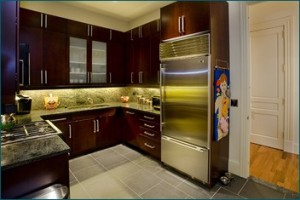
One of Emeril's kitchen's in his Manhattan Condo - Sold for $4.6 million. (Photo Credit: Wall Street Journal)
• Emeril Lagasse Sells Midtown Loft for $4.6 Million
Emeril Lagasse, famous for the catch phrases (“Bam” and “Lets Kick it Up a Notch), and of course for his Cajun cooking, recently sold his loft at the Beekman Regent NYC condo for $4.6 million. Located in Midtown Manhattan, the 4,000-square-foot apartment is a combination of two adjacent apartments that includes two kitchens – both of which have modern and stainless steel appliances, a formal dining room, a media room and two master suites. The apartment also features views of the skyline and the East River whose building’s interior includes 24-karat gold hardware and mahogany wood. According to the New York Post, Emeril won’t have to worry about his living situation that much longer since he reportedly just closed on a 6,900-square-foot Upper East Side townhouse. His new $11.5 million pad is recently renovated and includes two terraces, six fireplaces and a chef’s kitchen.
• Courtney Love to Lease Milla Jovovich’s NYC Townhouse
Much has been reported about adventurous tales of grunge rocker Courtney Love and her search for an apartment in NYC. Seems this tale has a happy ending, at least temporarily, as it was reported that Love is leasing a townhouse from actress/model Milla Jovovich. Love has been living in the luxurious Mercer Hotel in Soho for the past year while searching for a home in the West Village. Love has been looking to live next to Anna Wintour whose board rejected her request. Seems like a perfect situation for both parties as Jovovich has been trying to sell her Greenwich Village townhouse since 2008. Listed for sale at $7.5 million, the four-floor home includes four bedrooms, a private garden, a dining room and a rooftop deck. Curbed NY reported that Jovovich was seeking $24,000/month for rent. However, there was no word if this is what Love will be paying.

Weinberg's home for sale -- listed at $3,399,00. (Photo Credit: The Real Estalker).
• Max Weinberg Asking $3.3 Million for Flipped Home
Max Weinberg, resident drummer on the “Late Night with Conan O’Brien” and former member of Bruce Springsteen’s E Street Band recently listed a Hollywood Hills home for sale. Purchased in February 2009 for $2,888,000, Weinberg and his wife, Rebecca, renovated the home and is now looking to make a profit by listing it for $3,399,000. The contemporary five bedrooms, three bathroom home – previously owned by the parents of Maggie and Jake Gyllenhaal – includes views of the city, a swimming pool among a lush garden and angled stairs and 2,916-square-feet of living space. An infamous house flipper, Weinberg has been purchasing homes in California and New York, renovating them and selling them since the early 2000s.
Which home sparks your interest?

Views the undisclosed buyer of the 'most expensive home' in the world will enjoy. The home was purchased for $220 million. Photo Credit: www.telegraph.co.uk)
By Serena Norr
The spectrum of ridiculousness and luxury real estate just took a turn to the extreme on this week’s edition of the Celebrity Beat. To start things off with a bang, it was reported that the most expensive home was sold in London by an undisclosed buyer – insert your speculations here – for $220 million. Located in a building called One Hyde Park, the new owner will have six bedrooms, bulletproof windows and a panic room — perhaps these are standard amenities when you purchase a home of this nature. On a smaller scale (but not by much), there were many other homes shuffled through sales and placed on the market. In NYC, Rachel Maddow purchased a two-bedroom West Village apartment for $1.25 million that was once owned by the lead singer of R.E.M. Nicole Kidman and her hubs Keith Urban are also on the Beat for reportedly buying a three-bedroom home in West Chelsea. This newly designed home is being touted for its modern amenities, in particular, a sky garage that transports cars to its resident’s homes and back to the garage – seems to us that Jetson-like living isn’t that far away.
An undisclosed buyer recently purchased the most expensive homes in the world, according to Housing Watch.com. The new development called One Hyde Park was purchased for a whopping $220 million. Beginning construction in 2006 — the building with 86 properties – is still undergoing development with plans to complete the landscaping by December 2010. The unit purchased by the mystery buyer is reported to be a two-story, six-bedroom place with view of nearby Hyde Park. The London home also includes bulletproof windows and a panic room — for what we could imagine is needed the homes hefty price tag

Sky Garage at Nicole Kidman's new $10 million-dollar home. (Image Credit: www.200eleventh.com)
The starchitecture district, located in West Chelsea will soon have new residents. The New York Post and Curbed NY are reporting that Nicole Kidman and her husband Keith Urban have purchased at new penthouse at the posh 200 Eleventh Avenue for $10 million. Originally listed for $12.5 million, the super luxurious pad features amazing views of the Hudson, a private elevator opening to their foyer and access to Sky Garage, an automatic car elevator that will take Kidman directly to her apartment (see picture). The penthouse – featuring 3,248 square feet – includes three bedrooms and a master suite with a walk-in closest, 3.5 bathrooms, a large study and a modern kitchen with stainless steel appliances. According to the building’s website, Kidman and Urban can also enjoy several on-site amenities such as a 24/7 attended lobby and a fitness center with a spa.

Pics of Scarlett Johansson and Ryan Reynolds new home - Purchased for $2.9 million. (Photo Credit: realestalker.blogspot.com)
Super couple Scarlett Johansson and Ryan Reynolds recently purchased a new 2,835-square-foot home in Los Angeles for $2.9 million. The home, located in the hills of Los Feliz, includes two bedrooms, three bathrooms, a guest room with hardwood flooring and high ceilings. The small home also includes a two-car garage, a state-of-the-art security system and an outdoor area with a swimming pool and small garden. It is also reported by the RealEstalker that Johansson and Reynolds are looking for another home in Louisiana with eco-friendly amenities.
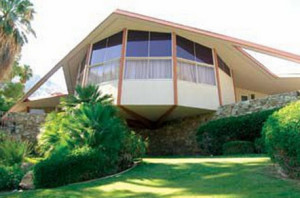
Live like the king for a night and rent Elvis' honeymoon home. (Photo Credit: Zillow.com)
• Elvis Presley’s Honeymoon House for Rent
According to Zillow.com, the Palm Springs, California home where Priscella and Elvis Presley stayed during their honeymoon is currently listed for rent. According to the estate’s website, ElvisHoneymoon.com, you can also have a corporate seminar, tour, film or have your own wedding/honeymoon at the home. Once considered “the House of Tomorrow” for its art deco design concepts, the home has been preserved with furnishings from the 1960s that also includes two bedrooms, four bathrooms and 4,695 square feet of living space.
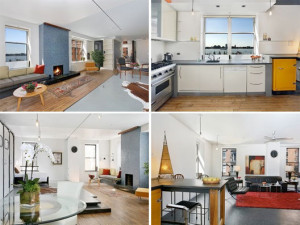
Shots of Rachel Maddow's new apartment - purchased for$1.25 million. (Photo Credit: NYCurbed.com)
• Rachel Maddow Buys Michael Stipe’s West Village Apartment
Rachel Maddow, host of “MSNBC,” recently purchased a West Village apartment that was once owned by R.E.M’s front man, Michael Stipe. Purchased for $1.25 million, the luxurious loft is quite the step up for Maddow who was formerly living in a 275-square-foot NYC apartment, according to Curbed NY. Her new digs – on Jane Street – include two bedrooms, gorgeous view of the Hudson and 1,325 square feet of living space. A former paper warehouse, the building was turned into condos in 1976.
August 11th, 2010 by
Admin
Categories:
Celebrity Real Estate,
design and decorate,
Do It Yourself,
exterior projects,
foreclosures,
Home Improvement,
homes for sale,
Insurance,
interior projects,
Mortgages,
Moving,
Plan Your Relocation,
Real Estate,
Relocation,
Relocation Data,
rentals Comments:
1 Comment » 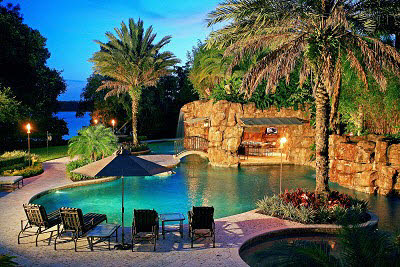
Joey Fatone's home for sale - To be sold at auction for $6.5 million
By Serena Norr
We had quite the mixed bag of homes for sales and home purchases this week. “Extra” host Mario Lopez recently purchased a 4,430 square-foot home in Glendale, California for the obvious reasons: outdoor pool, courtyard with a fountain and state-of-the art and modern amenities as well as for the not-so-obvious reasons: it will be the location of his new reality show where he and his baby mama will be filmed as they experience the trails of becoming new parents. While some may tune-in to catch Lopez juggle his abdominal workouts while changing diapers, we are more interested in seeing how he will upgrade and personalize his Spanish-style home with home improvement projects and decor. Disney star-turned-actress, Hilary Duff also made this week’s Beat for purchasing an elegant Toluca Lake estate with her fiancé Mike Comrie for $3.85 million. We also reported on an interesting auction of the home of Joey Fatone. Fatone, who was in the band ‘NSync, is asking $6.5 million for the home that features a swimming pool and an outdoor sushi bar. These properties never cease to amuse and amaze us! Until next week…
• Former ‘NSyncer, Joey Fatone Selling Orlando Home for $6.5 Million
Joey Fatone, of the popular 90s boy-band ‘NSync, will auction his home for $6.5 million citing wanting to be closer to his family as the reason for the sale. The gated estate, located in Orlando, is situated on 4.4 acres of lakefront property that includes 10 bathrooms, a 10-car garage and six bedrooms, including a 3,800 square-foot master suite with a butler’s pantry. The home also has 12,400-square-feet of living space that includes a movie theatre with stadium seating and an outdoor grotto area with a sushi bar, swimming pool and spa. The minimum bid for the auction is $3.7 million, which will take place on September 11, 2010.
• Mel Brooks Sells Ocean-Front Home for $5.3 Million
Comedian and director Mel Brooks recently sold his Watermill, New York home for $5.3 million. The 1,968-square-foot property was originally purchased for $2,995,000 by Brooks and his late wife, Anne Bancroft, which has been rented out for several summers. The home, situated by the ocean on. 74 acres, includes three bedrooms, two bathrooms, a fireplace and is right down the street from last week’s celebrity beat seller, Christie Brinkley.
• Leeza Gibbons Buys New Home for $6,600,000
Entertainment reporter Leeza Gibbons recently purchased a home in Beverly Hills, California for $6,600,000. The Mediterranean-style home includes five bedrooms, 5.5 bathrooms and backyard complete with a heated swimming pool, spa and lush greenery. The 6,579-square-foot home also includes walnut wood flooring, a family room, a fitness room, a billiard room, an office, a three-car garage, a home theatre, four fireplaces and a state-of-the-art security system.
• Mario Lopez Gets a New Home for $1,940,000
Mario Lopez of “Saved by the Bell” fame recently purchased a new home in Glendale, California. Sold to Lopez for a modest price tag of $1,940,000 (at least in celebrity real estate terms), the home will soon be seen by the rest of America when VH1 starts filming a new reality series about the trials and tribulations of Lopez’s life with a new baby. If you can’t wait to see the show, we can tell you the Spanish-style home includes four bedrooms, six bathrooms, three-car garage and a gorgeous courtyard with a fountain. The home, built in 1929, is fully renovated that also includes 4,430 square-feet of living space, a eat-in kitchen with modern appliances, an office, a formal dining area with hardwood flooring, arched doorways, fireplace and a swimming pool.

Exterior shot of Hilary Duff's new home - Sold for $3.85 million
• Teen Queen Hilary Duff Buys Home for $3.85 Million
Hilary Duff, former Disney star- and sometimes-designer/singer/actress recently purchased a colonial-style home for $3.85 million with her her fiancé Mike Comrie. Located in Toluca Lake, the elegant 5,260-square-foot two-story house includes five bedrooms, 6.5 bathrooms, an outdoor fireplace and a swimming pool and a modern kitchen with stainless steel appliances. Other amenities include a wet bar, French doors located throughout the home, a curved staircase, high ceilings and hardwood flooring. Duff and her fiancé Mike Comrie can also look forward to getting to know other Toluca Lake residents like Jenny Garth, Gwen Stefani and their next door neighbor, Britney Spears.