Archive for the 'Mortgages' Category
March 16th, 2011 by
Admin
Categories:
Celebrity Real Estate,
condos,
family moving,
foreclosures,
Home Improvement,
homes for sale,
House Swap,
International Moving,
Mortgages,
Moving,
Moving Day,
Moving Industry,
Plan Your Move,
Real Estate,
Relocation,
rentals Comments:
No Comments » By Serena Norr
This week ended up being an all-homes-for sale edition of the Beat, and boy, were there some interesting ones on the market. Starting in NYC, we featured the $90 million dollar estate that was once owned by the Woolworth family. The mansion, now owned by Lucille Roberts’ family, includes 10 bedrooms and 11.5 bathrooms. For a smaller amount (and not much), you can purchase Dennis Quaid’s home in the Pacific Palisades, Mary J. Blige’s home in New Jersey or Christine Aguilera’s home in Beverly Hills. Kelsey Grammer is also selling his Avon, Colorado home this week for $7.9 million. Still too rich for our blood, we’ll simply admire this luxurious real estate eye candy. Until next week…

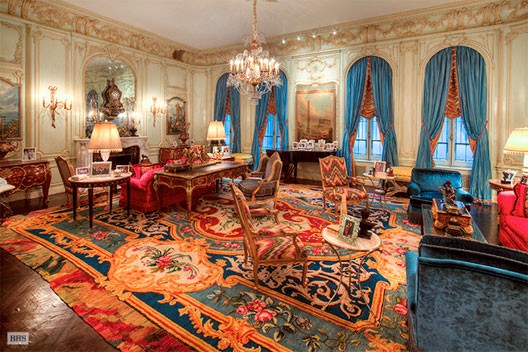
View of the $90 million dollar Woolworth mansion. (Image Credit: Curbed NY)
• Woolworth Mansion for Sale at $90 Million
The former Gothic-style townhouse once owned by Frank Woolworth (of the nickel and dime store) has recently been place on the market for the staggering asking price of $90 million dollars! Located on East 80th Street in NYC, the 18,000-square-foot mansion, now owned by Lucille Roberts (the fitness mogul), includes lavish amenities such as three kitchens, 10 bedrooms, an elevator, a library and 11.5 bathrooms. The massive complex, designed by famed architect Charles Pierpont Henry Gilbert, also includes 14-foot ceilings, seven floors, eight fireplaces, a gym and a suite for staff members. Roberts purchased the home in 1995 for $6 million but passed away in 2003 – which is why her family is looking to sell the opulent mansion. For those that can’t fork over the $90 million dollars, the home is also available as a rental for $210,000/month.
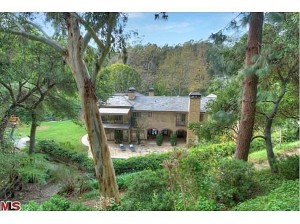
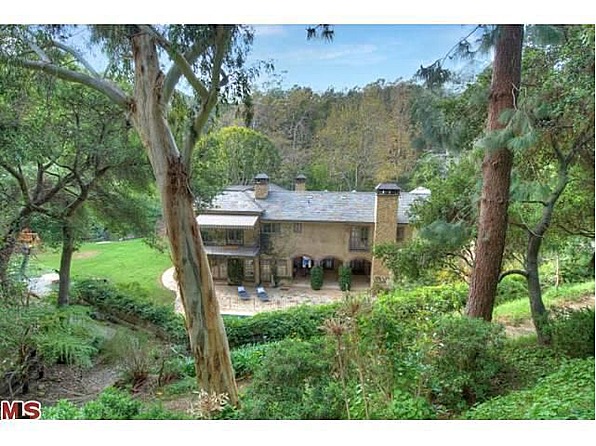
Exterior Shot of Dennis Quaid's Home - Listed for Sale at $16.9 Million. (Image Credit: Zillow.com)
• Dennis Quaid Lists Pacific Palisades Home for $16.9 Million
Famed actor and musician Dennis Quaid is reportedly selling his Pacific Palisades home for $16.9 million in order to relocate to Texas. The French-style home, purchased in 1999, has been completely renovated by Quaid and includes a guest house, three bedrooms, three bathrooms and a huge barn for several horses. The two-acre home also includes 8,400-square-feet of living space, a modern kitchen, an office, a pool and a wine cellar that is situated amidst a backdrop of sprawling trees and luscious greenery. If sold at $16.9 million, the home would average a profit of about 823.5 percent, according to Zillow.com.
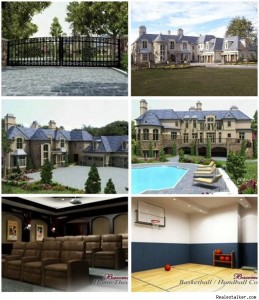
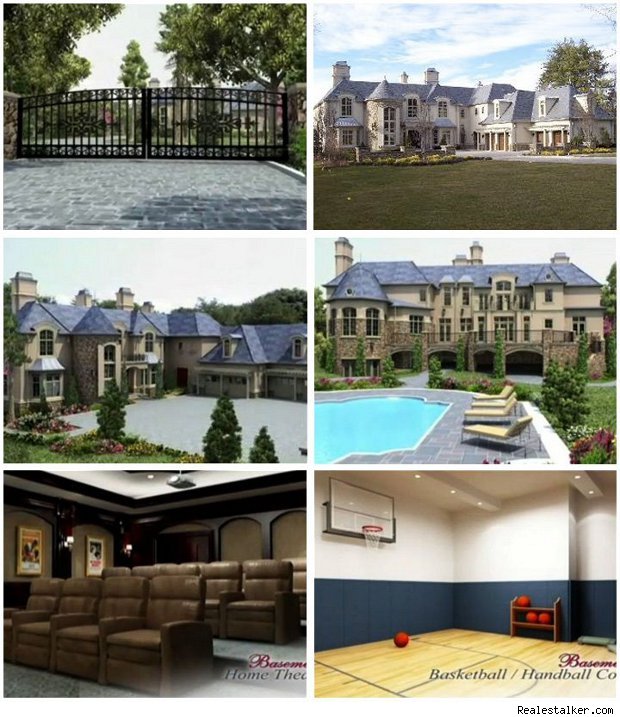
Pictures of Mary J. Blige's New Jersey Mansion - Listed for Sale at $13.9 Million. (Image Credit: Housing Watch)
• Mary J. Blige Lists New Jersey Mansion for $13.9 Million
Hip-hop mogul Mary J. Blige is reportedly looking to sell her New Jersey mansion for $13.9 million dollars. Located in Saddle River, New Jersey, the 25-room mansion features a gourmet kitchen, a movie theatre with 14 seats, a wine cellar, an indoor basketball court, a six-car garage and 18,250-square-feet of living space. The 4.2 acre house was originally listed at $17 million in 2008 and recently dropped to the current asking price.

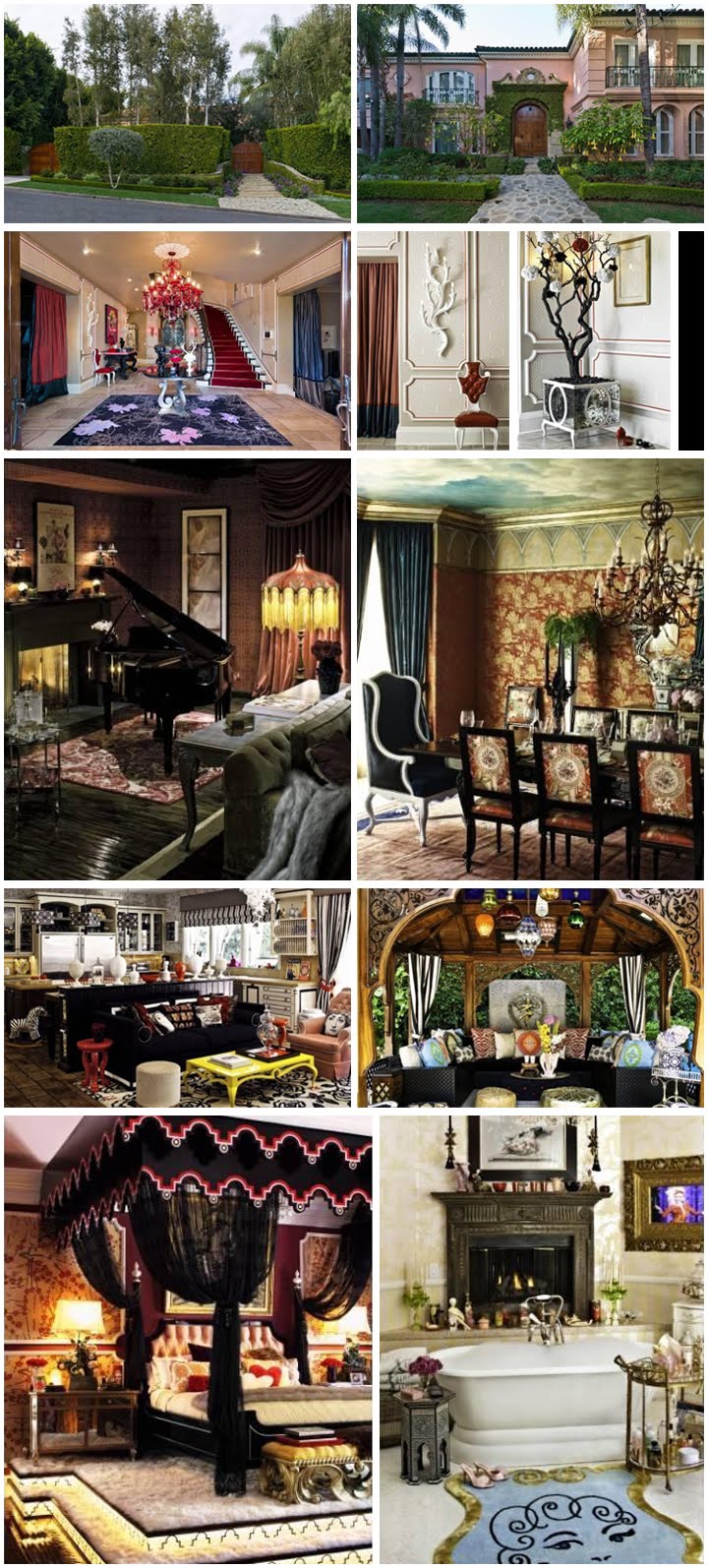
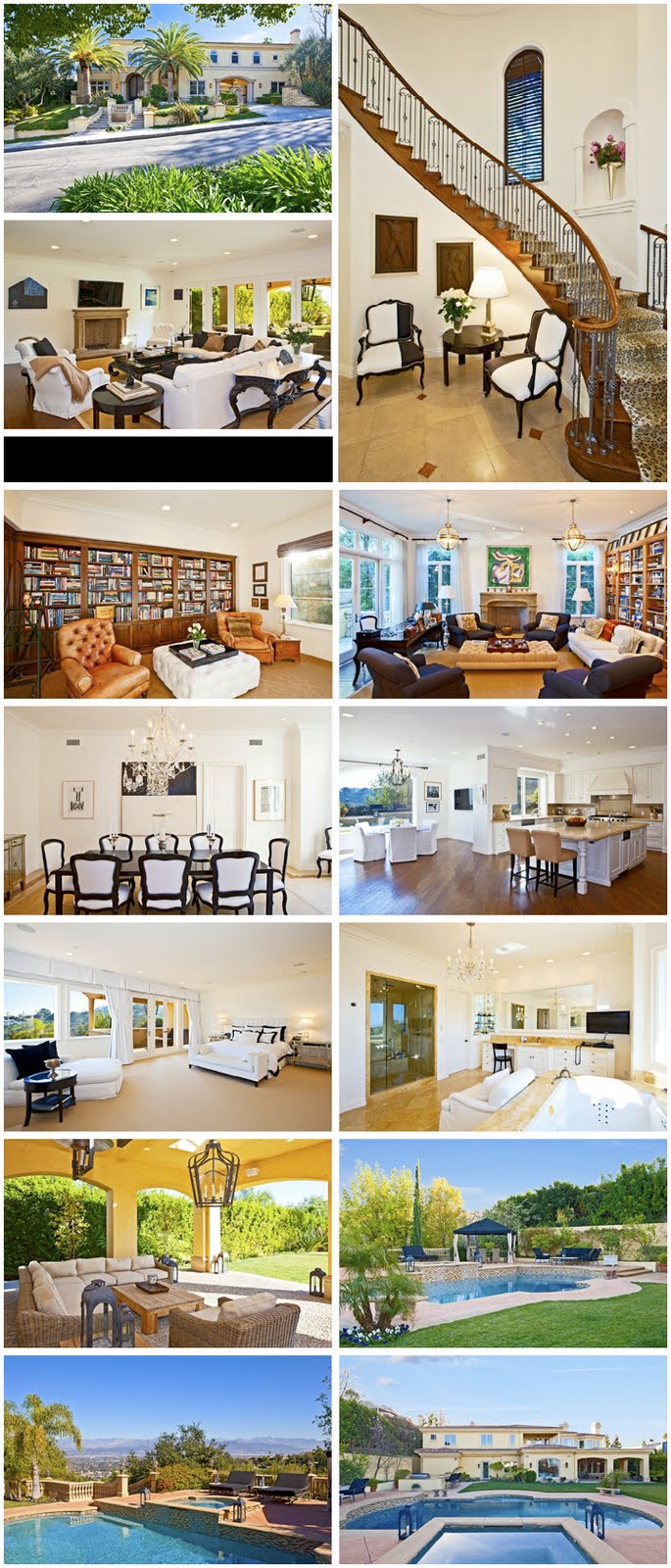
Christina Aguilera's Beverly Hills Mansion - Listed for Sale at $13.5 Million. (Image Credit: The Real Estalker)
• Christina Aguilera Places Beverly Hills Home on the Market for $13.5 Million
Pop singing sensation Christina Aguilera recently listed her Beverly Hills estate for $13.5 million. The 10,000-square-f00t home (once owned by the Osborne’s) includes six bedrooms, nine bathrooms, a formal living room, a home theater, a library, a recording studio and an in-home hair salon. The home also includes a massive backyard equipped with a pool, lounge and built-in barbeque area.
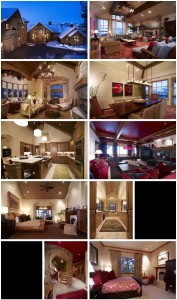
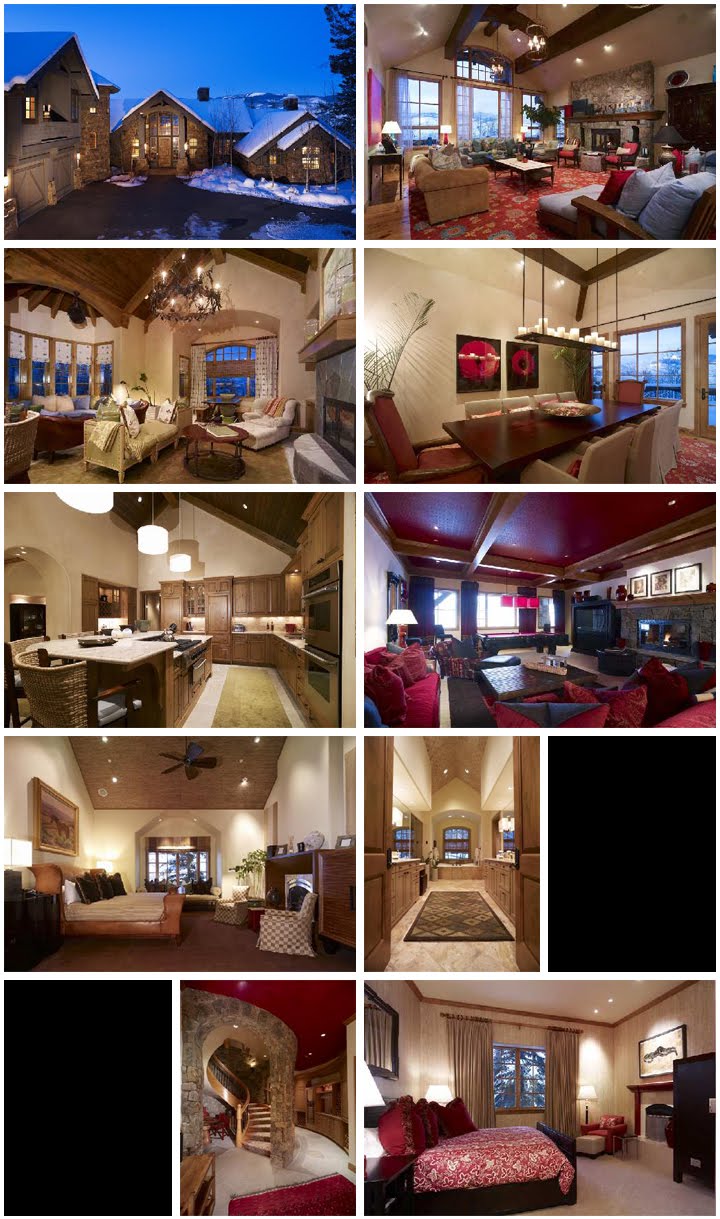
Kelsey Grammer's Colorado Ski Home - Listed for Sale at $7.9 million. (Image Credit: The Real Estalker)
• Kelsey Grammer Lists Colorado Ski Home for $7.9 Million
Kelsey Grammer of the hit shows “Cheers” and “Fraiser” recently listed his Avon, Colorado ski estate for $7.9 million. The recently divorced and remarried TV star is looking to sell this 8,230-square-f00t home as part of his settlement with Camille Grammer (of “The Real Housewives” fame). The gorgeous three-story vacation home includes six bedrooms, 7.5 bathrooms, stone fireplaces, a gourmet kitchen and a wine tasting room that is situated on 1.67 acres.
Don’t forget to like us on Facebook and follow us on Twitter!
• Follow us on Twitter @Relocation_News
• Become a fan of Relocation.com on Facebook
March 7th, 2011 by
Admin
Categories:
Celebrity Real Estate,
condos,
family moving,
foreclosures,
homes for sale,
House Swap,
International Moving,
Mortgages,
Moving,
Moving Day,
Moving Industry,
Moving with Kids,
Moving with Pets,
Packing,
Plan Your Move,
Plan Your Relocation,
Real Estate,
Relocation,
rentals Comments:
No Comments » The wacky and wild world of celebrity real estate did not disappoint this week. First, we have Charlie Sheen and his never-ending media circus has once again made the news – except this time it is within the real estate segment. He recently purchased a 9,020-square-foot mansion in Sherman Oaks, California that is reportedly for his ex-wife and their two children. On the rest of the Beat you will find homes listed on the market – ranging from Jennifer Aniston’s $42 million mansion to Julianne Moore’s $12.5 million dollar NYC townhouse. Those amounts are a bit out of our price range but we look forward to reporting on who the lucky buyers are. Stay tuned…

Charlie Sheen's New Mansion. (Image Credit: The Real Estalker)
• Charlie Sheen Buying a New Mansion
Much has been said about the drama involved around Charlie Sheen and his media circus and now he is making news within the real estate market with his recent purchase of a mansion in Sherman Oaks, California. Purchased for his ex-wife Denise Richards, the $7,495,000, 9,020-square-foot estate includes an elevator, six bedrooms, nine bathrooms, a library, a formal living room and a gourmet kitchen. The two-story gated home also includes a formal backyard with a swimming pool and spa.

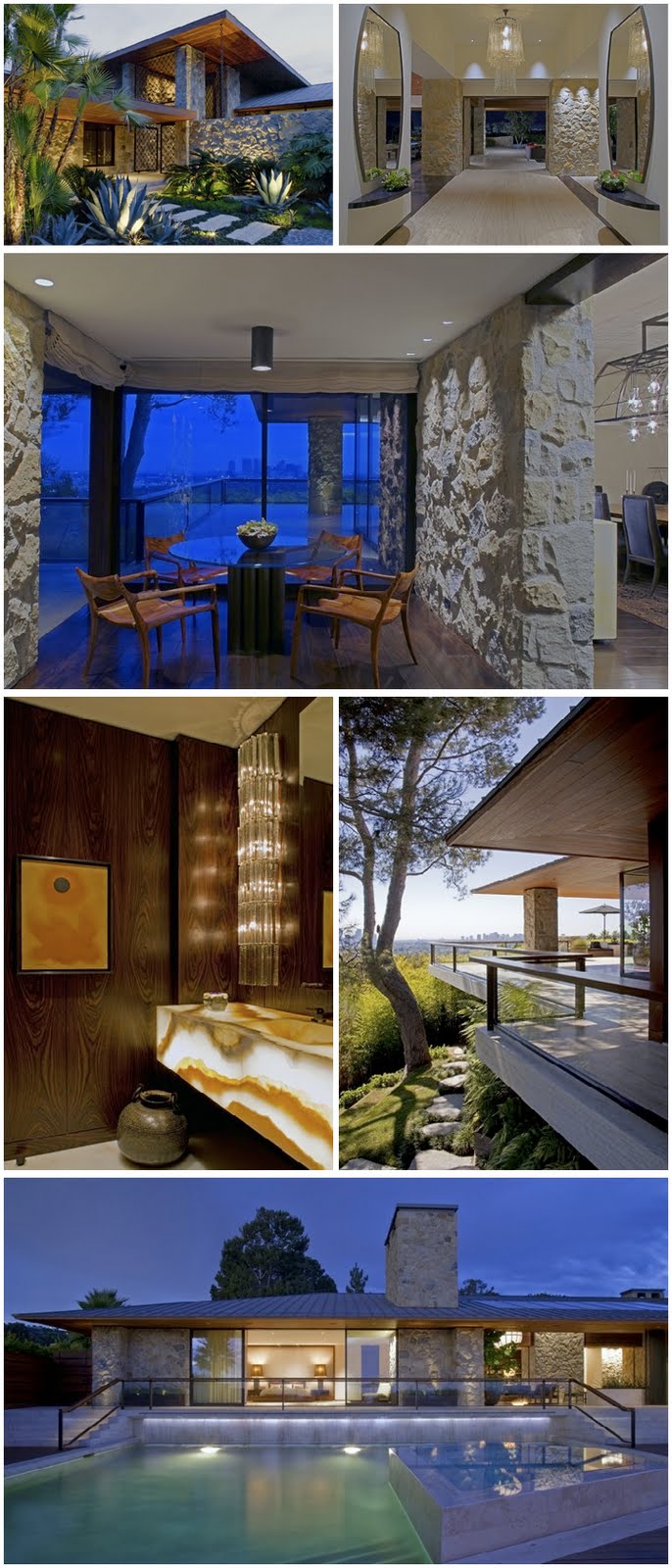
Jennifer Aniston Lists Beverly Hills Home. (Image Credit: The Real Estalker)
• Jennifer Aniston Lists Beverly Hills Mansion for $42 Million
Jennifer Aniston has recently been featured on the Beat as she has been scouring NYC for a new condo. No word yet on whether a home has been picked but there is news this week that she placed her Beverly Hills estate on the market. Listed at a whopping $42 million, the 10,000-square-foot Asian and Balinese-inspired home includes five bedrooms, 7.5 bathrooms, two living rooms, a gourmet kitchen and a home gym. The home is also said to include state-of-the-art smart house technology, an extensive security system, tons of storage space, a three-car garage and an outdoor swimming pool. Originally purchased in 2006 for $13,500,000, we’ll be sure to let you know who buys this luxurious (and expensive) property.
• Julianne Moore’s West Village Home is on the Market
Actress and children’s book author Julianne Moore originally listed her five-floor West Village townhouse for $11.995 million in 2009 – unable to find a buyer the home has been re-listed for $12.5 million. Built in the 1800s, the six-bedroom, 3 bathroom home, includes a gorgeous 49-foot garden, eat-in kitchen, a high-tech security system, a home office, media room and a laundry room.
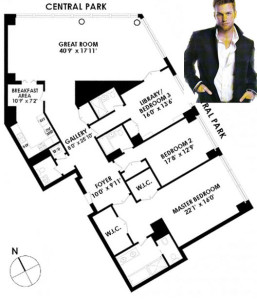
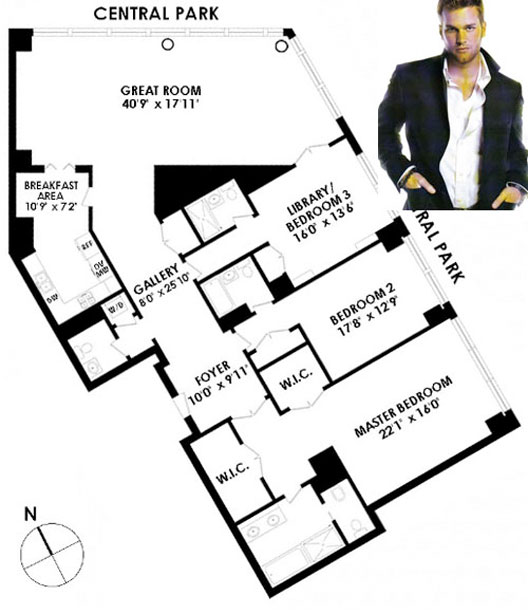
Tom Brady's floorplan. (Image Credit: Curbed NY)
• Tom Brady Selling Time Warner Center Condo
NFL star Tom Brady recently listed his three-bedroom condo for $14 million. Purchased in 2006, the condo, located in Time Warner Center, was then re-listed shortly after in 2007 where it has since been rented for $50,000/month. It has been reported by the Journal that the condo has a seller who is expected to enjoy a home with incredible light, oak flooring, a modern Chef’s kitchen with state-of-the art appliances, granite counter-tops and customized cabinetry.
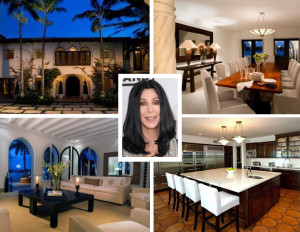
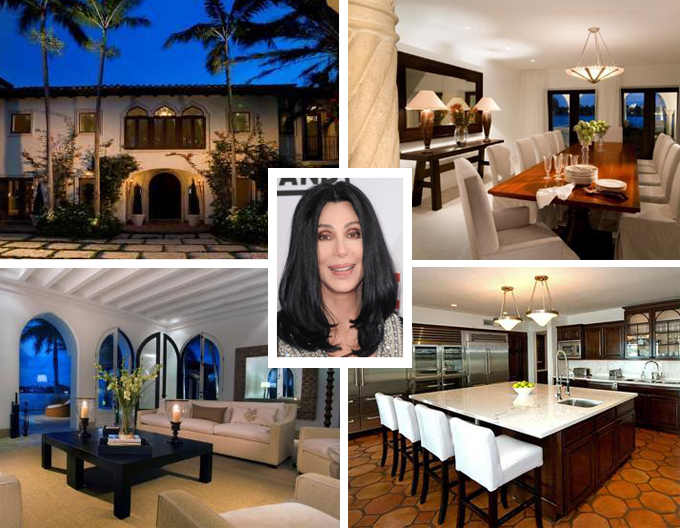
Cher's former home. (Image Credit: The Real Deal)
• Cher’s Former Home Reduced to $10.2 Million
The Gorce Island mansion home formally owned by Cher in the 1990s has recently listed has recently been to $10.2 million. Located off of Miami Beach, the luxurious 11,460-square-foot mansion, owned by investor Armin Mattli, includes upgrades of about $1 million dollars, a 60-foot pool, and 158-feet or water front. The three-story home also has six bedrooms, seven bathrooms and a two-story hall embraced with double staircases. Originally listed for $16.9 million in 2008 and then for $11.5 in July – making this recent drop at least 40 percent below the market price.
Don’t forget to like us on Facebook and follow us on Twitter!
• Follow us on Twitter @Relocation_News
• Become a fan of Relocation.com on Facebook
January 26th, 2011 by
Admin
Categories:
Celebrity Real Estate,
condos,
design and decorate,
Do It Yourself,
exterior projects,
foreclosures,
Home Improvement,
homes for sale,
House Swap,
interior projects,
Mortgages,
Moving,
Moving Industry,
Packing,
Real Estate,
Relocation,
rentals Comments:
No Comments » 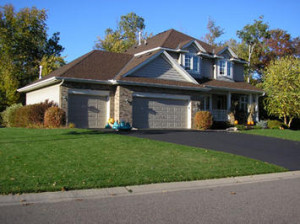
Moving to the city or the country? Read our detailed list about the pros and cons of both.
Transitioning Between the City and the Suburbs?: Here’s What You Need to Know about Making the Move
By Faith Teel
Special to Relocation.com
As the old saying goes, “The grass is always greener on the other side.” Whether you’re headed out to the wide-open spaces of the suburbs or moving into the exciting neighborhoods of the big city, you might find that you’ve gotten more than you’ve bargained for. Here are just a few examples of the things they don’t tell you in the advertisements.
Moving to the Suburbs
Long Commutes and Distant Stores – Many people move to the suburbs in search of more space to raise a family or grow a garden. Unfortunately, there is a flip side to having more space: everything is farther apart. Your commute will probably be longer, and you’ll have to drive, because most suburbs are too spread out to make public transportation cost-effective. In some places, it’s common to have an hour-long commute in each direction, which may mean 10 hours that have disappeared from your week.
The lack of public transport also means that you’re more likely to encounter the greatest terror to ever stalk the streets: the teenage driver. In cities, teens can often walk or catch the bus to socialize, but some suburbs are so spread out that a jog to the local coffee shop would be a three-hour marathon. Suburban teens usually get cars long before they get good judgment about driving them.
A Cultural Vacuum – One of the first things that urbanites miss when they move to the suburbs is the variety that cities offer. Many suburbs are extremely homogenous, with cookie-cutter houses and cookie-cutter restaurants. Even the people often seem the same, because few suburbs are economically or ethnically diverse. Don’t bother to look for museums, and feel lucky if a few of the chain restaurants offer take-out or delivery.
Where Are All the People? – The very privacy that you came looking for can also be your downfall in the ‘burbs,’ because everyone around you moved out here for privacy as well. With everyone so spread out, it can take a long time to meet new people.
Crime is Everywhere – Yes, there is usually more crime in the city, but the suburbs are not exempt from it. There’s lots of petty theft in suburbs, and there are still gangs and drug use in the high schools. Your kids are less likely to get mugged, but that doesn’t mean you should leave your doors unlocked at night.
The Grating Outdoors– One of the biggest surprises for ex-urbanites is the proximity of Mother Nature in the suburbs. If you’ve never had to mow a lawn or check the kids for ticks, you’re in for quite an experience.
Moving to the City
No Space – The city is an exciting place to be and a great place to find work, which is probably why you want to be there. Unfortunately, everyone else wants to be there too, and that drives up the price of real estate. If you want to live in a reasonably safe neighborhood, be prepared to pay through the nose for a tiny apartment.
For the same reasons, city parking is often impossible. People often sell their cars when moving to the city, which means you will have to rely on public transportation such as buses and cars.
Other People – Other people are everywhere in the city, and that can take some getting used to. Traffic is often worse, but the real nuisance is the noise, smells and constant crowds.
Goodbye, Mother Nature – It can be hard to get in tune with nature in the city. The parks are often crowded with other people (see above) and some may not even be located within a close distance to your home. If you manage to score a balcony or small yard with your apartment, keep in mind that the pollution can be hard on plants and trees. It’s also tough to keep animals in the city, especially big dogs that need room to roam.
School Roulette – In the city, it’s easy to get to know other parents, and you’ll need this advantage when it comes to getting your kids into a good school. In the suburbs, getting into the right school is usually a matter of buying a house in the best neighborhood. In the city, finding the right school is a combination of luck and strategy, and every city’s rules are different. You won’t even have to raise this topic at your kids’ next playdate, because it will be the first thing on every parent’s mind.
Abrupt Changes in Neighborhoods – With everything in the city so packed together, it can be hard to tell at first glance which neighborhoods are safe and which aren’t. In some cities, the transition from slum to swank can happen in just one block. The transient nature of a community’s character becomes more obvious over time. One day, you could wake up to discover that your edgy, artistic neighborhood has become a slum or a yuppie’s paradise.
Whether you’re searching for greener grass in Levittown or the Big Apple, one thing is certain: you’re sure to need some time to adjust. Before you make the jump, take a little bit of extra time to explore the community that you’re moving to. No two cities are alike, and the same is true for suburbs, so if you don’t like what you see, look elsewhere. The quality of your life depends on it.
January 12th, 2011 by
Admin
Categories:
Celebrity Real Estate,
condos,
foreclosures,
homes for sale,
House Swap,
Mortgages,
Moving,
Real Estate,
Relocation,
rentals Comments:
No Comments » By Serena Norr
California was a hot real estate destination on this weeks Beat. From Jack Black to Lindsay Lohan to Orlando Bloom to Drew Barrymore it seems that everyone was either buying or selling or placing their homes up for rent in Cali. Not only homes, this week it was reported that a massive yacht – 193-feet to be exact – was purchased by Google’s co-founder Larry Page. According to the New Zealand Herald, Page reportedly spent $45 million for his luxury liner that comes equipped with a fitness and massage room, on-deck Jacuzzi and a helicopter landing pad. Until next week…
• Jack Black Purchases Home in California for $5.9 Million
According to the LA Times, actor Jack Black recently purchased Flea’s (from the Red Hot Chili Peppers) California home for $5.965 million. The Los Feliz-area home includes seven bedrooms and three bathrooms, along with solar panels, a pool, a motor home and 6,500-square-feet of living space.
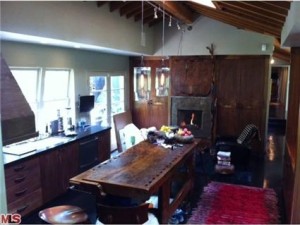
Image of Orlando Bloom's Home - Renting for $18,000/a month. (Image Credit: The Luxist)
• Orlando Bloom List Hollywood Home for Lease
English actor Orlando Bloom recently placed his Hollywood Hills Home up for rent for $18,000 a month. The private and gated estate, situated on a hill includes 3/4 of an acre of gardens, an outdoor pool, spa and a gourmet kitchen fitted with custom cabinets. The home, purchased for $2.75 million in 2007, also includes four bedrooms, four bedrooms, including a master suite with a large walk-in closet that overlooks the pool and 3,200-square-feet of living space that sits on a spacious three-quarter-acre lot.
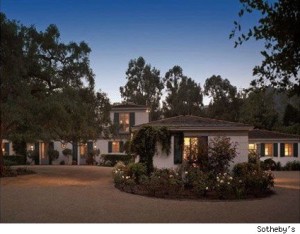
Exterior shot of Drew Barrymore's new home - Purchased for$5.7 million.
• Drew Barrymore Buys Home New Home in California
Actress Drew Barrymore recently purchased a two-plus acre estate in Montecito, California for $5,705,000 (originally listed for $6.9 million). The Monterey Colonial style mansion includes six full-sized and two half bathrooms, five bedrooms, three fireplaces, a two-car attached garage and a guesthouse. Encompassing 6,000-square-feet, the traditional L-shaped mansion also includes a formal dining room with walnut flooring, a library and an outdoor area with a gorgeous garden and backyard terrace.

Massive yacht purchased by Larry Page for $45 million. (Image Credit: Housing Watch)
• Google Co-Founder Larry Page Buys 193-Foot Yacht
According to the New Zealand Herald, Larry Page, the co-founder of Google recently purchased a 193-foot yacht called the Senses for $45 million. The massive white boat or what some may call a ‘floating mansion,’ includes indoor and outdoor dining areas, an office, a fitness and massage room and an on-deck Jacuzzi. The Senses can also fit 14 crew members and 10 guests and includes a helicopter landing pad. Page, who lives in Palo Alto, also owns a 8,149-square-foot mansion with six bedrooms and four full-sized bathrooms that he purchased for $6,800,000.
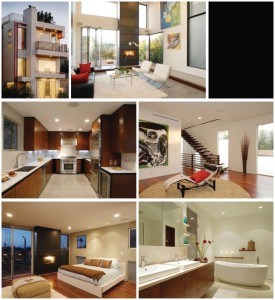
Images of Lindsay Lohan's new Venice rental - Listed at $17,000/a month. (Image Credit: The Real Estalker)
• Lindsay Lohan Rents at the Beach
Actress Lindsay Lohan (who was also recently released from the Betty Ford clinic), scored a new rental in Venice for $7,100 per month. The modern 3,100-square-foot high-rise home includes four bedrooms and 3.5 bathrooms that also includes a steel fireplace, huge windows and a modern kitchen with mahogany cabinets.
Don’t forget to like us on Facebook and follow us on Twitter!
• Follow us on Twitter @Relocation_News
• Become a fan of Relocation.com on Facebook
November 24th, 2010 by
Admin
Categories:
Celebrity Real Estate,
condos,
foreclosures,
Home Improvement,
homes for sale,
Mortgages,
Moving,
Plan Your Move,
Plan Your Relocation,
Real Estate,
Relocation,
rentals Comments:
No Comments » 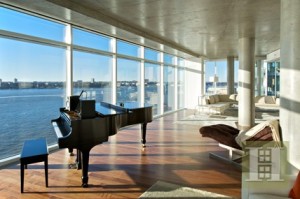
Nicole Kidman's Living Room - Listed for Rent at $45,000/month. (Image Credit: Luxist)
By Serena Norr
Although T-Day has been on our brain, the real estate industry isn’t far behind – especially within the exciting world of celebrity real estate. This week, Nicole Kidman listed her NYC penthouse for rent at a whopping $45,000/month. For those that fork over the bucks, you can look forward to leasing a glass-filled living room and a space with three bedrooms, 3.5 bathrooms and 3,785-square-feet of living space. Fashion director, Nina Garcia, is also on the Beat this week for placing her NYC condo on the market for $8.5 million dollars. This pre-war two-unit duplex includes 3.5 bathrooms, 12-foot-tall windows and a washer and dryer. Chelsea Handler and Jonah Hill also made an appearance on the Beat for buying homes in California with price tags of $6 million and $ 2 million, respectively. Whether you live a McMansion or an apartment, your home is only as important as those you enjoy it with you. Happy Thanksgiving!

Nicole Kidman's Living Room - Listed for Rent at $45,000/month. (Image Credit: Luxist)
• Nicole Kidman Renting Her NYC Pad
Actress Nicole Kidman recently placed her Perry Street apartment up for rent. Asking price? $45,000 per month, which even for NYC is a bit ridiculous! Kidman and her husband, Keith Urban, won’t have to worry about their real estate issues that long – they recently purchased a new luxury penthouse at 200 11th Avenue that comes complete with a sky garage – a car elevator that is accessible by a lift to one’s apartment complex. For anyone that can afford the rental on the Perry Street, they can look forward to having 3,785-square-feet, three bedrooms and 3.5 bathrooms – not to mention a glass-filled living room (designed by Richard Meier) that stretches the full width of the apartment, including views of the West Side Highway and the Hudson River. Kidman and Urban also own homes in Sydney, Nashville and in Beverly Hills.
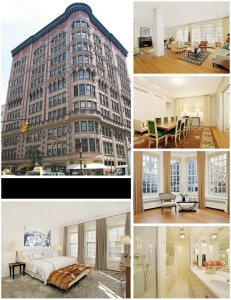
Nina Garcia's NYC Condo for Sale - Listed at $8.5 Million. (Image Credit: The RealEstalker)
• Fashion Director Nina Garcia Lists NYC Condo for $8.5 Million
Nina Garcia, fashion director and “Project Runway” judge recently listed her four-bedroom NYC two-unit condo for sale at $8.5 million. Located on East 66th street, the condo was originally purchased for $3,700,000 for one-unit and then $1,221,900 for an adjacent unit to create a two-unit condo. Located in a pre-war building, interested buyers will have to put down 50 percent of the asking price and expect to pay $4,080 in monthly maintenance charges. The condo also includes 3.5 bathrooms, 12-foot-tall windows, 11.5-foot tall ceilings, a large living room, a doorman, chandeliers, a washer/dryer and a kitchen with modern appliances such as the brands Subzero and Gaggenau appliances.
• Martha Stewart Drops Price on Home from $15.9 Million to $13.9 Million
According to Housing Watch.com, Martha Stewart recently lowered the price of her Perry Street penthouse from $15.9 million to $13.9 million. Another Richard Meier-designed apartment, Martha Stewart’s lower Manhattan pad includes 5,000-square-feet of living space, an on-site fitness center and 11-foot-high windows.

Chelsea Handler's New Home - Purchased for $6 Million. (Image Credit: The RealEstalker)
• Chelsea Handler Buys $6 Million Dollar Home
Chelsea Handler, host of “Chelsea Lately” and author recently purchased a 5,600-square-foot home in Bel Air, California for almost $6 million (she paid $5,942,500). Her electronically-controlled gated home includes 5,572-square-feet of living space, an outdoor kitchen with Viking appliances, a gym, six bedrooms and seven bathrooms. There is also two family rooms, a den and a backyard with a 50-foot pool, a raised spa and an outdoor fireplace.
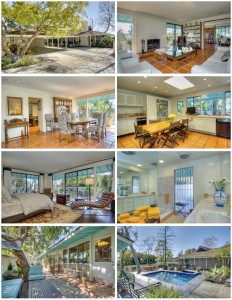
Jonah Hill's New Hollywood Compound - Purchased for $2 Million. (Image Credit: The RealEstalker)
• Jonah Hills Buys Los Angeles Compound for Under $2 million
Jonah Hill of “Superbad” and “Get Him to the Greek” recently purchased a new home in Los Angeles for $1,865,000. The new estate, built in 1959, includes 3,660-square-feet of living space, four bedrooms, 4.5 bathrooms, a storage room, a children’s playhouse and a detached guest house with a private bathroom. Other amenities include a fireplace, a sky lit kitchen with modern appliances and a modern suite that overlooks the swimming pool.
By Serena Norr
It’s a spooky edition of The Celebrity Beat. These famous haunted houses will thrill and shock you with their ghastly tales. Don’t be too scared, after all these are just homes, right?
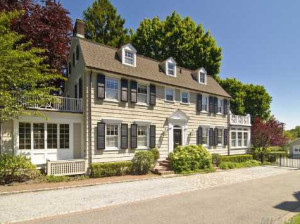
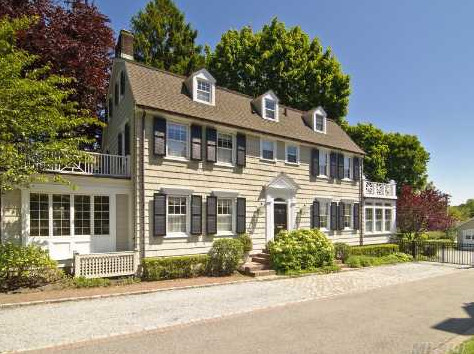
The Amityville House - (Photo Credit: Zillow.com)
1. The Amityville Horror House
Location: 108 Ocean Avenue, Amityville, New York
This haunted abode inspired by a book of the same name and five movies is often considered one of the scariest houses in America. Though we can’t say if it is haunted or not, the home located in Amityville, New York, was the scene of the horrific murder where Ronald DeFeo Jr. shot his parents and four siblings in 1974. Later sold to the Lutz family in 1975 who left after only living in the house for 28 days citing that they saw “slime oozing down walls, furniture moving, swarms of flies in the dead of winter and slamming doors,” as stated on Zillow.com. It was recently sold again (after only being on the market for 70 days!) for $1.15 million to a retired couple who states that the scariest thing about the house is the onlookers that visit it.
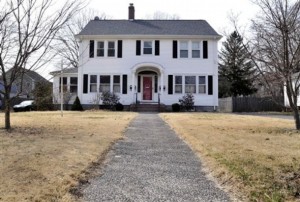
The Haunting in Connecticut House - (Photo Credit: AP Photo/Jessica Hill)
2. The Haunting in Connecticut House
Location: 208 Meriden Ave, Southington, Connecticut
Dubbed the Amityville of Connecticut, this former funeral parlor, located in Southington, was converted into multiple family apartments in the 1980s. In 1986, a New York family called the Snedeker’s moved into the house and began seeing demons — “one with high cheekbones, long black hair and pitch black eyes and another that wore a pinstriped tuxedo whose feet were constantly in motion,” according to the Daily Beast. The family also reportedly noticed foul smells, heard unexplained noises and personality changes in their eldest son, Philip, who started dressing and talking differently. The Snedeker’s later recruited Ed and Lorraine Warren (also involved in researching the Amityville). They reportedly had an exorcism that cleared the home of its ghosts in 1988. This story was later adapted into a movie in 2009 called The Haunting in Connecticut.
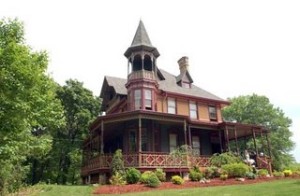
The Kresiher Mansion - (Photo Credit: http://prodigalborough.com)
3. The Kreischer Mansion
Location: 4500 Arthur Kill Road, Staten Island, New York
A prolific brick-supplier in the 1800s, the Kreischer family built two Victorian-style homes in Staten Island for the family- one home for the parents and the second, located on a secluded hilltop, was for their son. Shortly after the second home was built, the son, Edward Kreischer, shot himself and the house later mysteriously buried down. It is believed that the home is haunted by the son and his wife where guests have heard noises and doors banging. In 1996, the home was converted into a restaurant where guests and workers heard noises and doors slamming.
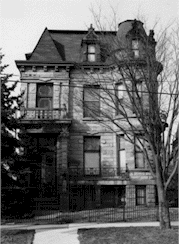
The Franklin Castle - (Photo Credit: www.prairieghosts.com)
4. The Franklin Castle
Location: 4308 Franklin Boulevard, Cleveland, Ohio
Considered the most haunted house in Ohio, the Franklin Castle, the home was built in 1865 by Hannes Tiedemann for his family. Over three years in the house, three of Tiedemann’s children died as well as well as his mother. Since his wife, Luise, was haunted by the family tragedies Tiedemann decided to expand the home to take her mind of the strange deaths. The additions included secret passageways, secret rooms, and hidden doors. Following Tiedemann’s death in 1908, it was reported that these secret rooms were not only a clever construction project. Here, he reportedly killed his niece by hanging her and is believed to have murdered a young servant girl. Additionally, a future homeowner found dozens of human baby skeletons in some of the secret rooms. Those that have lived or stayed in the home reported that they have heard strange sounds in the home like a women chocking, babies crying, organ music and footsteps. Currently, the home is dormant but it is reportedly being converted into a tourist attraction.
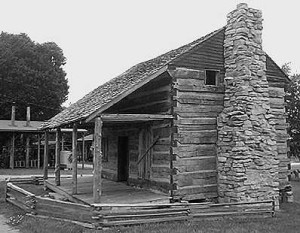
The mysterious Bell Witch Cabin - (Photo Credit: www.bellwitch.org)
5. Bell Witch House
Location: Adams, Tennessee
It is reported that the Bell family resided in this home in the early 1800s and started to hear strange noises. The youngest daughter, Betsy, also began to feel a gnawing like an invisible rat and the parents said they started having their blankets pulled over their heads. The Bell children also woke up with bruises on their face when the father decided to seek help. The community soon learned about the haunting and wanted to talk to the “witch” where it was reported that something from the house spoke in a husky whisper who said she was Kate Batts. As the years went on the Bell family continued to live at the house – where the witch apparently continuously beat and caused havoc to the Bell’s. Charles Bell, one of the brothers, even wrote a record of the haunting called in 1935 The Bell Witch: A Mysterious Spirit, or Our Family Troubles.
If you have any questions, comments or inquires, please contact me at editorial@relocation.com.
October 6th, 2010 by
Admin
Categories:
Celebrity Real Estate,
condos,
design and decorate,
Do It Yourself,
foreclosures,
Home Improvement,
homes for sale,
Insurance,
Mortgages,
Moving,
Moving Industry,
Packing,
Real Estate,
Relocation,
rentals Comments:
No Comments » By Serena Norr
We never know what to expect when we research the celebrity housing market for the Beat. This week we were excited to learn that Steve Jobs was finally given the go-head to start the demolition of the historic property he owns called the Jackling House. The demolition, which took six years to approve, will involve the construction of a smaller and more contemporary space — simplifying the home and tearing down its 30 rooms that will reportedly cost Jobs $8.45 million to complete. This week, we also discovered that Larry the Cable Guy’s home was placed on the market. Listed for $1.55 million and developed by the “Git-r-done” comedian, the Florida log-style home includes a “man cave” with a pool table, TV, mini-bar and bar signs as well as a pool and a spa. Acting couple, Naomi Watts and Liev Schreiber are also on the Beat this week. They placed their 4,410-square-foot Los Angeles home on the market that includes an on-site gym, a two-story guest house and six-bedrooms. We look forward to what next week brings…and the (unexpected) real estate news that follows.

Floor plan of Steve Jobs' new home -Expected construction costs: $8.45 million. (Photo Credit: Gizmodo)
• Steve Jobs’ Construction Plans Revealed
Steve Jobs, the multi-billionaire and CEO of Apple finally received the go-ahead to renovate the historic Jackling House. The 17,000-square foot, 30-room Spanish Colonial home, built for copper baron Daniel Jackling, is owned by Jobs but he has been unable to complete or even start his plans for a full-on demolition and remodel. Architectural preservationists stated that the home was an historic piece of real estate and shouldn’t be demolished. Finally in July of 2010, the preservationists’ dropped their case but some elements of the house such as an organ, flag pole and decorative tiles are being removed and preserved. The newer and more contemporary home plans was reveled on Gizmodo – showing the elaborate floor plan created by Bohlin Cywinski Jackson – the design firm responsible for several Apple stores. The new floor plan indicates a smaller home – measuring at 4,190-square-feet – that will include five bedrooms and 3.5 bathrooms. The new design also indicates that there are plans to build a three-car garage, a pool with a pool house and a third building for an office. Additionally, among the six acres of land there are plans to add various plants and flowers, stone walkways and a private vegetable garden – a diminutively simpler home than the former grandiose estate. It is estimated that the home will be completed in 22 months.

Naomi Watts and Liev Schreiber's home - listed for $5,995,000. (Photo Credit: The Real Estalker)
• Naomi Watts and Liev Schreiber List Brentwood Home
Actor couple Naomi Watts and Liev Schreiber recently placed their Los Angeles home on the market for $5,995,000. The 4,410-square-foot, two-story home includes six bedrooms and 4.5 bathrooms; a two-story guest room; an on-site gym; a two-car garage and a gated and secured entry way. The European-inspired home also includes several fireplaces, an eat-in kitchen, formal dining room, a swimming pool and circular spa. The couple also owns a 2,900-square- foot condo in New York.

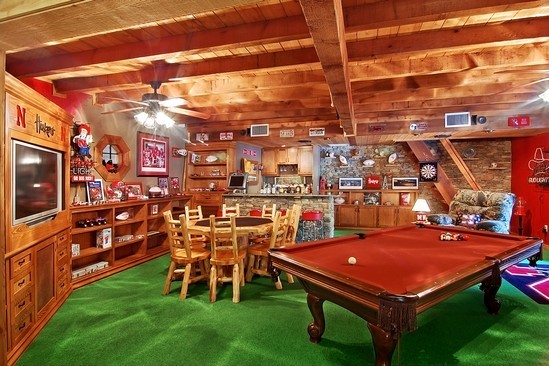
You, too, can have your own personal "man cave" if you buy Larry the Cable Guy's home - listed at $1.55 million. (Photo Credit: Housing Watch)
• Larry the Cable Guy Places Florida Home on the Market
Comedian Dan Whitney aka Larry the Cable Guy known for the catchphrase “Git-r-done” recently placed his Sanford, Florida home on the market for $1.55 million. The five-bedroom home, situated on 18.79 acres, includes a lot of interesting details that Whitney himself renovated. There is a “man cave” that includes a poker and pool table, mini-bar, TV and bar signs as well as an outdoor movie theater, a pool with a waterfall, an outdoor spa, detached gym and two children’s rooms with personal murals. Whitney sited outgrowing the home as the reason for the sale.
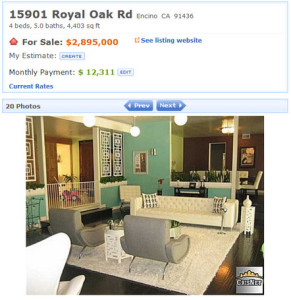
Scott Baio's home - sold for$2.5 million. (Photo Credit: Zillow.com)
• Scott Baio Sells Encino, California Home
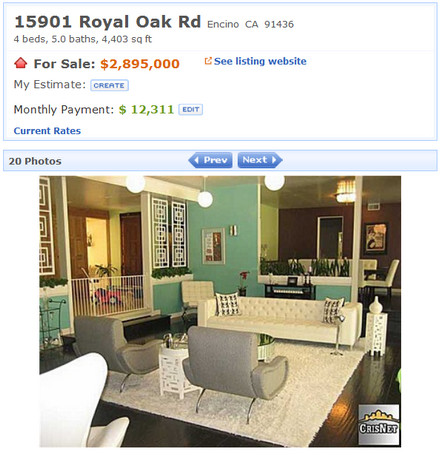
Actor Scott Baio recently sold his “Spectacular Celebrity Owned Estate!” to an undisclosed buyer for $2.5 million. Built in 1964, the new buyer can look forward to enjoying 4,400-square-feet of living space, three fireplaces, four bedrooms and 4.5 bathrooms. The Encino, California home also includes a swimming pool with a hot tub, a tennis court, a koi pond, a formal living and dining room and a sprawling back yard with luscious greenery and gardens.
September 29th, 2010 by
Admin
Categories:
Celebrity Real Estate,
condos,
design and decorate,
foreclosures,
Home Improvement,
homes for sale,
Mortgages,
Moving,
Plan Your Relocation,
Real Estate,
Relocation,
Relocation Data,
rentals Comments:
No Comments » By Serena Norr
Pricey real estate listings seem to be theme in this edition of “the Celebrity Beat.” Starting with Candy Spelling’s mega-mansion — a 14-bedroom, 27-bathroom home that has been on the market since 2009 and recently placed on the multiple listing services (MLS). Asking price? A cool $150 million, which her lawyer recently stated “is not a lot for the home.” Another expensive property we noticed this week was the sale of the Olsen twins’ NYC penthouse. On the market since 2005, the home was listed for $11 million in 2007 that was finally sold to a property developer for $8.4 million. Meg Ryan is also in city, but as a renter. She is reportedly leasing an apartment in Soho for $25,000 a month while her home in California is on the market. Well, all of these millions are making us realize that we have a lot to save in our piggy banks before we can purchase a home – much less a million-dollar one. Until next week…
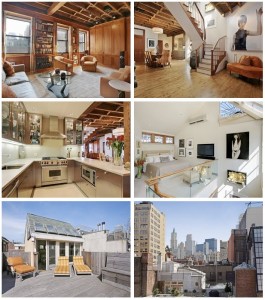
Katy Perry and Russell Brand's New Penthouse - Sold for $2.9 million. (Photo Credit: The RealEstalker)
• Katy Perry and Russell Brand Purchase Home in NYC for $2.9 Million
Pop singer Katy Perry and her fiancé comedian Russell Brand (of “Take Him to the Greek”) recently purchased a 1,500-square-foot duplex in TriBeCa. This luxurious and renovated two-bedroom, two-bathroom penthouse cost the pair $2.9 million that RealEstalker describes as an “oddly shaped.” The modern penthouse includes the standard real estate amenities like built-in bookcases, stainless steel appliances, large windows, exposed beams and high ceilings. The penthouse also includes a gorgeous cherry wood staircase that leads up to the master suite — that is lacking a closest. The lack of storage space probably doesn’t bother the couple that will spend most of their time in their recently purchased 4,706-square-foot house in Los Angeles.
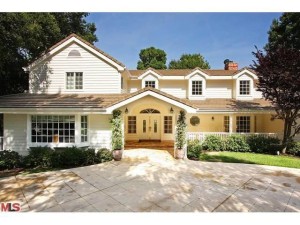
Angie Harmon and Jason Sehron's Home - Listed for $3.9 million. (Photo Credit: Zillow.com)
• Angie Harmon and Jason Sehron List Home for $3.9 Million
Actress Angie Harmon and her husband Jason Sehorn have recently placed their Hidden Hills, California home on the market for $3.9 million. The real estate listing describes this Cape-Cod style home as a “pastoral setting with no nearby sidewalks and street lights” that is also located near equestrian trails. Purchased in 2005, the 6,872-square-foot home sits on 1.5 acres of land that includes a pool, an office, hardwood flooring, five bedrooms and 4.5 bathrooms. To match its natural setting, the home includes a barn, a sprawling lawn and a tree-lined driveway.
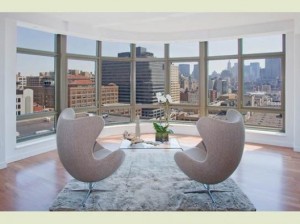
1 Morton Square - Former home of Mary Kate and Ashley Olsen - Sold for $8.45 million. (Photo Credit: Curbed NY)
• Olsen Twins Sell West Village Penthouse for $8.45 Million
Michelle Tanner better known as Mary Kate and Ashley Olsen recently sold their five-bedroom NYC penthouse for $8.45 million (that “Full House” franchise sure did them well.) The 5,700-square-foot penthouse – located at 1 Morton Square – has been on the market since 2005 that was listed in 2007 for $11,995,000 that has finally found a buyer with property developer Bruce Eichner for a lowered, but still expensive price tag.
• Meg Ryan Renting NYC Apartment for $25,000 a Month
According to Housing Watch, America’s former sweetheart, Meg Ryan, is now renting an apartment in Soho. This rental agreement will have Ryan paying $25,000 a month for a three-bedroom, 3.5 bathroom unit. This place, though, isn’t a typical rental – it includes 2,500-square-feet of living space, a private bar and lounge, an on-site pool, sauna that is housed in a glass building.

Candy Spelling's Mega-Mansion - Listed for $150 million. (Photo Credit: The RealEstalker)
• Candy Spelling Places Home on the Market for $150 Million
Candy Spelling, wife of the late Aaron Spelling, recently placed her California mega-mansion on the MLS for $150 million. Dubbed “the Manor,” the four-floor home, located in the posh Holmby Hills, includes 14 bedrooms, 27 bathrooms (!) and 56,500-square-feet of living space. On the market since 2009, Spelling recently placed it on MLS in hopes of a sale but did not lower the price — with a response from her lawyer stating that “this is not a lot for the home” [Wall Street Journal]. Of course for a $150 million-dollar home there has to be extras and this estate has plenty. Amenities like a billiard room, arcade room, doll museum, a bowling alley, an art studio, a tennis court, a personal gym and a 16-car garage are just some of the extras found in this mega mansion. Spelling also reportedly purchased a-yet-to-be-completed penthouse in Century City where she is looking to downsize, which to Spelling is a $47 million dollar condo with 16,500-square-feet of living space. Spelling will customize the condo with her own architects and designers that is expected to be completed in two years.



Ricky Martin's luxurious living room - listed at $18.9 million. (Photo Credit: Zillow.com)
By Serena Norr
Part gossip report part real estate news, this week on the Beat we are reporting on Tiger Woods and his search for real estate in NYC as well as Alex Rodriguez and Cameron Diaz who are looking for a pad in the same city that never sleeps. In California, T.R. Knight (of “Grey’s Anatomy”) is also looking to relocate to NYC, but first he has to sell his 4,160-square-foot Los Angeles home. Amy Adams, though, is staying in LA and recently purchased a 3.5 bedroom home in Beverly Hills that is the perfect size for her and her new baby.

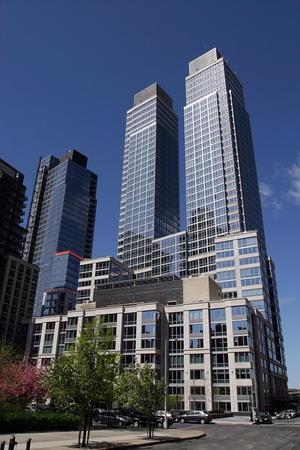
The Aldyn - the luxury condo that Diaz and Rodriquez are reportedly checking out. (Photo Credit: NYPost)
• A-Rod and Diaz Looking for a Pad in NYC
Alex Rodriguez and his main squeeze of the moment, Cameron Diaz, are currently looking for a luxurious apartment in NYC. According to the NY Post, Rodriguez and Diaz were reportedly spotted checking out a 5,600-square-foot duplex called the Aldyn. Situated along the West Side Highway, the six-bedroom condo includes a huge terrace overlooking the Hudson River, a private swimming pool, a hot tub, a squash court, bowling alley and climbing wall and a Kidsville, an indoor playground for children.
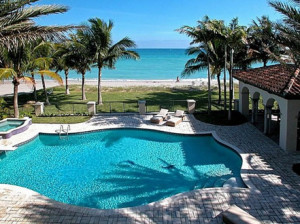
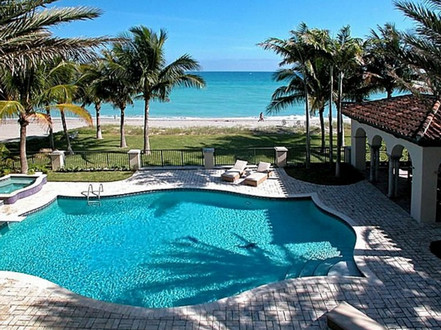
Ricky Martin's pool - this Golden Beach estate is listed at $18.9 million. (Photo Credit: Zillow.com)
• Ricky Martin’s Home on the Market
Ricky Martin, the 90’s pop sensation, has been trying to sell his this 9,882-square-foot Mediterranean-style estate since 2007 that is now back on the market for $18.9 million. This two-story Golden Beach, Florida estate is located on a private and secure beach community – about 12 miles north of Miami Beach – that includes five bedrooms with a master suite, seven bathrooms, a walk-in closet, a five-car garage, a media room and a terrace with views of the ocean.
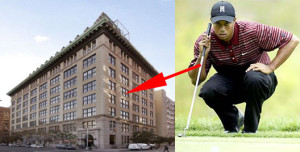
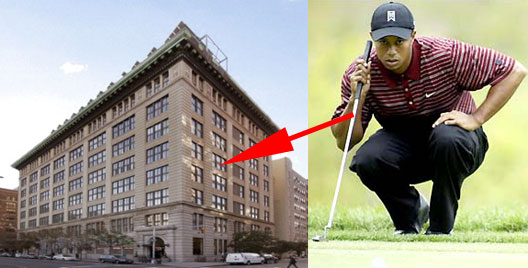
Tiger Wood's new pad in NYC. (Photo Credit: Curbed NY)
• Tiger Woods Looking to Score (A New Apartment)
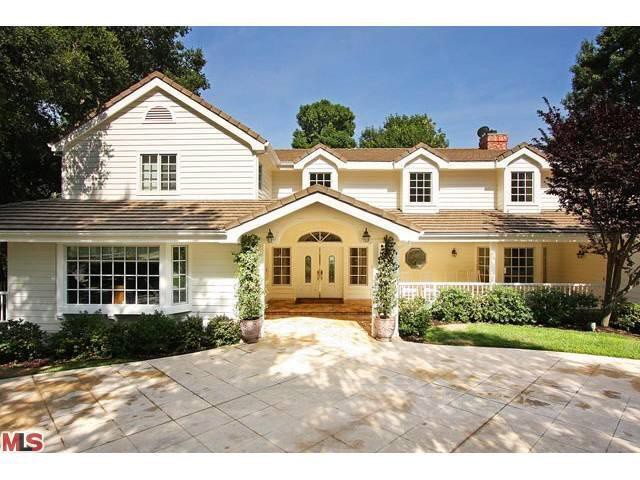
Infamous for his skills as a pro golfer and most recently for his well-publicized divorce, Tiger Woods is back in the news but this time it involves his search for an apartment in NYC. Woods is currently scouting out a condo on Hudson Street called the Printing House — a 19th-century commercial building that was converted into condos in the late 1970s. Described as an “Italian-Renaissance-palazzo-style” reports have been unclear as to which unit Woods is interested in, but a $5,200/month two bedroom, two bath unit was recently sold where reports have speculated that Woods was the buyer. This unit includes hardwood flooring, high ceilings, a walk-in closet, dishwasher, central air and a personal gym. Woods can also look forward to having a building with a doorman, a concierge, a pool, a sundeck, video security and valet service.
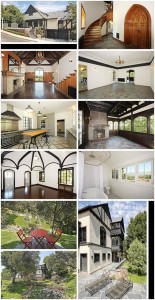
T.R. Knight's home - listed at $3.9 million. (Photo Credit: The Real Estalker)
• T.R. Knight’s Home on the Market for $3.9 Million
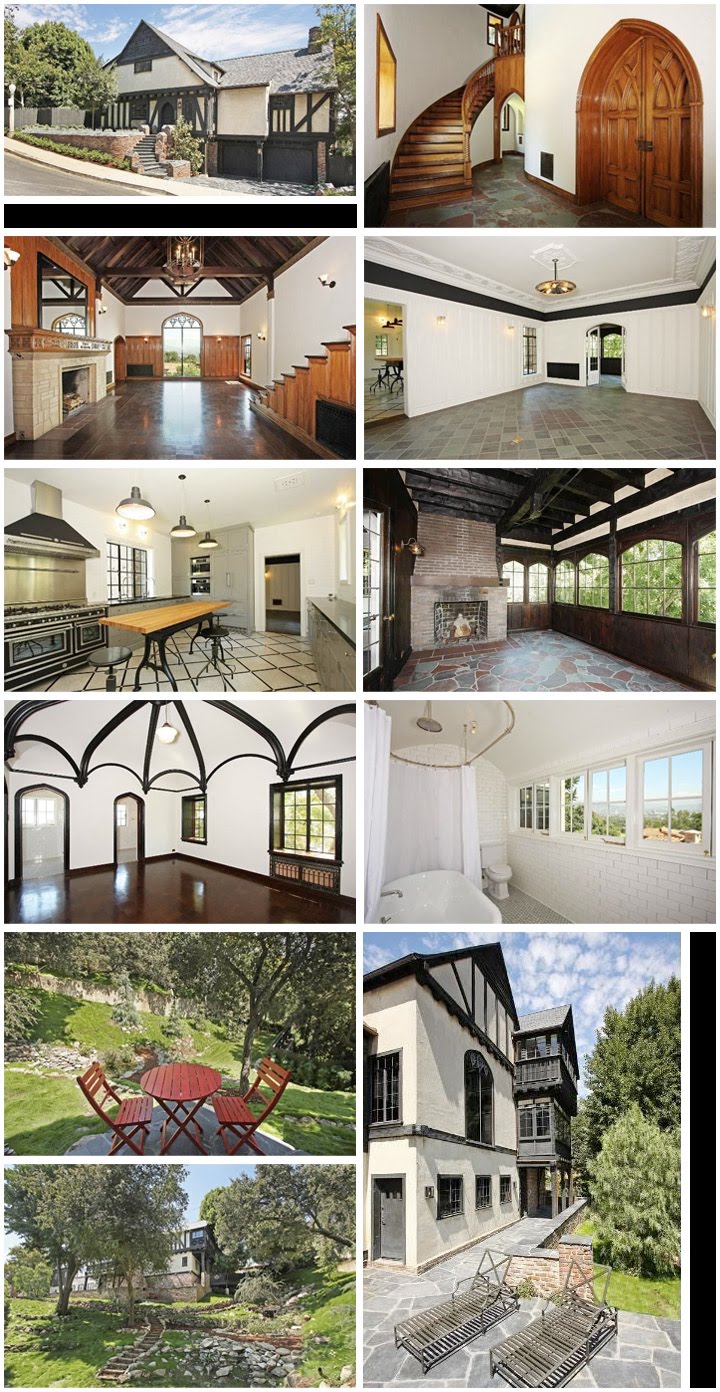
T.R. Knight of “Grey’s Anatomy” fame recently placed his 4,160-square-foot Los Angeles home on the market. The four-bedroom, 3.5 bathroom home has been T.R’s home since 2007, but now that he ended his stint on that show he is looking to relocate to NYC. The 1930s Tudor-style home is listed at $3,995,000 that includes gothic furnishings, exposed beams, parquet flooring and an outdoor area with a covered fireplace, terrace and landscaped grounds.
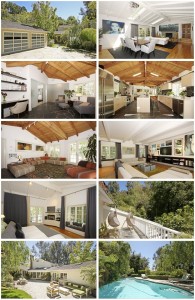
Amy Adams' new Beverly Hills home -- listed at$3,165,000. (Photo Credit: The Real Estalker)
• Amy Adams Buys Home in Beverly Hills
Two-time Oscar nominee Amy Adams recently purchased a home in Beverly Hills for $3,165.000. The four-bedroom, 3.5 bathroom home, described as a “Cape Cod estate,” includes 4,311-square-feet of living space, hardwood flooring, a fireplace, walk-in closets and a private patio with views of the ocean. The property is also protected by a secured gate and features contemporary glass panels, a den, built-in bookcases and French doors.
August 25th, 2010 by
Admin
Categories:
Celebrity Real Estate,
design and decorate,
Do It Yourself,
exterior projects,
foreclosures,
Home Improvement,
homes for sale,
interior projects,
Mortgages,
Moving,
Real Estate,
Relocation,
rentals Comments:
2 Comments »
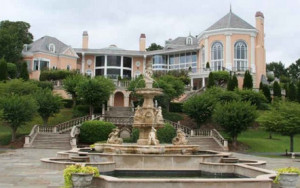
Tyler Perry's new home - purchased for $7.6 million. (Photo Credit: Zillow.com)
By Serena Norr
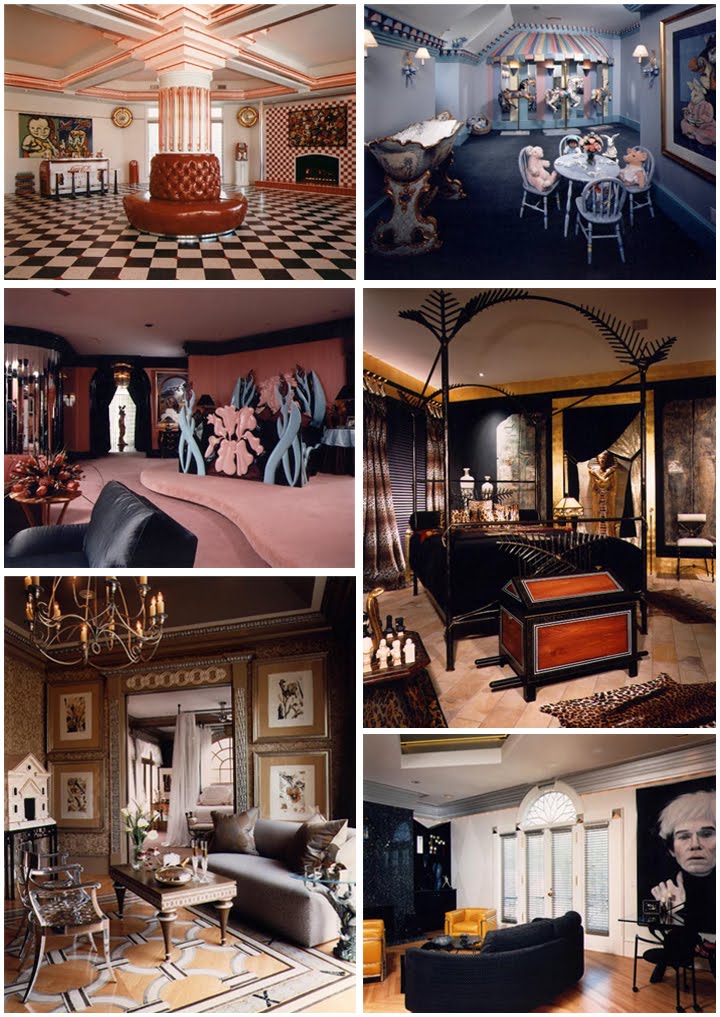
The biggest home sale this week on the Beat – in both price and size – was the massive mansion purchased by Tyler Perry aka the man behind the sassy Madea. The mansion, called Dean Gardens, was created in the early 90s by software developer Larry Dean and his wife, Lynda, who certainly had their wild imagination come to life in this overly done 58-acre mansion. From a carousel-themed nursery to art deco-inspired bedrooms, the Deans personal taste is not for everyone, and some may even say that the home is more famous for the time it has been on the market. Listed on the market since 1993 (following the couples split), Perry plans to remodel and tear several rooms in order to create an environmentally-friendly home made out of concrete. To shift from extreme homes to an aesthetically pleasing one, Bradley Whitford and Jane Kaczmarek have placed their 6,769-square-foot Italian-inspired villa on the market. The couple, who also separated, is seeking $6.7 million for their six bath, six-bedroom home. Courtney Love’s public real estate plight has been reported on Curbed NY, the New York Post, and even here on Relocation.com. Searching for a home next to Anna Wintour proved unsuccessful (Love was rejected by the condo board) and we guess living in Soho’s posh Mercer Hotel had its days numbered as Love is now leasing Milla Jovovich’s townhouse (which has been on the market since 2008). We’re interested to see how that living arrangement plays out…From extreme homes to peaceful abodes, we have you covered on the Celebrity Beat.
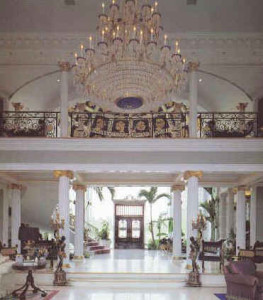
Front door entryway at Tyler Perry's new home -- purchased for $7.6 million. (Photo Credit: Hooked on Houses)

Some themed-rooms at Dean Gardens -- now owned by Tyler Perry. (Photo Credit: The Real Estalker)
• Tyler Perry Buys Georgia Mansion for $7.6 Million
Entertainment maven (comedian/actor/director/producer/playwright), Tyler Perry recently purchased the massive Dean Gardens estate in the suburban outskirts of Georgia for $7.6 million. The 58-acre estate, located along the Chattahoochee River, has been on the market for 17 years (Michael Jackson was once an interested buyer), which was conceptualized by software developer Larry Dean and his wife, Lynda. The 32,000 square foot mansion was designed by the Dean’s 21-year-old that took four years to create a massive wonderland of themed-bedrooms and grandiose chandeliers. The Deans, though, never did enjoy their overactive mansion. Shortly after the construction of the home (in 1993) the couple separated and placed it on the market, which it has been on for 17 years. It was recently listed for $13,900,000 for the home and its furnishings (carousels, an entry way with massive-sized Italian paintings, custom murals and a room with Peacock décor were some features); however, Perry declined that offer and paid $7.6 million solely for the home. The home has been recognized (both praised and scoffed) for its unique décor options, formal gardens, outdoor band shell, 18-hole golf course, 12-car garage, 12 fireplaces, eight themed-bedrooms, nine bathrooms and on-site wedding chapel. We’re not sure what to make of some of these odd features and perhaps Perry wasn’t either as he plans to tear down the house and “… build one that is environmentally friendly and made of concrete,” according to Zillow.com. Zillow broke down even further, “this will include paying $25 million to build it, $18 million to pay for staff, taxes and utilities over the years and $1 million in annual maintenance.” Perry also owns homes in Los Angeles, an 11.4 acre home in Fairburn, Georgia and a mansion in Atlanta, Georgia. It sure pays to be a quadruple threat…
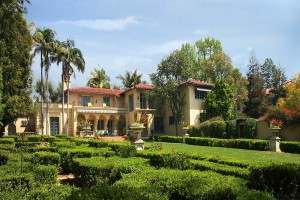
Jane Kacmarek and Bradley Whitford's villa - listed for $6.7 million. (Photo Credit: Luxist.com)
• Jane Kaczmarek, Bradley Whitford Place San Marino Villa on Market for $6.7 Million
Jane Kaczmarek and Bradley Whitford filed for a divorce in 2009, and sadly selling their gorgeous San Marino Villa was also involved in their separation. Located in San Marino (near Pasadena, California), the 6,769-square-foot home is described as an “Italian Renaissance Revival estate.” Designed in 1924, the home is situated on more than an acre of land that includes an outdoor swimming pool, original formal gardens, a spa, six bedrooms and six bathrooms, a library, hardwood flooring and a private guesthouse. The home, which underwent a massive renovation in 1997, was originally purchased for $5.9 million in 2004.
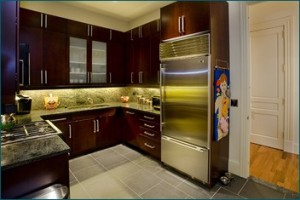
One of Emeril's kitchen's in his Manhattan Condo - Sold for $4.6 million. (Photo Credit: Wall Street Journal)
• Emeril Lagasse Sells Midtown Loft for $4.6 Million
Emeril Lagasse, famous for the catch phrases (“Bam” and “Lets Kick it Up a Notch), and of course for his Cajun cooking, recently sold his loft at the Beekman Regent NYC condo for $4.6 million. Located in Midtown Manhattan, the 4,000-square-foot apartment is a combination of two adjacent apartments that includes two kitchens – both of which have modern and stainless steel appliances, a formal dining room, a media room and two master suites. The apartment also features views of the skyline and the East River whose building’s interior includes 24-karat gold hardware and mahogany wood. According to the New York Post, Emeril won’t have to worry about his living situation that much longer since he reportedly just closed on a 6,900-square-foot Upper East Side townhouse. His new $11.5 million pad is recently renovated and includes two terraces, six fireplaces and a chef’s kitchen.
• Courtney Love to Lease Milla Jovovich’s NYC Townhouse
Much has been reported about adventurous tales of grunge rocker Courtney Love and her search for an apartment in NYC. Seems this tale has a happy ending, at least temporarily, as it was reported that Love is leasing a townhouse from actress/model Milla Jovovich. Love has been living in the luxurious Mercer Hotel in Soho for the past year while searching for a home in the West Village. Love has been looking to live next to Anna Wintour whose board rejected her request. Seems like a perfect situation for both parties as Jovovich has been trying to sell her Greenwich Village townhouse since 2008. Listed for sale at $7.5 million, the four-floor home includes four bedrooms, a private garden, a dining room and a rooftop deck. Curbed NY reported that Jovovich was seeking $24,000/month for rent. However, there was no word if this is what Love will be paying.

Weinberg's home for sale -- listed at $3,399,00. (Photo Credit: The Real Estalker).
• Max Weinberg Asking $3.3 Million for Flipped Home
Max Weinberg, resident drummer on the “Late Night with Conan O’Brien” and former member of Bruce Springsteen’s E Street Band recently listed a Hollywood Hills home for sale. Purchased in February 2009 for $2,888,000, Weinberg and his wife, Rebecca, renovated the home and is now looking to make a profit by listing it for $3,399,000. The contemporary five bedrooms, three bathroom home – previously owned by the parents of Maggie and Jake Gyllenhaal – includes views of the city, a swimming pool among a lush garden and angled stairs and 2,916-square-feet of living space. An infamous house flipper, Weinberg has been purchasing homes in California and New York, renovating them and selling them since the early 2000s.
Which home sparks your interest?
August 11th, 2010 by
Admin
Categories:
Celebrity Real Estate,
design and decorate,
Do It Yourself,
exterior projects,
foreclosures,
Home Improvement,
homes for sale,
Insurance,
interior projects,
Mortgages,
Moving,
Plan Your Relocation,
Real Estate,
Relocation,
Relocation Data,
rentals Comments:
1 Comment » 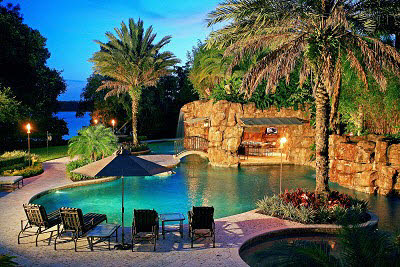
Joey Fatone's home for sale - To be sold at auction for $6.5 million
By Serena Norr
We had quite the mixed bag of homes for sales and home purchases this week. “Extra” host Mario Lopez recently purchased a 4,430 square-foot home in Glendale, California for the obvious reasons: outdoor pool, courtyard with a fountain and state-of-the art and modern amenities as well as for the not-so-obvious reasons: it will be the location of his new reality show where he and his baby mama will be filmed as they experience the trails of becoming new parents. While some may tune-in to catch Lopez juggle his abdominal workouts while changing diapers, we are more interested in seeing how he will upgrade and personalize his Spanish-style home with home improvement projects and decor. Disney star-turned-actress, Hilary Duff also made this week’s Beat for purchasing an elegant Toluca Lake estate with her fiancé Mike Comrie for $3.85 million. We also reported on an interesting auction of the home of Joey Fatone. Fatone, who was in the band ‘NSync, is asking $6.5 million for the home that features a swimming pool and an outdoor sushi bar. These properties never cease to amuse and amaze us! Until next week…
• Former ‘NSyncer, Joey Fatone Selling Orlando Home for $6.5 Million
Joey Fatone, of the popular 90s boy-band ‘NSync, will auction his home for $6.5 million citing wanting to be closer to his family as the reason for the sale. The gated estate, located in Orlando, is situated on 4.4 acres of lakefront property that includes 10 bathrooms, a 10-car garage and six bedrooms, including a 3,800 square-foot master suite with a butler’s pantry. The home also has 12,400-square-feet of living space that includes a movie theatre with stadium seating and an outdoor grotto area with a sushi bar, swimming pool and spa. The minimum bid for the auction is $3.7 million, which will take place on September 11, 2010.
• Mel Brooks Sells Ocean-Front Home for $5.3 Million
Comedian and director Mel Brooks recently sold his Watermill, New York home for $5.3 million. The 1,968-square-foot property was originally purchased for $2,995,000 by Brooks and his late wife, Anne Bancroft, which has been rented out for several summers. The home, situated by the ocean on. 74 acres, includes three bedrooms, two bathrooms, a fireplace and is right down the street from last week’s celebrity beat seller, Christie Brinkley.
• Leeza Gibbons Buys New Home for $6,600,000
Entertainment reporter Leeza Gibbons recently purchased a home in Beverly Hills, California for $6,600,000. The Mediterranean-style home includes five bedrooms, 5.5 bathrooms and backyard complete with a heated swimming pool, spa and lush greenery. The 6,579-square-foot home also includes walnut wood flooring, a family room, a fitness room, a billiard room, an office, a three-car garage, a home theatre, four fireplaces and a state-of-the-art security system.
• Mario Lopez Gets a New Home for $1,940,000
Mario Lopez of “Saved by the Bell” fame recently purchased a new home in Glendale, California. Sold to Lopez for a modest price tag of $1,940,000 (at least in celebrity real estate terms), the home will soon be seen by the rest of America when VH1 starts filming a new reality series about the trials and tribulations of Lopez’s life with a new baby. If you can’t wait to see the show, we can tell you the Spanish-style home includes four bedrooms, six bathrooms, three-car garage and a gorgeous courtyard with a fountain. The home, built in 1929, is fully renovated that also includes 4,430 square-feet of living space, a eat-in kitchen with modern appliances, an office, a formal dining area with hardwood flooring, arched doorways, fireplace and a swimming pool.
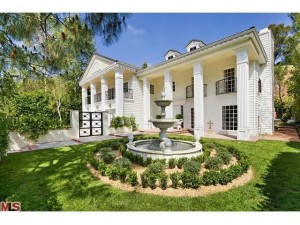
Exterior shot of Hilary Duff's new home - Sold for $3.85 million
• Teen Queen Hilary Duff Buys Home for $3.85 Million
Hilary Duff, former Disney star- and sometimes-designer/singer/actress recently purchased a colonial-style home for $3.85 million with her her fiancé Mike Comrie. Located in Toluca Lake, the elegant 5,260-square-foot two-story house includes five bedrooms, 6.5 bathrooms, an outdoor fireplace and a swimming pool and a modern kitchen with stainless steel appliances. Other amenities include a wet bar, French doors located throughout the home, a curved staircase, high ceilings and hardwood flooring. Duff and her fiancé Mike Comrie can also look forward to getting to know other Toluca Lake residents like Jenny Garth, Gwen Stefani and their next door neighbor, Britney Spears.

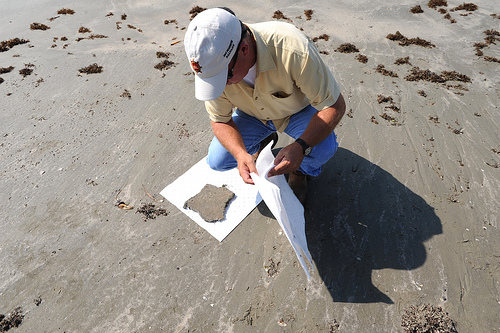
BON SECOUR NATIONAL WILDLIFE REFUGE , Ala. - Relocation procedures for sea turtle that are too close to the tideline. (Photo Credit: U.S. Fish and Wildlife Service photo by Bonnie Strawser)
By Serena Norr and Joann Pan
As we discussed in the first part of this series “The Devastating Impact of the BP Oil Spill on Real Estate,” the oil spill off of the Gulf Coast has not only affected our waters, marshes, animals and our health, but the “worst spill in history” has also greatly impacted the real estate industry. Although we are happy to hear that engineers have been able to stop oil gushing from the well [LA Times Blog], there is the looming question pertaining to the state of real estate in Alabama and Mississippi. Early numbers are estimating that the oil spill will “drive down the Gulf’s property values by 10 percent for at least three years,” according to CoStar Group Inc [Bloomberg]. The International Property Estimate stated that “losses may total $4.3 billion along the 600-mile (966- kilometer) stretch from the Louisiana bayous to Clearwater, Florida.”
Since April 20th, new property developments in Alabama and Mississippi have been put “on hold” and commercial properties such as hotels that are suffering from a decline in tourism and the inability to provide certain supplies such as with restaurants that can no longer offer fresh and local shrimp, oysters, etc. Some of these real estate issues are not immediate, but will impact these areas long after the spill has been cleaned. Will people want to relocate to an area that was once covered in oil — whether directly or nearby? Will the water ever be clean enough for fishing? Will tourism pick up? As the pieces are starting to be picked up and clean-up efforts are prevalent in the Gulf, we will be keeping a watch eye, hopeful that we will be able to report on positive news from the Gulf.
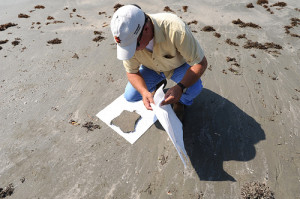
GALVESTON, Tx - Cleaning up tar balls off on Galveston beaches. (Photo Credit: U.S. Coast Guard photo by Petty Officer 2nd Class Prentice Danner)
Alabama’s Businesses Suffer Including Restaurants, Condo Owners, Shops Owners and Fishing Industries
For three months, after the media has continually projected the dismal prospect of coastal communities affected by the BP Oil Spill to the rest of the world, the states lining the Gulf of Mexico are seeing and feeling the onset of low numbers of tourists and homebuyers. When President Obama went to see the effects of the BP oil spill on the state in mid-June, Governor Bob Riley and the communities of Alabama were relieved to have president see the effects for himself. In a speech, the president addressed the jabs that the tourism and fishing industries have suffered. The lives of Alabama’s shop owners, restaurateurs, commercial and sport fishermen and those in real estate have not seen normal business for about three months [Montgomery Advertiser]. As oil continues to wash to shore, it’s not the effects on the beaches that worries community members, but the state’s precious marshes, estuaries and wetlands that will be lost. Tourism is also down, which is evident by the pictures of empty beaches that would normally be flooded with people. There are men bringing booms down to the waters—approximately 10,000 feet of booms a day to keep the oil at bay.
As soon as the oil started leaking—rather gushing relentlessly into the Gulf of Mexico—officials and professionals have been implemented quick clean-up of the space. As personnel continue to tread the waters of the Gulf, people are coming forward with disaster-related illnesses. In Louisiana, their Department of Health is aware of 71 cases and in Alabama, there are 15 reported illnesses—a mix of respiratory problems and skin irritations [CNN Health]. As soon as news like this hits to mainstream, areas where tourism and properties are hot start to see businesses fade.
The NY Times painted a dreary picture for us on July 5 by running a feature about an Alabaman seaside Inn that has seen the scary effects of the oil spill that include a lack of bumper-to-bumper traffic along Perdido Beach, minimal diners at coastal restaurants, missing swimmers in the water and a diminished population of seagulls riding up the coast. And in the place of those summer beach expectations are tar balls and lines of oil that have layered themselves in the daily repetitions of low tide and high tide that brings new sand and oil on shore. The building’s owner is Jerry Gilbreath, 61, who bought the structure in 1980 and turned it into a successful bed-and-breakfast. Now, Gilbreath, like other resort, hotel and property owners in Alabama are struggling to meet ends meet. To give you an idea the inn made $21,000 last June, but only made $6,000 this June, a month after the drum of oil starting leaking [the NY Times].

NEW ORLEANS - Debris and oil in the Gulf of Mexico from the Deepwater Horizon drilling.
Mississippi’s Job Loss, Real Estate Outlook and Tourism Industry
Since the oil spill, 4,500 unemployed workers in Alabama, Louisiana, Florida and Mississippi have been hired to clean the beaches– raking and shoveling debris, taking out trash and using power loaders to wash away oil-covered rocks [CNN Money]. Although finding work is always a positive sign (especially since Mississippi has an 11.5 percent unemployment rate), the conditions in which these workers were hired is not something residents of these Gulf States were expecting.
The immediate impact of the spill is not the only matter at hand, but one that Mississippi will be dealing with years after the spill; especially when pertaining to real estate. Recently, several real estate agents and brokers have requested $20 billion dollars as compensation for the loss of sales due to the oil spill. Kenneth Feinberg, a Washington attorney who is working on organizing money for the victims, stated “The Realtors and real estate brokers are a major political force. I’m hearing from them constantly. I’m not sure whether they have a valid legal claim.” As of now, these claims fall into the category of “tough eligibility decisions,” whose issue will be further explored through an independent committee held next month [SunHearald.com].
There is also the issue of the loss of jobs and tourism in Mississippi. A University of Mississippi study found that the oil spill could cost Jackson, Harrison and Hancock counties nearly $120 million in the tourism and service sectors; while the Mississippi Development Authority estimated that tourism was down statewide and about “seven percent in fiscal 2010 to $5.2 billion” [Insurance Journal]. Hit the hardest right now are non-casino hotels, which are down by $50 million and services related to tourism such as restaurants, beverages and food and area beaches (even though no oil has been washed onto Mississippi’s beaches). According to David Bulter, a professor who conducted the survey, these figures are related to the “negative images portrayed by the national news.” There has also been a decline in charter boats and recreational and commercial fishing.
Now that the leaking has been stopped by a temporary cap—until further measures can be made, that is—we wait and hope for positive news in the upcoming months.
Sources and Additional Reading:
All photos are from Deepwater Horizon’s flickr page- http://www.flickr.com/photos/deepwaterhorizonresponse/
July 21st, 2010 by
Admin
Categories:
Celebrity Real Estate,
design and decorate,
Do It Yourself,
exterior projects,
foreclosures,
Home Improvement,
homes for sale,
interior projects,
Mortgages,
Moving,
Moving Day,
Moving Industry,
Packing,
Real Estate,
Relocation,
rentals Comments:
No Comments » 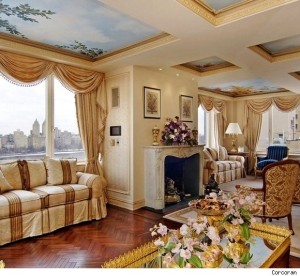
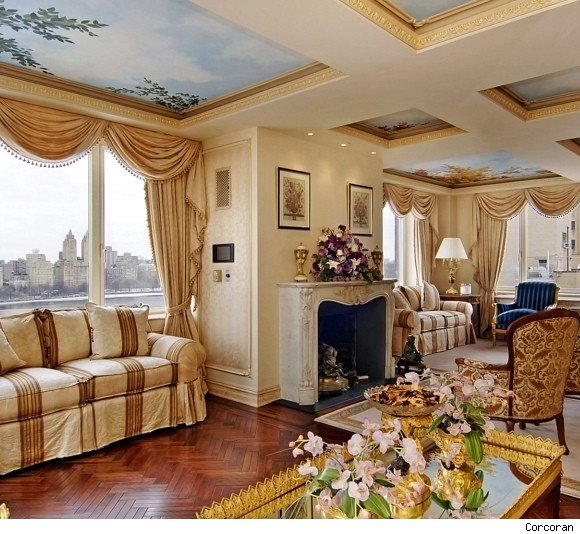
The ornate abode of Rush Limbaugh -- Sold for $11.5 million. (Photo Credit: Corocan via the Wall Street Journal)
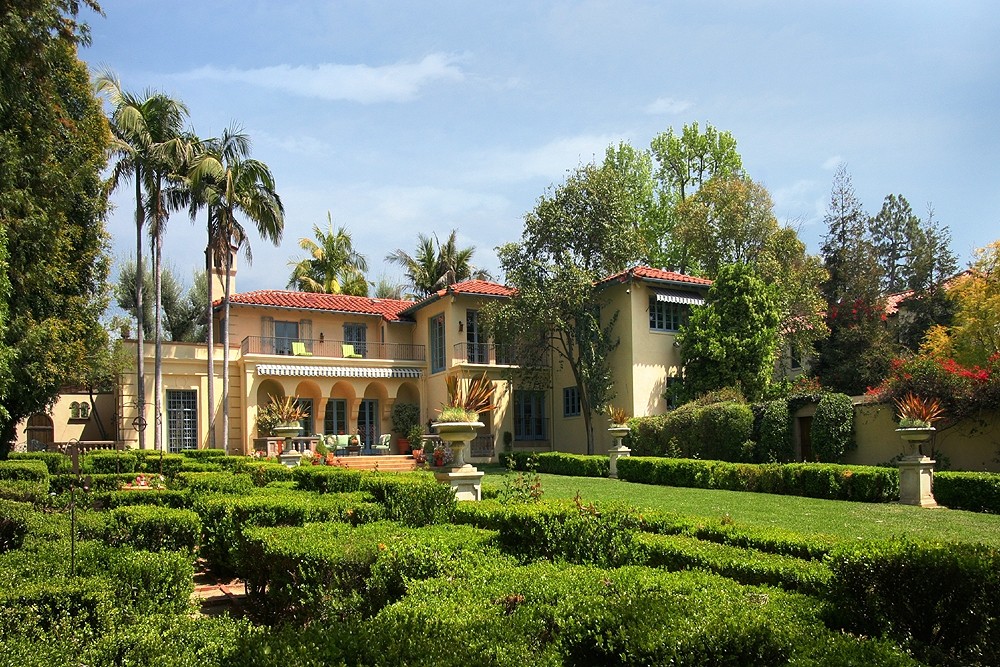
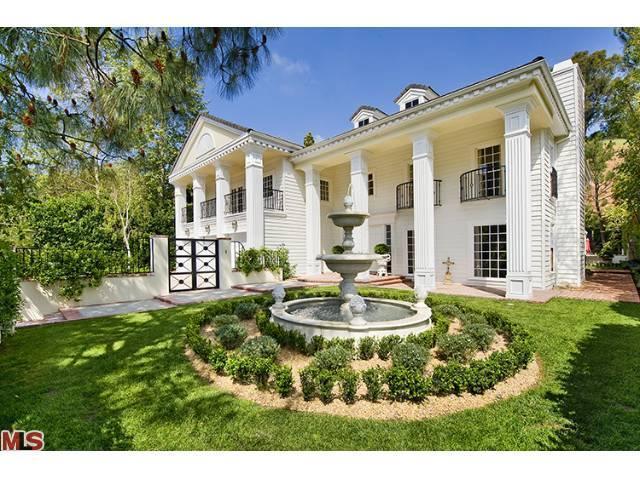
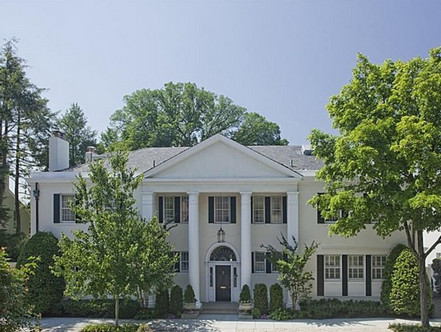
A few politicos made “the Celebrity Beat” this week. The “Lion of the Senate” aka the late Ted Kennedy’s Washington, DC home was recently placed on the market for $7,995,000. This massive Colonial-style estate includes five bedrooms, six bathrooms, a wine cellar and a personal gym designed by “the Terminator” or Governor Schwarzenegger, as he is referred to these days. On the right side of the political spectrum, Rush Limbaugh’s Upper East Side penthouse was sold for $11.5 million to an undisclosed buyer. Limbaugh has been stating he has wanted out of New York due to the city’s high property taxes — but if you have an $11 million dollar home, we are thinking you have sufficient funds to pay good-old Uncle Sam. To light things up a bit, comedians Cheryl Hines and Adam Carrolla are both selling their California homes. Hines’ home is situated in Brentwood overlooking the mountains; while Carrolla’s home overlooks downtown Los Angeles that was also personally designed and renovated by Carrolla.
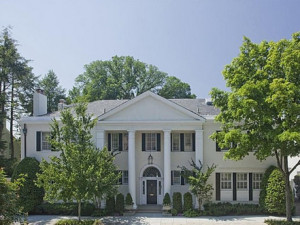
Exterior Shot of the Late Ted Kennedy's Home -- Listed at $7,995,000. (Photo Credit: Zillow.com)
• Ted Kennedy’s Home on the Market for $7,995,000
The Washington, DC home of the late Ted Kennedy (Kennedy passed in 2009 after a long bout with brain cancer) is on the market for $7.95 million. Purchased in 1998 for 2.7 million, the 8,900-square-foot home includes five bedrooms, six full-sized bathrooms and two half baths, a wine cellar, an indoor and outdoor pool, a secret hideaway from the library and an indoor gym designed by no other than the movie star-turned-gobernador Arnold Schwarzenegger! Described as a “Colonial-style home” whose decor features long white columns, French doors, high ceilings, an outdoor terrace, gardens and a massive dining room that is customized to fit 50 people. Listed by Vicki Kennedy (Kennedys’ widow), who is seeking a smaller home in Washington, DC. According to the Wall Street Journal, the home is “quietly being shopped around” with no current buyer.
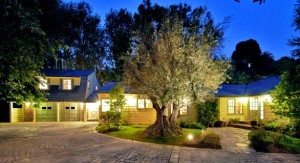
Exterior View of Cheryl Hines Brentwood Home -- Listed at $4,249,000. (Photo Credit: Paul Barnaby via the Wall Street Journal)
• Cheryl Hines Lists Brentwood Home for $4,249,000
Comedian and “Curb Your Enthusiasm” star Cheryl Hines recently listed her walled and gated Mandeville Canyon-area estate for $4,249,000.The 4,908-square-foot home sits on an acre of land that features stunning views of the nearby California mountains and new furnishings and renovations throughout the properties open-floor plan. If that isn’t enough, perhaps the homes six bedrooms, 5.5 bathrooms, a guest house and an outdoor pool with massive trees throughout the property may entice you to buy?
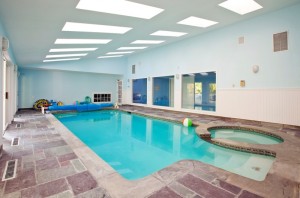
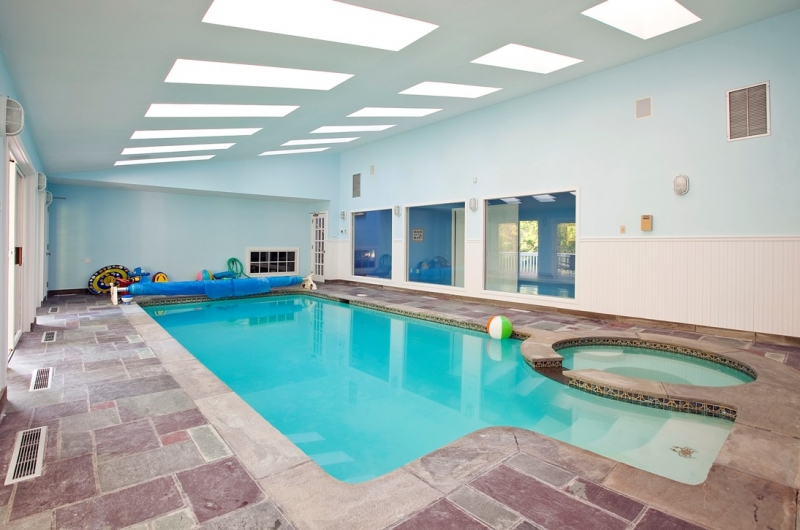
Joe Torre's home includes an indoor swimming pool -- Listed at$1,175,000. (Photo Credit: Zillow.com)
• Joe Torre’s Home Listed for Auction at $1,175,000
Joe Torre, former coach of the New York Yankees and current coach of the Los Angeles Dodgers has recently placed is New Rochelle, New York to be sold via a public auction. Located 30 minutes from Manhattan, the 6,500-square-foot home is listed at $1,175,000 that is expected to exceed the asking price. Some notable features about the two-level property includes six bedrooms, five bathrooms, an indoor pool and a three-car garage all of which is situated on 1.01 acres of land. The first level features a family room, a fireplace, and a large kitchen; while the second level has a master suite, guest rooms and a laundry room. Owners of the property will also become stockholders of the estate property company. For more information on the auction, visit BidOnTheCity.com.
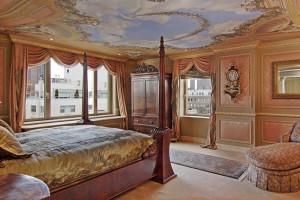
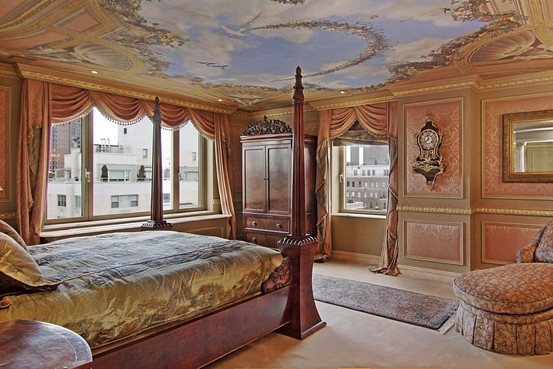
Rush Limbaugh's master bedroom complete with a ceiling mural -- Sold for $11.5 million. (Photo Credit: Corocan via the Wall Street Journal)
• Rush Limbaugh Finds Buyer for NYC Penthouse
On another side of the political spectrum, conservative pundit Rush Limbaugh has found a buyer for his Upper East Side NYC penthouse. Originally listed for $13.95 million, the undisclosed buyer will pay $11.5 million for the condo, according to the Wall St. Journal. The full-floor penthouse overlooks Central Park and features 10 rooms, four terraces, a 30-foot-wide living room and a private elevator. The new buyer will also enjoy personal decorating touches of the conservative talk-show host such as ornate wall designs and a mural of clouds and birds in the master bedroom, along with various ceiling murals throughout the penthouse featuring palm trees and the beach. Limbaugh is relocating from New York due to the high property taxes, which he announced in February on his radio-show entitled “El Rushbo to New York: Drop Dead.”
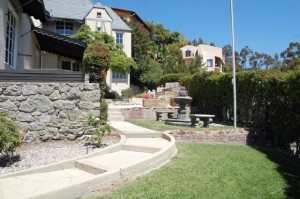
Adam's Carolla's Home for Sale-- Listed at $1,395,000. (Photo Credit: the Luxist)
• Adam Carolla Lists Home for $1.3 Million
Comedian, Adam Carolla recently put his Beachwood Canyon home on the market. Carolla – who also owns two other properties in the Los Angeles-area – personally did all of the renovations on this three-bedroom as stated on the Luxist, “the home was totally rebuilt, piece by piece, like a restoration of an old car with modern equipment.” With a contractor background, Carolla spent at least $350,000 in home improvements on his 2,281-square-feet French-style home. The “ultimate bachelor pad,” that was “overbuilt,” as stated by Carolla, includes some interesting features such as an office, an indoor and outdoor bar, an updated kitchen with state-of-the-art appliances and a soundproof basement. The exterior of the house is also pretty impressive, which resembles a castle and overlooks downtown Los Angeles and views of the Hollywood sign.

Interior View of Jim Clark's Miami Penthouse - Listed at $27 Million (Photo Credit: Luxist.com)

Views of Jim Clark's Deck (Photo Credit: Luxist.com)
By Serena Norr
Another week of the Celebrity Beat, your weekly celebrity real estate report and this is certainty a luxurious one. From Jenny Garth’s family-friendly mansion for sale to Madonna’s home renovations reportedly costing $1.7 million, and not to mention a $27 million dollar Miami palace (yes, a palace) for sale owned by Netscape founder, Jim Clark. These real estate listings never cease to amaze us, and after reading about them (and taking a peak at these jaw-dropping pictures) we’re sure you will think so, too.
- Jenny Garth’s Toluca Lake Home for Sale for $5,995,000
Jenny Garth – of “Beverly Hills 90210” fame – and her actor hubby, Peter Facinelli are selling their six-bedroom, seven bathroom Toluca Lake home for $5, 995,000. This 8,416-square-foot Colonial-style mansion was originally purchased in 2005 for $2,850,000 that has been greatly expanded and remodeled for additional rooms and modern amenities. The multi-winged mansion also includes gated and fenced surroundings, two master suites with dual walk-in closets, a breakfast area leading to an outdoor rose garden, a formal dining area, four fireplaces, hardwood floors, a media/kids space, arched doorways and a game room with a poker table, bubble gum dispenser and a pinball machine! Oh, and there is a five-car garage and a swimming pool – among many other amenities the new homeowner will love. Toluca Lake, California is also known as being family-friendly, which may help draw in a new owner.
- Madonna’s Townhouse Will Receive Renovations for $1.7 Million
We all know who Madonna is and with an impressive 20-plus career as a singer/actor/writer/ sometimes provocateur, she obviously has some money to invest in real estate. Some of that hard-earned dough — to the tune of $1.7 million — is currently being put into the renovation of her $32 million dollar New York City townhouse. According to the New York Post, Madonna is adding another floor in her soon-to-be 13,847-square-foot Upper East Side home to include a gym, two brand-new master suites, a closest solely for luggage, a playroom, a hair salon and a wine cellar in the basement. At the end of the day, Madge will have 10 bedrooms and 13 bathrooms in her Georgian-style mansion. Not quite the renovations necessary to beef up your home for a sale, but when you have $1.7 mil to add a home hair salon and a wine cellar, we’re pretty sure this is something she is not worrying about.
- Faith Hill and Tim McGraw Sell Beverly Hills Home for $9.55 Million
Super couple and country/movie stars, Faith Hill and Tim McGraw, recently sold their Beverly Hills mansion for $9.55 million. On the market since 2008, the home was originally listed at $14.8 million, reduced to $10.8 million and finally sold for $9.55 million. The 11,000-square-foot Mediterranean-style home is situated on three acres of land and includes six bedrooms, 7.5 bathrooms and impressive views of Los Angeles. There is also a home gym, massive gardens, a tree house, tennis courts, a heated pool and a boat dock. For more jaw-dropping pictures, check out the Wall Street Journal.
- The Hawaiian Estate of the Late Author Michael Crichton is on the Market
According to Zillow.com, the Hawaiian estate of the late Michael Crichton has been recently put on the market for $12 million. Crichton, author of the popular novels “Jurassic Park” and “Congo” (both of which were made into movies) and creator of the television show “E.R.” passed away in 2008, left two homes that have since been listed for sale. Built in 1926 for a local doctor, this Hanalei Bay estate is situated on 1.2 acres of land, resembling a plantation home with three parcels (one is empty). The main parcel is a 3,000-square-foot space features a calming décor with mainly white cabinetry and hardwood flooring. There are also two bedrooms, two bathrooms, an open-aired porch, a guest home with two bedrooms and 1.5 baths, along with a yoga studio and detached three-car garage. The property is also surrounded by lovely views of mountains and the beach, as well as a flourishing garden and lush greenery in the backyard.
- Tales from the World of Luxury Real Estate: Jim Clark’s Massive Miami Penthouse Listed for $27 Million
Jim Clark, founder of Netscape recently listed his uber luxurious home for sale at $27 million. Located in Miami, the multi-level penthouse — or perhaps palace is a better term — is an ode to Thai and Asian cultures that is listed as a “Thai home in the sky,” according to Sotheby’s Realty. The 6,209-square-foot space is filled with ancient statues and artwork, unique architecture, custom wood carvings and dangling gold chandeliers situated throughout the space. Although spirited with an Asian-focus, the home is not short on modern amenities, which includes granite countertops, a billiard room, a high-tech security system, an open-aired deck with a swimming room, bar and a hot tub. Additionally, the property — called the Setai — comes with many on-site amenities such as a valet, room service, a fitness room and spa and three pools. And to top it all off, the new homeowner will have amazing views of Miami Beach and the boardwalk.
Missed a Beat? Check out Relocation.com’s recent blog posts covering the entertaining tales of celebrity real estate:
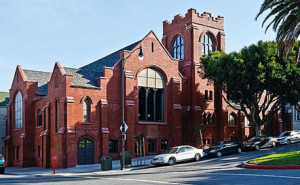
Exterior Shot of Former Church- Listed at $7.49 Million (Photo Credit: Zillow.com)
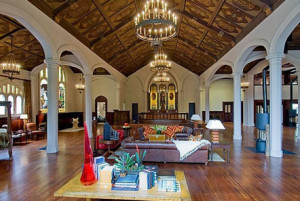
Living Room of Redesigned Church in San Francisco (Photo Credit: Zillow.com)
By Serena Norr
Homes for sale in the million dollar price range seem to be the theme of this week’s Celebrity Beat. From spacious mansions in Tennessee to Manhattan co-ops with secret passageways to a converted home that once was a church; we’ve got you covered with the latest real estate buzz. Check out the Beat and let us know what you think of these unique (and pricey) listings.
• Sheryl Crow’s Nashville Home on the Market for $7.5 Million
Purchased in 2008, singer Sheryl Crow recently listed her 154-acre Tennessee home for sale. Horse lovers will surely love this equestrian abode, equipped with a 14-stall barn with enough acres to practice riding, as well as sufficient space to let horses run free. The gated mansion/farm hybrid is marketed as a “solar home” according to Zillow.com that is” designed to reduce electric costs by 42 percent” thanks to its modern and energy efficient appliances. The home also features private quarters, fireplaces, a guest house, an outdoor pool, indoor riding arena, a state-of-the-art media room and a music studio.
• Penelope Cruz’s Home on The Market for $3, 695, 000
Actress Penelope Cruz recently put her Bali-style home on the market for $3,695, 000. Constructed in 1956, the Hollywood home features views of the Sunset Strip that Ms. Cruz has owned since 2005. The 3,334-square-foot one-story home features three-bedrooms and 3 1/2 bathrooms, bamboo flooring and French doors. There is also a tiled courtyard with a fountain, an outdoor pool with a heated patio, an office and a modern kitchen with a breakfast nook. Cruz is moving on since she already has other properties in Los Angeles and a home in Spain.
• Golden Girl-Rue Mc Clanahan’s Co-op on the Market for $2.5 Million
The New York City co-op of recently deceased Golden Girl is on the market for $2.5 million. Located in midtown Manhattan, the apartment is full of charm and unique attributes such as a “spice rack that turns into a secret passageway” and amazing views (and access to) a private garden, complete with professionally landscaped flowers and plants—functioning as a private oasis, according to CurbedNY.com. The apartment also features three bedrooms with a master suite, two baths, high ceilings, great lighting, a library and a modern kitchen.
• Alan Jackson’s Home Sold for $28 Million
Country crooner, Alan Jackson recently sold his Tennessee mansion for $28 million to multi-millionaire, Willis Johnson. Originally listed at $38 million, the mansion known as “Sweetbriar” is situated on 135 acres of land that features six bedrooms and seven baths. There are also five fireplaces, a 20-car garage, a private lake with its own boat house, three ponds, a gym and a separate guest log cabin with two bedrooms.
• Converted Church on the Market for $7.49 Million
Not a celebrity property but one that will surely cause the same jaw-dropping effect, especially since this Gothic-style building once functioned as a church. Built in 1910, the exterior appears to look like a church; however the interior space is a gorgeous updated single-family home with high ceilings, seven chandeliers, three bedrooms and two baths. This San Francisco home also features arched and long stained glass windows (some indication that it once was a church), along with modern amenities such as spacious kitchen, a den, a large dining room, two fireplaces, a wine cellar and a media room with a recording studio. The church home also features a six car garage and mahogany doors to welcome guests to this massive complex.
June 9th, 2010 by
Admin
Categories:
foreclosures,
homes for sale,
Mortgages,
Moving,
Moving Industry,
Plan Your Move,
Plan Your Relocation,
Real Estate,
Relocation,
Relocation Data,
Saving Money Comments:
No Comments » 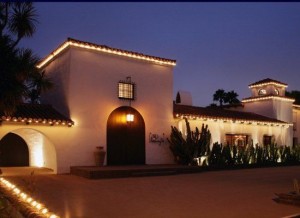
Diane's Keaton's Spanish-style home on the market for $10.95 million-Image from The Huffington Post
By Serena Norr
Yet another week of real estate buzz-Tina Fey, Will Ferrell, reality starlet Teresa Giudice and Diane Keaton are the talk of The Celebrity Beat. And with an Upper West Side condo on the market, a Spanish-colonial home for sale and a New Jersey foreclosure it’s easy to see why. Check out the Beat and let us know what property peaks your interest.
Will Ferrell recently purchased a loft in the West Village (13th street to be exact) for $4.2 million. In contract since March, the 2,699-square-foot loft features three bedrooms, two bathrooms, an open-aired study with a fireplace, maple hardwood flooring and a newly remodeled kitchen and bathrooms. Purchased by trustee Matt Lichtenberg, this luxurious New York City property was built in the 1890s that was converted into condos in 1998.
Purchased in 2005 for $1.9 million, Fey and her husband recently put their Upper West Side condo on the market as they upgraded to a $3.4 million five-bedroom condo in the same neighborhood. Now selling for $2.3 million, the 1,873 square-foot condo features two bedrooms with a private bathroom and two additional bathrooms with a 31-foot entrance way. The condo also appears to have some lovely hardwood floors, French doors, a guest bedroom, a fireplace, an eat-in kitchen and its own laundry facilities.
Real Housewives of NJ “reality star” Teresa Giudice has recently reported as having $11 million dollar in debt, ranging from home foreclosures and bankruptcy The old spending more than you make is to blame here with reported earnings of $79,000 per year and $104,000 in credit card debt, fertility payments, car payments and real estate debt of $2.6 million. Zillow.com via the New York Post is reporting that her Towaco, New Jersey home (valued at $616,000) is going through the foreclosure process as Giudice and her husband have not been making mortgage payments.
Academy Award-winning actress Diane Keaton has reduced the price of her home from $12,995,000 to $10,950,000. Although we still can’t afford such luxurious digs, her impressive casa is sure to draw in a buyer, especially as Zillow.com noted “her hobby is buying historically interesting homes in California and renovating them.” Designed in the 1920s, the 9,000 square-foot Spanish Colonial home features seven bedrooms, nine bathrooms (wow!), an entryway converted into a library, a courtyard with a fountain, media room, a den, a pool and Keaton’s design touches featured throughout the home.

Annie Rice's Home Listed at $3.3 Million-Image from the LATimes.com (Photo Credit: Jeff Atkins)
By Serena Norr
Welcome back for another addition of The Celebrity Beat: Relocation.com’s real estate report. This week James Bond and Jon Stewart purchased new homes; while Anne Rice and Jesse James are looking for sellers. From duplex lofts to homes on the beach, which space peaks your interest?
• Daniel Craig (one of the James Bond’s) Scores TriBeCa Home for 1.9 Million
Double 007 just scored a luxurious 1,121-square-foot pad for $1.9 million. The penthouse (purchased in cash!) is located in the über hip neighborhood of TriBeCa that includes one bedroom and two bathrooms. According to the Real Estalker, this hefty price tag means that Mr. Craig is paying about $1,700 per square foot, along with monthly condo charges of $2,265! The duplex loft features three terraces, a dining area with 20-foot ceilings, hardwood flooring, a balcony and two closets (one of which is a walk-in).
• Jon Stewart Buys Home in New Jersey for $3.8 Million
According to Housing Watch.com, political satirist and “Daily Show” host, Jon Stewart recently purchased a new home on the Navesink River in Red Bank, New Jersey. The 4,999-square-foot Victorian home features 1.3 acres of land located on the river with what we all can assume features some amazing views of the nearby landscape. Other details include a wrap-around porch with a deck, a swimming pool, two-car garage and a boat house.
• Anne Rice’s Home on the Market for $3.3 Million
Author Annie Rice has listed her six-bedroom home for sale. Built in 1995, the California residence features an outdoor pool, a garden with fruit trees, an air-conditioned garage, a separate dining area and an updated kitchen, seven bathrooms (yup, seven!), a private living area for a housekeeper or maid and a detached two-bedroom home for guests with a full kitchen. Rice is selling her home for a smaller pad, but stated that “I’ve loved it here in Thunderbird Heights with views of the valley and the mountains.”
• Jesse James Puts Sunset Beach Home on the Market
Much has been mentioned about motorcycle manufacturer and reality star, Jesse James from the tabloids. Mr. James is also causing some buzz within the real estate industry as his $6.75 million dollar beachfront home was recently placed on the market. The two-floor Mediterranean-inspired casa features four bedrooms, a media/game room, an office, a guest room, a fireplace, a modern kitchen, an island bar and a three-car garage with a built-in space for tools and storage. The home also has a built-in security system and an outdoor area with a swimming pool, tiki torches, waterfall and a waterslide!
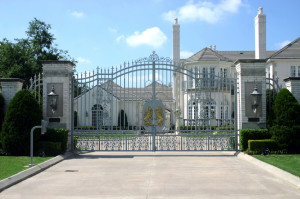
This gated mansion can be yours for $4.5 million- Any takers?
By Serena Norr
Oh, what to do when you when you have millions of dollars? Travel around the world, eat in fine restaurants and real estate investing comes to mind and for some people, like celebrities these purchases are the norm. At Relocation.com, we are fascinated, part disgusted and semi awe struck by these luxurious extreme homes (eight bedroom condos and in-home movie theatres anyone?) and recently launched a real estate only blog called The Celebrity Beat. Every week we will cover real estate news, a rundown of recent purchases, homes for sale and foreclosures-stay tuned!
• Uma Thurman Selling Greenwich Village Townhouse-Listed for $14.2 M
According to Zillow.com, Uma Thurman aka the lady that killed Bill is reportedly selling her Greenwich Village townhouse. This 5,086-square-foot luxurious pad has seven bedrooms, 6.5 bathrooms and an urban garden complete with a Buddhist sanctuary. Those not so keen on walking up and down stairs may not be into this place (of course if price was no option) since the home has no elevators and five floors. But the media room, spacious dining area and the rooftop deck may change your mind.
• Conan’s $29. 5 Million Home May Have a Seller
Much has been covered of Mr. O’Brien’s late night woes, but perhaps making $29.5 off of his duplex will have him laughing all the way to the bank. This sprawling super-sized duplex (the 17th and 18th floors were combined in 2004) includes seven bedrooms, three terraces, two libraries, and 8½ bathrooms, according to a listing by John Burger, a broker at Brown Harris Stevens. An unidentified buyer is intended to make this sale, which if it does follow through will be the most expensive real estate sale to date at the art-deco apartment complex, the Majestic.
• Kanye West’s Home on the Market for $3.9 Million
Producer, rapper, quasi political communitarian, Kanye West’s Hollywood Hills condo is on the market for $3.995 million. His modern pad is modest (at least for celebrity standards) with three bedrooms and 3.5 baths. But then again, there are built-in computers in every room, an in-home movie theater and room with a pool that makes it out of the norm.
• Billy Joel Purchases $3.3 Million Townhouse
The piano man recently purchased a 1,607-square-foot townhouse in the lovely neighborhood of Nolita. This $3.3 million home features bedrooms and two bathrooms, complete with handcrafted architecture from old NYC and an uber modern kitchen (stainless steel and modern appliances). It is speculated by CurbedNY.com that the apartment was purchased for his daughter.
• Julianna Margulies sells Santa Monica home to Ed O’Neill
Al Bundy bought that nurse from ER’s Spanish-style home for $3,350,001. This pricey Santa Monica, California abode features a spacious office, a library with built-in shelves, three bedrooms, 2 1/2 bathrooms and a swimming pool. There is also a separate guesthouse with its own bedroom and bathroom.
May 10th, 2010 by
Admin
Categories:
Home Improvement,
Insurance,
Mortgages,
Moving,
Moving Industry,
Plan Your Move,
Plan Your Relocation,
Real Estate,
Relocation,
Saving Money Comments:
1 Comment » 
Night View of the Brooklyn Bridge and Lower Manhattan
By Serena Norr
Often dubbed “the Greatest City in the World,” New York City is a cultural melting pot that millions of people call home. Within this prime locale, residents have access to fine dining and nightlife, ethnic cuisine, museums and galleries, Broadway shows, sporting events and recreational parks and facilities.
With all of these unique amenities, it’s no wonder people from all over the world are moving to New York every year. However, once you relocate to NYC there is the issue of finding a place to live. There is no shortage of housing options in NYC with luxury apartments, two-family houses, buildings, condos and coops, brownstones, and even some houses with property; however these places don’t come without a sizeable price tag. In fact, when you move to NYC you will quickly find that locale determines the price of real estate. Due to these high-rentals (and desire for space), many people have moved away from Manhattan, opting for a two-bedroom apartment in Brooklyn, as opposed to a studio in the Lower East Side. This real estate shift has greatly altered what neighborhoods are desirable in NYC; however the high-end Manhattan real estate shows no signs of slowly down with new development deals and luxury condos throughout the city.
From new commercial developments to residential brownstones on the market to celebrity deals, there is always something exciting happening in the NYC real estate scene. On the beat of the real estate industry are some extraordinary NYC bloggers that are on top of the latest industry news and trends and whose sites feature in-depth articles ranging from tenant’s rights to real estate taxes. Here are some of Relocation.com’s favorites:
Created by Jonathan Butler in 2004, Brownstoner covers Brooklyn’s real estate market, latest news, new housing developments and renovation projects. This also includes covering housing issues in Brooklyn, buying tips and pictures of houses, and listings of apartments, coops and condos on the market. The site has grown tremendously since it began that also includes a directory of services, a community forum, restaurant guide, links to various renovation blogs and a sister site called Brownstoner Philadelphia.
A free listing resource, How to Rent in NYC features no broker fee and no fee apartments. The site also includes a renters section where users can write reviews about their landlords, as well as place to read past tenant’s experiences. Created by Alicia Schwartz, the site also features a directory of no fee management companies and landlords, a helpful question and answer segment for renters, rental articles and a listing of moving companies to get you to NYC.
Covering all of Manhattan, NYC Blog Estate features current real estate listings, recent developments and informative articles about the industry. Users can also navigate their way through the site based on the neighborhood they are interested in. The site also has a buyer and seller section where interested parties can post their home or apartment for a direct sale.
A self-professed “real estate solider,” Property Grunt features the latest news on Manhattan’s real estate industry. The daily blog also provides commentary pertaining to current issues such as crooked real estate transactions, taxes and housing issues, problems with landlords, housing reports, tenant’s rights and pictures of local real estate developments.
A print and online edition, The Real Deal features daily content about real estate news, commercial developments, foreclosed properties and expensive deals throughout the NYC area. Stories can also be broken down by neighborhood and users can share their tips about real estate to the website’s editors. The site also has an event section and listing of offices, retail spaces and commercial properties for sale.
The New York Observer’s blog-The Real Estate covers stories about high-end real estate transactions, building developments, tenant experiences and market reports. They also showcase “it’s free to look” area where users can check out luxury apartments and condos on the market.
Published by the Heddings Property Group, the True Gotham blog delivers content that pertains to the inner workings of the real estate industry. Taking an open and honest approach, the site features market reports of transitions in Manhattan, industry news, podcasts and videos and a residential listing section.
As mentioned, in our Best Real Estate Blogs in Los Angeles post we are fans of Curbed and their network of websites. The New York addition — aptly named Curbed NY— follows a snarky and direct approach to covering the latest news and headlines of the NYC real estate market. The site also features celebrity homes on the market (Olsen twins home for $.45 million is just one example), real estate gossip and developments, commercial real estate news, real estate construction and a link to their flickr site showcasing gorgeous photos of real estate around the city. Sellers can also list their home and buyers can search through homes on the market at the Curbed Marketplace.
A comprehensive real estate site, Urban Diggs analyzes the Manhattan real estate market through the use of macro economics to determine real estate trends and investment strategies. Created by Noah Rosenblatt, the site provides in-depth articles, a user discussion section, charts of current trends and insider tips. The also site covers renovations, mortgages, inventory and features a contractor directory.
Everything is coming up green, which also rings true for the real estate industry. Green Buildings NYC not only covers the real estate segment, but design and construction projects in the greater NYC area. The content on the site is organized by neighborhood where users can discover the latest news and articles on green building and sustainability on office spaces, commercial real estate, architecture projects, environmental issues, energy efficient buildings, alternative energy sources, lawn development and much more. Through the site users can also learn about local events, engage in a community forum, locate jobs and search for green real estate listings.
May 3rd, 2010 by
Admin
Categories:
Mortgages,
Moving,
Moving Industry,
Moving Scams,
Packing,
Plan Your Move,
Plan Your Relocation,
Real Estate,
Relocation,
Saving Money Comments:
1 Comment » Buy or Rent? The 10 Best Cities in the U.S for Both Markets
By Serena Norr
The great debate lives on: Should you buy or rent? Both sides of the discussion are very passionate about their stance. Renters scuff at the idea of buying due to an inability to put down a sizeable down payment or perhaps they live in an area where renting is favorable to buying a home. Buyers, on the other hand don’t understand why anyone wouldn’t want to own their own property in order to build a home for themselves or their families, as well as own a piece of real estate that may increase in value over time. This friendly debate has seen a bit of a shift with the upturn of the economy where some renters can now afford to buy due to foreclosures and financial assistance from the $8,000 tax credit for new homebuyers. Whereas, some homeowners have been forced out of their homes and can now only afford rent.
Of course, the complexity of the housing bubble isn’t so black and white. Location also plays a huge factor in an individual’s decision and ability to buy or rent. For example: in New York it is cheaper to rent than to own; whereas in Boston the market is stronger for buyers. As this paradigm continues to flip, we at relocation.com won’t be taking any sides; but we can offer a list of the best cities (area amenities, price, thriving job markets and real estate growth) for both markets. Now if we could just solve the mortgage crisis, we would all be one big happy family.
10 Best Cities for Renters
1. Columbus, Ohio: According to apartments.com, the average rental in Columbus, Ohio is $837 for a two-bedroom apartment—pretty amazing deal for the largest city in Ohio and home of Ohio State University. Real estate is also expected to pick up, but for now it is certainly a renters market.
2. Indianapolis, Indiana: As the largest city in Indiana, Indianapolis is experiencing a steady job market that is also renowned for its job market within the manufacturing industries and home of the Indianapolis 500. Residents of this Midwestern area also have access to numerous cultural attractions such as the Indiana State Museum, the NCAA Hall of Champions and the White River State Park. Renters can also look forward to affordable apartment prices with an average monthly rent of $751 for a two-bedroom apartment, according to mynewplace.com.
3. San Antonio, Texas: As the second largest city in Texas, San Antonio has cultural ties to Mexico and the U.S. where residents can see a rodeo or check out exciting cultural attractions such as the Alamo and the River Walk. The area is also home to major universities and research centers such as South Texas Medical Center. The area is also ideal for renters where months rents average $850 for a two-bedroom apartment, according to apartments.com.
4. Salt Lake City, Utah: The average two-bedroom rental in Salt Lake City, Utah is $804, according to mynewplace.com. This outdoor lover’s paradise is home to numerous ski resorts, golf courts and national parks and attractions such as The Utah Museum, the Historic Temple Square of Natural History and Great Salt Lake.
5. Austin, Texas: Dubbed the “live music capitol of the world,” music and Austin, Texas are often mentioned in the same sentence, which is evident by the numerous musical festivals (South by Southwest and Austin City Limits Music Festival) that are held here. Austin is also the corporate headquarters of Whole Food Market, Dell and recently a new office for Facebook. The city is also a biker friendly area and one that is very eco-conscious and not to mention affordable with the average two-bedroom rental at $1065, according to apartments.com.
6. Charleston, South Carolina: An exciting southern city, Charleston, South Carolina features numerous recreational amenities such as beaches, campgrounds, museums (Gibbes Museum of Art and the Charleston Museum) and an historical downtown area. The area also boosts a mild climate throughout the year to enjoy an outdoor lifestyle. What’s even better is that you get all of this for a monthly rate of $ 825 as stated by mynewplace.com.
7. Oklahoma City, Oklahoma: As the largest city in Oklahoma, Oklahoma City is renowned for its livestock industries and oil production. This western city is also home to the Ford Center to check out a basketball game or a concert, the American Banjo Museum and Oklahoma City Museum of Art. Renters will also love the price of $665 for a two-bedroom apartment, according to apartments.com.
8. Sacramento, California: Sacramento, California is known as a lively area for its recreational amenities (Sacramento Zoo, national parks, museums and marina). There is also favorable rent in this area of $934 for a two-bedroom apartment, according to mynewplace.com.
9. Tucson, Arizona: Dry, arid climates are in the norm in Tucson, Arizona where residents can enjoy outdoor adventures such as rock climbing, hiking at one of the areas numerous parks and nature reserves. New construction is also promising for renters with an average two-bedroom apartment at $723 a month, according to apartments.com.
10. Denver, Colorado: If surrounded amongst natural beauty and access to historic western attractions aren’t enough, cheap rents are sure to entice you to move to Denver, Colorado. According to mynewplace.com the average rent in the Mile High City is $978 for a two-bedroom apartment.
10 Best Cities for Homebuyers
1. Boston, Massachusetts: A vibrant college town, Boston, Massachusetts is the home of Harvard, Boston University and the Boston Conservatory of Music. The area is also experiencing a strong housing market with a 2.17 percent increase in home sales and an average single family home priced at $359,900, according to ziprealty.com.
2. Atlanta Georgia: Dubbed the Sun Belt for its hot temperatures, Atlanta, Georgia is the headquarters of CNN, the Coca-Cola Company and Delta. Not just a mecca for big business, this area is a hot market for homebuyers with the average single family home costing $146,500, according to zillow.com.
3. Baltimore, Maryland: Centrally located in Maryland, Baltimore is a vibrant seaport city situated along the Patapsco River. The area also has a downtown commercial district and nine surrounding neighborhoods for your pick of a suburban or city environment. According to ziprealty.com, the average home is $194,000 whose area is experiencing a steady increase since January 2010.
4. Minneapolis, Minnesota: The average single-family home in Minneapolis, Minnesota aka the Twin Cities is $184,000 , according to zillow.com along with a 2.33 percent sales increase in March, 2010 that makes this area favorable for buyers. In addition to affordable homes, the job market is seeing a slight increase, along with area amenities such as the Minneapolis Sculpture Garden at the Walker Art Center, recreational parks and parks and historical tours that makes for an ideal (and affordable) location.
5. Washington, D.C.: As the nation’s capitol there is never short of something to do in while living in Washington, D.C. Exploring the White House, Arlington National Cemetery and the Smithsonian Museum are just some of the many area attractions residents can take advantage of. This area also has a combination of modern and historic neighborhoods that is favorable for buyers with homes averaging $330,000 and increasing in sales of 2.36 percent in March, 2010, according to ziprealty.com.
6. Sacramento, California: Famous for the home of the gold rush in the 18th century, Sacramento is now a thriving city situated along the Sacramento River. The area is also the state capitol of California that is a hub for parks, modern museums and music (Crocker Art Museum and the Sacramento Philharmonic Orchestra), theatre (Sacramento Theatre Company) and colleges (Sacramento State). Buyers can also look forward to affordable housing prices with homes averaging $239,900, according to ziprealty.com.
7. Charlotte, North Carolina: Known as the “Queen City,” residents of Charlotte, North Carolina have access to numerous artistic and cultural attractions such as the NC Blumenthal Performing Arts Center, the Discovery Place: a hands-on science museum, a vibrant financial center located in downtown Charlotte and historic neighborhoods. On top of all that buyers can score a major deal with the average price of home at $148,900, according to zillow.com.
8. Dallas, Texas: With a motto like: “Live Large, Think Big,” Dallas surely lives up its credo with its diverse culture, modern restaurants and access to one of the largest arts districts in the U.S (the Dallas Symphony Orchestra, Dallas City Arts Festival, and Shakespeare Festival of Dallas are just a few of the many cultural offerings.). This vibrant city is also very affordable with the average home at $189,750 and a steady increase in sales at 2.57 percent, according to ziprealty.com.
9. Jacksonville, Florida: The largest city in Florida, Jacksonville is sure to please sun worshippers but will also be favorable to individuals who seek a diverse area whose job market is steadily rising. Jacksonville is also home to the largest park system in the country, according to coj.net, along with beaches and a vibrant downtown area. Home buyers will also love this area for its affordable home prices. In March, 2010, the average home in Jacksonville was $165,000, according to ziprealty.com.
10. Las Vegas, Nevada: Hit pretty hard by the housing market, real estate in Las Vegas is starting to see signs of growth with a 1.19 percent increase in home sales in March 2010, as opposed to the -4.95 percent loss in December 2008. This dessert city is sure to be exciting for residents (and not just cause of the Vegas Strip), but an area that features natural beauty, an arid climate and established neighborhoods whose homes feature modern amenities and access to great schools. Houses typically range from $169,900 and new construction is promising for this dessert city.
Resources:
• MyNewPlace.com
• Apartments.com
• Ziprealty.com
• Zillow.com
• AOL’s Best Cities for Renting
• Ten Cities for Real Estate Steals
City Pages:
• Columbus, Ohio
• Indianapolis, Indiana
• San Antonio, Texas
• Salt Lake City, Utah
• Austin, Texas
• Charleston, South Carolina
• Oklahoma City, Oklahoma
• Sacramento, California
• Tucson, Arizona
• Denver, Colorado
• Boston, Massachusetts
• Charlotte, North Carolina
• Dallas, Texas
• Jacksonville, Florida
• Las Vegas, Nevada
April 26th, 2010 by
Admin
Categories:
Home Improvement,
Mortgages,
Moving,
Moving Day,
Moving Industry,
Plan Your Move,
Plan Your Relocation,
Real Estate,
Relocation,
Saving Money Comments:
No Comments » 
The Picturesque California Sunset
By Serena Norr
As the second largest city in the United States, and the largest city in California, Los Angeles is renowned as a hub for glamour and entertainment, amazing weather, fine dining, attractions and breathtaking beaches.
This “City of Angels” is also home to some of the most immaculate real estate properties in the world with seaside residences, homes situated in the mountains, über modern architectural wonders and green design concepts. Although these housing options are plentiful, the area was hit pretty hard by the declining housing market, causing market price to plummet and foreclosures throughout the city. However, this area is now starting to see signs of growth with the rebound of home sales. Forbes magazine even named Los Angeles one of the top 10 metro areas in the U.S that is easing from the recession. Good prospects are up ahead and relocation.com is very excited to cover these Los Angeles bloggers who are on the pulse of what’s happening in this (once again) burgeoning real estate market.
As part of the popular Curbed network, the Curbed LA edition covers anything and everything real estate throughout all of the neighborhoods in the City of Lights. This up to the minute blog is certainly on the beat of what is going on in the market through their informative, but fun articles. The site also features breaking real estate news and deals, developments in architecture, home improvement and design concepts and real estates listings, accompanied by gorgeous pictures.You can also find restaurant reviews and everything about LA fashion on its sister sites-Eater LA and Racked LA for the complete LA experience.
Covering the Westside of Los Angeles and Downtown, the Los Angeles Real Estate Blog features the point of view of real estate broker-Keller Williams and his first hand insight of this residential real estate market. Since the blog covers Downtown, most of the listings feature apartments, condos and coops, along with location information (restaurants, area amenities, etc) room features, floor plans, pictures and even YouTube videos that give users an interactive tour. The site also provides informational articles such as green living, analysis of home growth in certain areas and parking in LA with a dead meter.
Crafted by the Valerie Fitzgerald Group, Los Angeles Real Estate Talk covers the market in Beverly Hills, Bel Air, Brentwood, Malibu, Santa Monica and the Westside of Los Angeles. This luxury real estate blog showcases the latest buying and selling trends and listings, as well an a great resource for informational articles about home inspections, construction sites, loans, mortgage rules and tax credits. Buyers and sellers should be sure to check out the blogs resource page, where they can check out a payment calculator, moving checklist, budget calculator, closing costs, and understanding investment, among many other informational (and free!) resources.
The Malibu Real Estate Blog gives users the “low down” on high end real estate from techy/real estate agent, Michael Gardner. Auctions, listings and pictures, sales and real estate developments throughout Malibu are all covered on the site through Gardner’s straightforward tone. He even lists his cell phone number, so that users can call or text him directly with their listing information or any questions.
A Manhattan Beach real estate blog, the Manhattan Beach Confidential lists properties on the market and compares current asking prices to its previous sales, which gives buyers a comprehensive analysis on property values and real estate trends. The reviews also include open house times, location information and a straightforward review of a homes appearance. Recent posting such as: “First, there’s that exterior, with its hard-on-the-eyes adornments. It just doesn’t work” are just some of the brutally honest remarks regularly found on MBC.
Blogger/real estate broker, Irina Netchaev breaks down the real estate market in Pasadena through her site, Pasadena Views. This informational resource covers architecture, home sales, real estate market reports, as well as information about loans and mortgages. Home owners can also list their homes here, or buyers can search through the up-to-date free listing section. The site also features foreclosures, market statistics and profiles on Pasadena’s neighborhoods such as average home price and amount of time a place is listed on the market. The site also has a personal touch with Irina’s real-life stories of the buying/selling market, advice and insider secrets.
Covering Bel Air, Beverly Hills, Brentwood, Los Angeles, Malibu, the Pacific Palisades, Santa Monica and Westwood, the Los Angeles Real Estate Voice provides a neighborhood-by-neighborhood breakdown of real estate listing and housing news. The blog also features these areas through their own profile pages, as well as through lifestyle articles covering local restaurants, where the best schools are and an interactive video section where experts give their opinions on real estate in these markets.
Looks like brighter days are coming for Los Angeles, as the market is showing signs of some real change. Check out some of these blogs to stay up-to-date on current trends, real estate listings and industry news as they happen—we know we will!
Shopping for your first apartment is such and exciting time. In addition to choosing which neighborhood to move to and seeing all that is out on the market, you are invariably confronted with the question: should you go for a condo or a co-op?
The first thing you’ll notice is that condos usually cost more. That’s because buying a condo is more like buying a house. Buyers own their deeds and pay taxes. The good news is the percentage down-payment requirements are smaller and you can sublet condos more readily than co-ops.
Co-op is short for “cooperative housing project,” and you technically don’t own your apartment, as you do with a condominium. Instead, you own shares of the co-op corporation that owns your building. The larger the living unit, the more shares you own in that corporation.
While you’ll pay less money for a co-op you need to keep in mind the board, run by other shareholders, will have a bigger say in almost every facet of living.
As thus, everything that happens in a co-op must be approved. From purchase, when the board checks personal background and finance information, as well as comprehensive employment history and background checks; to any renovation that goes on in the apartment; to subleasing, which in many cases, is not allowed at all. Moreover, co-ops require larger down payments than condos, and those all-encompassing maintenance fees are higher than in condos, although they are tax-deductible.
Finally, selling a co-op can be little harder than selling a condo. Some boards assess a “flip tax” if you resell within a set period, such as one to three years.
So, depending on your financial status, how much money you have for a down payment and how much you want to be part of a group, you can decide for yourself whether you wish to go condo or co-op.
When I look at my assets these days — and it’s a quick look, trust me, I think I can look directly at the sun longer — I don’t even consider the value of my home.
Why not? Because I don’t even see it as part of my investment mix. Sure, when I sell, I hope I see a gain. But when I bought the home a couple years ago (yep, I nailed the top of the market, please keep your comments to yourself….) I looked at it as a pure financial decision: over the course of 10 years, even if we lost money on the house, would we pay more in rent, or pay more for the mortgage?
Unless I’m forced to load up the jalopy and head out West ‘Grapes of Wrath’ style, I think the answer is that I’d pay more in rent.
The thing is, I’m just not good at timing the market. Even with stocks, I buy high, sell low. That’s why I put my investing on auto-pilot and make regular investments, and do the same with selling positions that run a little hot.
I try to have the same clear-eyed view when considering housing. I knew the market was overheated and likely to come down, but I didn’t know when. And with a new Johnson on the way, I knew I needed more space. Going from a one-bedroom to a two-bedroom in New York is shockingly expensive, and doing the math, buying instead of renting made more sense (as did moving to the suburbs from the City).
So when I hear the debate about whether now’s a good time to buy a house, I think the same thing:
If you can afford it, preferrably keeping real estate costs to less than 30% of your take-home pay (yes, take-home).
and
If you would pay less on housing costs over 10 years than you would pay in rent,
Then buying a home might be for you.
I’m doing a mortgage refinance and have been silently mocking my mortgage broker’s laments about all the documentation the government is now requiring on mortgages.
Of course, if the banks had actually been CHECKING homebuyers’ documentation over the past decade, we wouldn’t be in the terrible mess we are today.
Still, she did clarify her statement. Wherease before they checked NOTHING, now they’re checking EVERYTHING. That, in turn, is raising the costs of doing a refinance for the banks, who (surprise, surprise) are turning over the costs to borrowers in the form of higher rates than they might normally get.
The next few years are going to bring a real balancing act between getting solid borrowers the funds they need, with the banks’ need to make money (at least make money that they don’t give back in future years because of awful investments).