Archive for the 'Relocation Data' Category
March 3rd, 2011 by
Admin
Categories:
family moving,
Moving,
Moving Day,
Moving Industry,
Moving with Kids,
Moving with Pets,
Packing,
Plan Your Move,
Plan Your Relocation,
Real Estate,
Relocation,
Relocation Data Comments:
No Comments » 
Tips to Ease Moving Day Strain When Pregnant
By Serena Norr
Sometimes you have to move, regardless of whether you want to or not. One of those special situations occurs during pregnancy. With all of the ups and downs that occur during this time, adding moving to the mix can increase a mother-to-be’s level of stress and anxiety. No need to fret, Relocation.com is here to help you make this transition as smooth as possible; whether you are moving down the block or to another state or across the country.
1. Move in the Middle:
If you have any sort of flexibility, move during your second trimester. The nausea and tiredness from the first trimester will likely have passed, leaving you feeling energized and pretty good (in general). This will be beneficial when you move, especially since your day may involve long travels, organizing boxes and dealing with movers.
2. Prepare for the Move:
In general, a successful move is determined by how organized and prepared you are. This involves planning your move by locating movers (and picking individuals that you trust), as well as obtaining boxes, packing and locating a storage facility. When looking for moving companies, ask friends and family members for referrals. You can also locate reputable and local movers online through Relocation.com. When calling moving companies, never accept an offer over the phone and be sure to research and then invite at least two-three movers to your home for an in-house moving estimate. This is the best way for movers to actually see your belongings (thus determine the price) as well as a great opportunity to interview them and ask them specific questions pertaining to your needs.
Tip: Since you are with child, make sure that you pace yourself when completing these tasks. It is best to give yourself extra time to stay on top of everything that needs to be done (writing things down helps), which will also prevent you from getting too stressed out along the way.
3. Ask for Help:
You are going to need help with your move. Even if you have a small move, be sure to ask friends and family members for their assistance with anything from packing to calling movers to locating storage. If you can, assign your helpers specific tasks in order to stay organized – having efficient and step-by-step moving checklists are great for this. You can also have your moving company do all of the packing (for an additional fee).
4. Organize your Items:
Hopefully you have some very handy helpers to assist you with your packing, but if not you can stay organized by devising a packing systems for your belongings. Through this efficient plan, organize your items into three piles: pack, donate and toss. The items that don’t work or maybe have holes in them are likely items to toss. The donate pile may be items of clothing that you no longer like or those that don’t fit to be given to friends or charity; while the keep pile are items that will move with you to your new home and can be placed in boxes. This moving system is also a great way to start fresh and get rid of old junk before the new baby. Stay organized throughout the packing process by labeling all of your boxes based on what room the items will be placed. This is also a great way for the movers to know where your belongings should go.
5. Test your Home:
If you are moving into an older home be sure to have it tested for lead. Although you likely had a home inspection, make sure that this also included looking for metals, lead and asbestos. This problem is common in older homes and even in homes that have undergone renovations where walls were simply covered and not stripped of these hazardous materials.
6. Rest and Rest Some More:
It’s finally here; your moving day! This goes without saying but be sure that you get plenty of rest before your move. During the move, be sure to take breaks to rest and stretch, use the restroom, drink tons of fluids and don’t strain your body. This includes not getting stressed out when the inevitable problem happens on moving day. Also, be sure that you are comfortable by wearing comfy shoes and loose fitting clothing and don’t lift anything heavy. Luckily, you don’t have to prove you are supermom on moving day, especially since you are prepared, organized and have a few helping hands to assist you along the way.
Don’t forget to like us on Facebook and follow us on Twitter!
• Follow us on Twitter @Relocation_News
• Become a fan of Relocation.com on Facebook
February 28th, 2011 by
Admin
Categories:
Celebrity Real Estate,
condos,
foreclosures,
homes for sale,
House Swap,
Plan Your Relocation,
Real Estate,
Relocation,
Relocation Data,
rentals Comments:
1 Comment » By Serena Norr
This week the sports media was buzzing with the trade of Carmelo Anthony from the Denver Nuggets to the NY Knicks. Now that Anthony is back in the Big Apple he now needs a place to live and has reportedly been looking for a high-priced NYC rental for about $30,000 a month. We aren’t sure what he will choose but there is buzz that he has been eying the uber luxurious Soho Mews and 158 Mercer (the same building where Bon Jovi lives). The rest of the Beat takes us to California where reigning pop queen Britney Spears and celebrity stylist Rachel Zoe both recently purchased new mansions. There were also homes listed on the market in California by TV stars Dave Coulier and Mischa Baron whose home is described as a “modern villa.” Until next week…
• Carmelo Anthony Looking to Rent
Much has been said about trade of Carmelo Anthony from the Denver Nuggets to the NY Knicks. With everything in place, Carmelo and his family are now looking to rent in NYC for about $30,000 a month. He has been reportedly scouting 158 Mercer St., the same building where Jon Bon Jovi lives and SoHo Mews where Justin Timberlake has a place.

Britney Spears' New Hollywood Hills Home. (Image Credit: The Real Estalker)
• Britney Spears Buys in Hollywood Hills
Oops she did it again but this time it is an expensive real estate property. Purchased for $12,900,000, the Hollywood Hills home includes 19,107-square-feet of living space, 10 bedrooms and 13 bathrooms that is situated on a 3.39-acre village-like estate. The gated Tudor-style home also includes an arcade, a modern kitchen, a fitness center, a poker playing room, guest quarters, a swimming pool and spa.

Rachel Zoe's New Beverly Hills Home. (Image Credit: The Real Estalker)
• Rachel Zoe Moves to Beverly Hills Mansion
Celebrity stylist Rachel Zoe is on the move. The pregnant Zoe and her husband recently left their one-bedroom apartment and relocated to a huge 7,185-square-foot mansion in Beverly Hills. The two-story contemporary mansion includes five bedrooms, 6.5 bathrooms and two walk-in closets. The complex also includes a formal living room with a fireplace, a private terrace, private facilities, a well-lit kitchen and a two-car garage. The property also includes a backyard with luscious greenery, a swimming pool and spa. It was also reported that Zoe paid $8,250,000 for the property.

Deck View from Mischa Barton's Home. (Image Credit: Zillow.com)
• Mischa Barton Looking to Sell Beverly Hills Estate
Former “OC” actress Mischa Baron is looking to sell her gorgeous Beverly Hills estate for $8,695,000, or for lease at $30,000/month. Located in the gated Beverly Glen community of Bowmont Estates, the home includes an ivy-draped main house, 8 bedrooms, 10 bathrooms, and 9,800-square-feet of living space. There is also a modern kitchen, guest houses, an outdoor swimming pool, and spa. According to listing information, the main house and three guesthouses total 8 bedrooms.

Exterior View of Dave Coulier's Home. (Image Credit: Zillow.com)
• Dave Coulier Places Encino, California Home on the Market for $1.65 Million
Dave Coulier, better known as Uncle Joey on the popular show “Full House,” has recently placed his Encino, California home on the market for $1.65 million. The remodeled and gated home includes 4,000-square-feet of living space, six bedrooms, three bathrooms, an office, living room and dining room, and an outdoor space with a patio and a swimming pool.
February 2nd, 2011 by
Admin
Categories:
Celebrity Real Estate,
condos,
design and decorate,
Do It Yourself,
family moving,
foreclosures,
Home Improvement,
homes for sale,
House Swap,
Moving,
Moving Day,
Plan Your Relocation,
Real Estate,
Relocation,
Relocation Data,
rentals Comments:
No Comments » 
Gorgeous views from Katay Sagal's former home - sold for $3.77 million. (Image Credit: Housing Watch)
By Serena Norr
We saw some exciting properties listed on the celebrity real estate market this week. Starting with novelist Truman Capote whose Brooklyn Heights home was recently listed on the market for $15.9 million – a drop from its original listing of $18 million. Considered one of the most expensive homes for sale in Brooklyn, the gorgeous Greek Revival is said to be the home where Capote lived from 1955-1965 and where he also wrote “In Cold Blood” and “Breakfast at Tiffany’s.” Kate Moss, the professional waif was also on the Beat this week for purchasing an historic mansion in London. Once owned by several literary figures, the home is situated on Highgate Hill and includes seven bedrooms and seven fireplaces – among many other attributes of this four-floor mansion. There were also numerous homes placed on the market from Los Angeles such as Rose McGowan’s Spanish-style home and Kyle Richards’ (of the Real Housewife fame) Los Angeles cul-de-sac and we are eager to see who purchases these hot properties. Until next time…
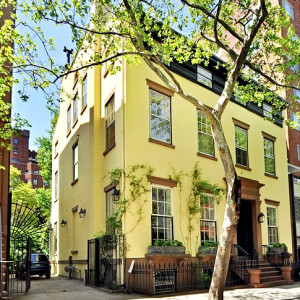
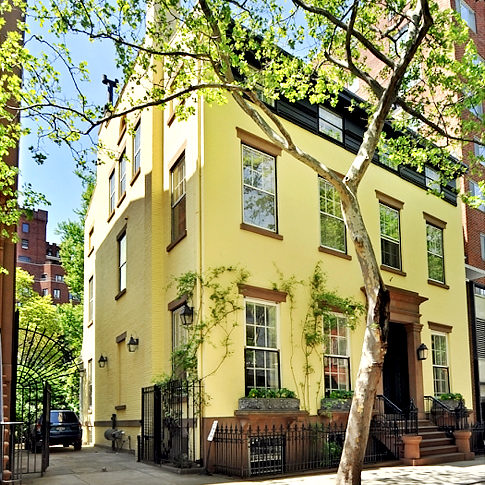
Exterior shot of Truman Capote's Brooklyn townhouse - Listed for $15.9 million. (Image Credit: Sotheby's International Realty)

Four flights of stairs in Truman's former townhouse

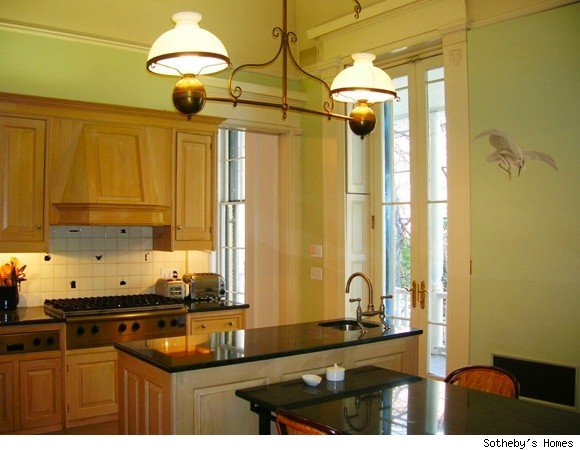
Kitchen in Truman Capote's former home. (Image Credit: Sotheby's International Realty)
• Truman Capote’s Brooklyn Home Drops to $15.9 Million
Truman Capote’s former Brooklyn Heights residence was recently placed on the market for $18 million – only to see a recent drop to $15.9 million. A Greek Revival townhouse, built in 1839, the 9,000- square-foot home includes 11 bedrooms, 11 fireplaces, columned porches, mahogany staircases, two kitchens, crystal chandeliers, an artist’s studio, a library and a gorgeous garden. The sale of the historic home is being maintained by Sotheby’s Realty that is said to be the most expensive townhouse for sale in Brooklyn. Capote lived in the home from 1955-1965 where he wrote “Breakfast at Tiffany’s” and “In Cold Blood.”

Exterior shot of Rosie McGowan's home - Listed for sale at $1.8 million. (Image Credit: The Luxist)

Rose McGowan's living room- Listed for sale at $1.8 million. (Image Credit: Housing Watch)
• Rose McGowan Lists Los Feliz-Area Home
Actress Rose McGowan recently listed her Los Feliz-area home for $1,849,000 million. Purchased in 2004, the home features both Spanish and Moroccan architectural elements that cover the four-bedroom with wood doors, three-bathroom home. The vintage-inspired home also includes a formal dining area, arched windows and 4,278-square-feet of living space. The home also includes a renovated kitchen and dining room and French doors that opens to a balcony on the second floor.

Katey Sagal's Kitchen - Sold for $3.77 million. (Image Credit: Housing Watch)

View from the pool of Katay Sagal's former home.
• Katey Sagal Sells Her Hollywood Hills Home for $3.77 Million
Actress Katey Sagal and her husband Kurt Sutter have recently sold their spacious Los Angeles home for $3.77 million to Rickey Minor, former music director of “American Idol.” Measuring at over 7,202-square-feet, this five-bedroom, eight-bathroom home is located on a gated property that leads up to the wooded hillside property. Built in 1962, the home is situated on 1.5 acres of land that also includes a dining room, a two-sided fireplace, a built-in contemporary breakfast area and an outdoor area with a basketball court, swimming pool and spa that also happen to overlook the gorgeous LA hills and the ocean.

The new mansion Kate Moss purchased for £7,950,000. (Image Credit: The Real Estalker)
• Kate Moss Buys a Historic Literary Mansion in London
Model Kate Moss recently purchased a 6,728-square-foot home in London for £7,950,000. Situated on Highgate Hill, one of the highest points in London, the mansion is considered an historic home where numerous literary figures once lived. The historic four-floor home includes seven bedrooms, seven fireplaces, two kitchens and four full-sized bathrooms. There is also a wine cellar, boiler room, storage space and guest quarters that includes two bedrooms, two bathrooms, a laundry room and a kitchen/dining area. Moss also owns a 10-bedroom farmhouse in Little Faringdon and a property in St. John’s Wood/Primrose Hill area of London, which is expected to go on the market shortly.

Kyle Richards' Hollywood estate - Listed for sale at $2.4 million. (Image Credit: The Real Estalker)
• Kyle Richards, a Real Housewife of Beverly Hills is Looking to Sell
Kyle Richards of the “Real Housewives of Beverly Hills” recently placed her four-bedroom, five-bathroom home on the market for $2,450,000. Located in Los Angeles, the 4,200-square-foot remodeled home also includes a formal dining area, an office and a resort-style back yard with a pool, barbecue area and a spa. The home, located at the end of a quiet cul-de-sac, was first listed for sale in 2009 for $3,450,000, which later dropped to its current listing price.
January 5th, 2011 by
Admin
Categories:
DIY Move,
family moving,
Holidays,
Moving,
Moving Day,
Moving Industry,
Moving with Kids,
Packing,
Plan Your Move,
Plan Your Relocation,
Relocation,
Relocation Data Comments:
No Comments » 
Moving with young children can actually be enjoyable!
By Relocation.com Staff
Although it is advisable to move during the summer period to start children in school during the beginning of a new school year, this is not always possible. Given the other alternatives, experts are divided on the best time to move when you have children that are in school. Some experts think that it is best to move during the holidays, while others believe it is best to move during the school year.
If you have the flexibility to choose when you move your family, then you should consider a couple of points when making your decision.
Moving During the Holidays:
- The children are out of school anyway. Their studies will not be interrupted.
- Your children will start the new term with other new kids and therefore may not be considered the new kids on the block.
- Other activities such as sports or extra-curricular activities may begin after major holidays.
Moving During the School Year:
- Your children will make friends more quickly because they immediately jump into the classroom environment.
- A quickly established routine may help your children adapt easier.
Given the inherent challenges that both of these options create for your school-age children, you will want to carefully assess all of the factors before making your final decision. Most moving companies will provide meaningful discounts when you are not moving during the busy summer moving season, which is yet another factor that you will want to take into account when you choose your date to move.
Don’t forget to like us on Facebook and follow us on Twitter!
• Follow us on Twitter @Relocation_News
• Become a fan of Relocation.com on Facebook
November 30th, 2010 by
Admin
Categories:
homes for sale,
Moving,
Moving Day,
Moving Industry,
Plan Your Relocation,
Real Estate,
Relocation,
Relocation Data,
Relocation.com Survey,
rentals Comments:
No Comments » 
Home Sweet Small Home - More Americans Prefer Smaller Homes in the Suburbs, According to a New Relocation.com Survey
Could it be true? Has the “McMansion Era” finally come to an end? Surprisingly, recent survey results reveal that a majority of Americans prefer smaller homes.
During the 80s and 90s, large, opulent homes, dubbed “McMansions,” were what many U.S. homebuyers wanted. However, in our recent consumer lifestyle survey of nearly 1,500 Americans between the ages of 18 and 60, 48 percent indicated that their ideal home size would range from 1,000 to 1,999 square feet, while less than a third said they’d want a 2,000 to 2,999-square-foot home.
What do you think – have the days of the 3,000+ square-foot McMansions come and gone?
Additionally, the survey found that cost of a residence is NOT the #1 deciding factor when purchasing a home. In fact, only 29 percent of respondents stated that living costs was the most important reason when relocating. We also found that Americans prefer to live in the suburbs (54 percent of respondents) and only 24 percent of those who responded preferred to live in an urban area.
Are you as surprised by these findings as we were? What do you think this means for Americans and real estate in the next five to 10 years?
(Click here for full survey results)
November 2nd, 2010 by
Admin
Categories:
Celebrity Real Estate,
condos,
foreclosures,
Home Improvement,
homes for sale,
Moving,
Plan Your Relocation,
Real Estate,
Relocation,
Relocation Data,
rentals Comments:
No Comments » 
Val Kilmer's Ranch - Listed for sale at $23 million (Photo Credit: Santa Fe Realty Partners)
By Serena Norr
Grandiose properties – in both price and size – are on this week’s Beat. Although this is no different from any week on the Beat, we were particularity intrigued by Val Kilmer’s massive Rowe, New Mexico ranch that encompasses 5,328-acres and 11, 573-square-feet of living space. The new property owners (whomever they may be) will also enjoy seven bedrooms and eight bedrooms as well as 10 springs and 10 miles of hiking and biking trails. This is, of course, for the reduce price of $23 million – guess a luxury ranch isn’t in our future. The Donald is also selling one of his many properties. This one, located in Rancho Palos, California, includes a 18-hole golf course, ocean views, five bedrooms and 11,000-square-feet of living space. We also heard that Bill and Giulania Rancic purchased a luxurious Chicago mansion this week as did Toni Collette who purchased a Spanish-style home in California for $1,300,000. Until next week…

Donald Trump's Rancho Palos Estate - Listed for $12 Million (Photo Credit: Housing Watch)
• Donald Trumps Puts California Estate on the Market
Real estate maven, Donald Trump, recently placed one of his zillion-plus properties on the market. A bit of an overstatement, but as we all know the name Trump equals real estate. This latest property on the market, located in Rancho Palos, California (a community outside of Los Angeles) is situated on 300 acres of land and includes 11,000-square-feet of living space. Listed for sale at $12 million, the Mediterranean-style property was purchased for $27 million and includes five bedrooms, several fireplaces, a 18-hole golf course an outdoor area with an infinity pool and gorgeous views of the ocean due to its location on the bluffs of the Pacific Ocean. The house also includes a glass wine room, a game room and a master bath with a spa and a double shower.

Bill and Giulania Rancic's New Mansion - Purchased for$1,560,000. (Photo Credit: Laura Rubin Dresner)
• Bill and Giulania Rancic Purchase Mansion for $1,560,000
Bill Rancic, winner of the first season of “The Apprentice” and his wife, Giuliana Rancic, recently purchased a mansion in Hinsdale – a suburb outside Chicago – for $1,560,000. As a seasoned real estate flipper, Bill Rancic is no stranger to real estate purchases with homes in both Chicago and Los Angeles. This latest home, calculating at 12,000-square-feet, includes seven bedrooms, 9.5 bathrooms, a 1.5 car garage and a state-of-the art security system.

Pics of Toni Collette's New Home - Purchased for $1,330,000. (Photo Credit: The RealEstalker)
• Toni Collette Buys a Hollywood Home for $1,330,000
Actress Toni Collette, “United States of Tara” and her partner recently purchased a new home in Los Angeles for $1,330,000. Encompassing 2,236-square-feet, the home also includes three bedrooms, 3.5 bathrooms (including one bathroom in the pool house) and a wide front porch. The Spanish-style home is also gated and fenced and features walnut-flooring, a fireplace, an arched doorway, and a modern kitchen with stainless steel appliances. Collette and her partner also own properties in Australia and Ireland.
• Actress Amanda Seyfried Buys at Devonshire House
Mean Girl Amanda Seyfried recently purchased a luxury condo in NYC for $1.875 million. Located in Central Village’s Devonshire House, a pre-war condominium designed by architect Emery Roth, Seyfried’s unit includes two-bedrooms, two-bathrooms and 1,585-square-feet of living space. The building itself also includes interesting amenities such as a 24-hour doorman, a courtyard garden, a rooftop terrace, an on-site gym and storage, a children’s play room and a cold storage unit for groceries.

Val Kilmer's Ranch - Listed for $23 million (Photo Credit: Santa Fe Realty Partners)
• Val Kilmer Re-lists Rowe, New Mexico Ranch
Much as been publicized about Val Kilmer and his attempts to sell his 5,328-acre ranch located in Rowe, New Mexico. Originally listed for $33 million, the price was recently reduced to $22 million (a substantial price jump) that Kilmer, at one point, wanted to turn into a lodge. According to the listing, the property, located in the the wilderness, is situated near 10 natural springs with six miles of the Pecos River and 10 miles of hiking and biking trails. The house itself includes seven bedrooms, eight bathrooms and 11,573-square-feet of living space.

Don't forget to pack your fruits and veggies on moving day.
By Serena Norr
You are what you eat and if you eat junk on moving day – you are going to feel pretty junk, not to mention tired, irritable and moody. The common rite of passage on moving day involves gorging on high-carb, high fat fare like pizza, chips, candy and fast food – where anything in sight is often fare game. Carb loading may initially feel great and a welcome comfort to dealing with the rigors of moving but when your blood sugar spikes causing your body to crash, it won’t be pretty. And not feeling your best is not how you want to begin moving day – especially when throughout the day, you will have to be on top of your game – dealing with packers and movers, and in some instances, the loading and the driving of the moving truck yourself. So while we believe that staying organized and double-checking your to-do list will contribute to the success of your move, feeling good, rested and energized is also a huge part of the success of your move.
1. Breakfast: As mom says “Breakfast is the most important meal of the day.” Eating a nutritious breakfast is not only advisable on the day of your move, but you should do so every day to keep you energized and maintain your blood sugar so that you don’t overeat. Consider a breakfast with a balance of complex carbohydrates and high protein/fiber to keep you sustained. We like Zen Habits and their healthy breakfast suggestions like oatmeal with flaxseed and blueberries, protein shakes, muffins and fresh fruit. Spark people is also on top of the breakfast game and suggested starting the day with waffles, bran muffins and an egg white omelet.
2. Get Snackin’: While breakfast is essential to get you through the day, so are snacks – and of course we only mean the healthy ones. Experts suggest that eating throughout the day is actually more advisable – as opposed to eating three big meals. Since you might be snacking on the road, consider snack items that are portable like trail mix, almonds, protein bars, fruit, carrots and hummus and cheese are quick snack options to keep you full until lunch.
3. Lunchin’ on the Road: Hopefully your healthy snack will have sustained you, but now it’s time for lunch. Consider making a brown bag lunch to save you money and use some of your left over food. Eating Well magazine recently released their picks for the 25 best lunches. Simple sandwiches like their Tuscan-style tuna salad and even pizza roll-ups (great for the kids) would be easy to travel with and prepare the night before on the. You can also make a simple peanut butter and jelly on whole wheat bread (also great for the kids) or a spinach salad packed in a plastic container. Load up the sandwiches in a cooler, along with your snacks and water. If you can’t make lunch, be wise when on the road. Even popular chains like Mickey D’s now offer salads and fruit these days.
4. Dinner Time: Hopefully you will be in your new home by dinnertime. Since everything will be packed away, this is a good excuse to try out a restaurant in your new area. If you are too exhausted to go out, consider take-out, but still sticking to a healthy meal. Remember, tomorrow and the next few days are going to be exhausting with unpacking, sorting out utilities and decorating your new home – tackling the madness by eating healthy is one easy way to keep you on your toes during the hectic time that is moving.
Relocation.com’s Ideas for the Best Breakfast, Lunch, Snack and Dinner Options.
Breakfast:
Cereal with fresh fruit – not the sugary kind
Protein shake with mixed berries, bananas, flax seed, oats and protein poweder
Egg white scramble with spinach, mushrooms and a light cheese
Bran muffin
Oatmeal with flaxseed and berries
Tofu Scramble with whole wheat toast
Low-fat granola with yogurt
Lunch:
Tuna sandwich on a whole wheat wrap
Peanut butter and jelly sandwich
Spinach salad with a lean protein like fish or chicken, carrots, beets, avocados and rice
Snacks:
Trail mix with nuts and dried fruit
Fruit like melons or mixed berries
Low-fat cheese
Crackers
Carrots, cucumber and celery with hummus or peanut butter
apple with peanut butter
Protein bars
Dinner:
Lean protein like grilled fish or chicken
Whole grain rice
Sautéed broccoli or spinach
If you have any questions, comments or inquires, please contact me at editorial@relocation.com.
October 14th, 2010 by
Admin
Categories:
Celebrity Real Estate,
condos,
foreclosures,
Home Improvement,
homes for sale,
Moving,
Plan Your Relocation,
Real Estate,
Relocation,
Relocation Data,
rentals Comments:
No Comments » 
Justin Timerlake's NYC Loft - Listed for sale at $5.25 million. (Photo Credit: Modlin Group)
By Serena Norr
Mr. Sexy Back aka Justin Timberlake seems to have no real estate or financial issues in sight. Before the sale of his current NYC loft-style condo was completed (listed at $5.25) Timberlake purchased a new NYC penthouse for $7.65 (at the Soho Mews). Citing lack of privacy as the reason for the move, the new penthouse includes three-bedrooms, an ultra-luxe 4,000-square-foot shared courtyard and private parking. We’re not sure how much privacy Timerlake will get – especially since the address has been published — but the new building does have a 24-hour security team as opposed to his current pad that only had a part-time security team. The Beat also reported that Patricia Cornwell (the crime novelist) recently purchased a luxurious two-floor penthouse at the Fairmont Battery Wharf for $6.5 million. A quasi-hotel – the condo features 24-hour cleaning services and an on-site gym and restaurant. Stay tuned for next week’s Beat — we have a special haunted house edition in the works…

Pics from Lenny Kravitz's New Orleans home - Listed at $775,000 (Photo Credit: The Real Estalker)
• Lenny Kravitz’s New Orleans Cottage for Sale
Lenny Kravitz recently placed his New Orleans cottage on the market. Purchased in 1994, the 220-year-old French Quarter cottage with its weathered exterior was originally purchased for $360,000 that is now listed at $775,000. Many of the design elements are created by Kravitz including an enhanced and dramatic main living space with gleaming hardwood floors and silvered wallpaper. The modestly-sized and narrow 1,725-square-foot home also includes sleeping loft for guests, sleek marble counters, central air, a small courtyard that is described as “metro chic,” two bathrooms and one bedroom. Kravitz likely did not live solely in this property since he owns properties in the Bahamas, Paris and Brazil.
• Michael Douglas and Catherine Zeta-Jones Purchase a Colonial Mansion
Michael Douglas and Catherine Zeta-Jones recently purchased a Colonial mansion in Bedford, New York. Sold to the couple for $5.25 million, the Westchester mansion includes five-bedrooms, 5½-bathrooms, a pond, pool, guesthouse and three-car garage that is situated on 5.7 acres. The couple reportedly rented out the 6,300-square-foot home before they decided to purchase it.

Justin Timberlake's kitchen - Loft listed for sale at $5.25 million. (Photo Credit: Modlin Group)
• Justin Timberlake Lists NYC Apartment and Buys Another
Justin Timberlake recently purchased a new penthouse from the new building Soho Mews – a pair of buildings designed by architects Gwathmey Siegel & Associates – before he completed the sale on his Tribeca loft. Located in the heart of Soho, the 2,598-square-foot penthouse, purchased for $7.65 million, includes three-bedrooms, parking and a 4,000-square-foot private garden. The reason for the quick sale? Timberlake reportedly wanted more privacy from the paparazzi that frequently set up camp outside of his home. The Tribeca 3,000-square-foot loft still on the market is located in the Pearline Soap Factory and is listed at $5.25 million. The listing through the Modlin Group states the loft has 11-foot ceilings, plenty of light and an open kitchen with “restaurant quality appliances by Wolf, Sub-Zero, and Miele.” The Pearline Soap Factory is also noted for having one apartment per floor and key-locked elevators.

Patricia Cornwell's new home - Purchased for $6.5 million. (Photo Credit: The Real Estalker)
• Author Patricia Cornwell Buys Boston Penthouse for $6.5 Million
Crime novelist Patricia Cornwell recently purchased a 4,553-square-foot penthouse in the North End area of Boston. The modern four bedroom, 4.5 bathroom condo, located at the Fairmont Battery Wharf development includes on-site security, 24-hour housekeeping services, valet parking, an on-site gym and a restaurant located on the lower level of the complex. The duplex-style penthouse itself has a circular staircase, fireplace, hardwood flooring, large windows, stainless steel appliances and granite countertops. The property was sold to Cornwell and her partner for $6,500,000. It was also reported that Cornwell purchased another two-bedroom property for $1,650,000 in another area in Boston.

Jesse James' Kitchen - Condo recently reduced to $999,999
• Jesse James Reduces Price of Condo
In June, we reported on this Sunset Beach home that Jesse James placed on the market following his quickie divorce from Sandra Bullock. And now it seems that property is still on the market but for a reduced price. This three-bedroom, 3.5-bath condo was originally listed for $1,290,000 – that is now listed for a little under a million for $999,999. The Mediterranean home itself, encompassing 2,634-square feet and two floors, is actually quite gorgeous. There an elevator, a rooftop deck, a quaint kitchen with modern appliances, a media/game room, an office, a guest room, a fireplace, a modern kitchen, an island bar and a three-car garage with a built-in space for tools and storage – not to mention being located right next to the beach!
If you have any questions, comments or inquires, please contact me at editorial@relocation.com.
September 29th, 2010 by
Admin
Categories:
Celebrity Real Estate,
condos,
design and decorate,
foreclosures,
Home Improvement,
homes for sale,
Mortgages,
Moving,
Plan Your Relocation,
Real Estate,
Relocation,
Relocation Data,
rentals Comments:
No Comments » By Serena Norr
Pricey real estate listings seem to be theme in this edition of “the Celebrity Beat.” Starting with Candy Spelling’s mega-mansion — a 14-bedroom, 27-bathroom home that has been on the market since 2009 and recently placed on the multiple listing services (MLS). Asking price? A cool $150 million, which her lawyer recently stated “is not a lot for the home.” Another expensive property we noticed this week was the sale of the Olsen twins’ NYC penthouse. On the market since 2005, the home was listed for $11 million in 2007 that was finally sold to a property developer for $8.4 million. Meg Ryan is also in city, but as a renter. She is reportedly leasing an apartment in Soho for $25,000 a month while her home in California is on the market. Well, all of these millions are making us realize that we have a lot to save in our piggy banks before we can purchase a home – much less a million-dollar one. Until next week…

Katy Perry and Russell Brand's New Penthouse - Sold for $2.9 million. (Photo Credit: The RealEstalker)
• Katy Perry and Russell Brand Purchase Home in NYC for $2.9 Million
Pop singer Katy Perry and her fiancé comedian Russell Brand (of “Take Him to the Greek”) recently purchased a 1,500-square-foot duplex in TriBeCa. This luxurious and renovated two-bedroom, two-bathroom penthouse cost the pair $2.9 million that RealEstalker describes as an “oddly shaped.” The modern penthouse includes the standard real estate amenities like built-in bookcases, stainless steel appliances, large windows, exposed beams and high ceilings. The penthouse also includes a gorgeous cherry wood staircase that leads up to the master suite — that is lacking a closest. The lack of storage space probably doesn’t bother the couple that will spend most of their time in their recently purchased 4,706-square-foot house in Los Angeles.

Angie Harmon and Jason Sehron's Home - Listed for $3.9 million. (Photo Credit: Zillow.com)
• Angie Harmon and Jason Sehron List Home for $3.9 Million
Actress Angie Harmon and her husband Jason Sehorn have recently placed their Hidden Hills, California home on the market for $3.9 million. The real estate listing describes this Cape-Cod style home as a “pastoral setting with no nearby sidewalks and street lights” that is also located near equestrian trails. Purchased in 2005, the 6,872-square-foot home sits on 1.5 acres of land that includes a pool, an office, hardwood flooring, five bedrooms and 4.5 bathrooms. To match its natural setting, the home includes a barn, a sprawling lawn and a tree-lined driveway.

1 Morton Square - Former home of Mary Kate and Ashley Olsen - Sold for $8.45 million. (Photo Credit: Curbed NY)
• Olsen Twins Sell West Village Penthouse for $8.45 Million
Michelle Tanner better known as Mary Kate and Ashley Olsen recently sold their five-bedroom NYC penthouse for $8.45 million (that “Full House” franchise sure did them well.) The 5,700-square-foot penthouse – located at 1 Morton Square – has been on the market since 2005 that was listed in 2007 for $11,995,000 that has finally found a buyer with property developer Bruce Eichner for a lowered, but still expensive price tag.
• Meg Ryan Renting NYC Apartment for $25,000 a Month
According to Housing Watch, America’s former sweetheart, Meg Ryan, is now renting an apartment in Soho. This rental agreement will have Ryan paying $25,000 a month for a three-bedroom, 3.5 bathroom unit. This place, though, isn’t a typical rental – it includes 2,500-square-feet of living space, a private bar and lounge, an on-site pool, sauna that is housed in a glass building.

Candy Spelling's Mega-Mansion - Listed for $150 million. (Photo Credit: The RealEstalker)
• Candy Spelling Places Home on the Market for $150 Million
Candy Spelling, wife of the late Aaron Spelling, recently placed her California mega-mansion on the MLS for $150 million. Dubbed “the Manor,” the four-floor home, located in the posh Holmby Hills, includes 14 bedrooms, 27 bathrooms (!) and 56,500-square-feet of living space. On the market since 2009, Spelling recently placed it on MLS in hopes of a sale but did not lower the price — with a response from her lawyer stating that “this is not a lot for the home” [Wall Street Journal]. Of course for a $150 million-dollar home there has to be extras and this estate has plenty. Amenities like a billiard room, arcade room, doll museum, a bowling alley, an art studio, a tennis court, a personal gym and a 16-car garage are just some of the extras found in this mega mansion. Spelling also reportedly purchased a-yet-to-be-completed penthouse in Century City where she is looking to downsize, which to Spelling is a $47 million dollar condo with 16,500-square-feet of living space. Spelling will customize the condo with her own architects and designers that is expected to be completed in two years.



San Francisco -- One of the Top Towns for Vegetarians. (Image Credit: www.nps.org)
By Joann Pan
These days being a vegetarian isn’t as hard as it used to be, but we say that from a big city standpoint. We’re not quite sure how it is for folks in small towns. Here in NYC, instead of getting a burger, there’s always an option for pizza or salad. Instead of having a sausage sandwich for breakfast, there’s always an option to get some sweetly caked waffles from a food truck. With a plethora of stands, kiosks and restaurants in New York City [average rent for a two-bedroom apartment $5,286: Figure provided by www.mynewplace.com]that seem to take up every nook and cranny of our beloved city, it’s actually hard to eat meat every day (and not that hard to eat meat ever again) when there’s so much vegetarian food around—from the cheap and delicious falafel sandwiches on St. Marks, avocado rolls in Midtown, to the meat-shaped tofu Asian place that we enjoy when we visit the beloved borough of Queens. Our vegetarian food tours of our hometown have inspired us to see what’s available in other hometowns across the U.S. This is for you current veggies or wannabe vegetarians out there: Relocation.com’s Guide to the Best Vegetarian Towns in the U.S.
Austin, Texas [average rent for a two-bedroom apartment $1,239: Figure provided by www.mynewplace.com]
Wow—who knew that there was such a big vegetarian metropolis in the southern state of Texas where the beef and poultry are abundant. Personally, without having taken a trip to out West, I only know of Texas from the old-time cowboy movies and from trying out a Texas-style steakhouse in Queens (pre-veggie days). From doing vast research online; we found out that Austin vegetarians love living animal-friendly in their city. They are really proud of the fact that they can ride their bicycles (Austin is also one of the greenest cities in the U.S., according to USAToday.com) to get to a dozen vegan trailers and cafes with ease. Some of the mentionable restaurants are: Counter Culture (we hear that their Jackfruit Philly is delicious), Korean vegetarian restaurant Koriente and Casa de Luz (picture lush green decorations and pebbled paths leading to the most peaceful meal you’ve ever had).
Portland, Oregon [average rent for a two-bedroom apartment $1,626: Figure provided by www.mynewplace.com]
Goveg.com and Relocation.com love Portland, Oregon—who recently named it “America’s Best Vegetarian-Friendly Large City” and the top city people are relocating to (in respective order). They say Portland is a big city (much like NYC) that persuades people to eat vegetarian with convenient veggie meals on wheels, amazing animal-free meals at star restaurants and vegan desserts you can only have here. Such as something called a Voodoo Doughnut that sells many vegan options that includes the “Fruit Loop Donut,” which you can imagine looks like something out of your childhood breakfast bowl and the “Old Dirty Bastard,” which actually doesn’t look how it sounds—it’s a doughnut with chocolate frosting, crumbled Oreos and peanut butter drizzle. And when we looked up vegetarian places in Portland we came up with over 1,035 restaurants, carts and bistros that include popular digs such as Vita Café in Alberta Arts District, Paradox Café in Southeast Portland, and Swagat Indian Cuisine in Alphabet District.
San Francisco, California [average rent for a two-bedroom apartment $3,969: Figure provided by www.mynewplace.com]
San Francisco the city by the bay is a perfect location for vegetarians because of the plethora of vegan restaurants and organic food markets. I can even say that the vegetarian establishments can outnumber the city’s large number of cafes. PETA lists it in spot number seven on a list of “The Most Veg-Friendly Cities in North America.” I believe it should be higher on the list. There were over 2,777 restaurants that came up as vegetarian when we did our own search. Some of the most popular vegetarian/vegan restaurants we know of are: Weird Fish in the Mission neighborhood, Greens in Cow Hollow, Enjoy Vegetarian Restaurant in Inner Sunset, The Plant Café Organic in Cow Hollow (we seriously recommend the green curry) and Golden Era Vegetarian Restaurant in Civic Center.
Asheville, North Carolina [average rent for a two-bedroom apartment $827: Figure provided by www.mynewplace.com]
Asheville is different than the big vegetarian cities we’ve featured because it’s a small town nestled in the back woods of North Carolina. Asheville was once named “the Happiest City in America” by Self Magazine; probably because of all the vegetarian eateries and pleasant neighbors that the city has to offer. Asheville veggies love the Sunny Point Café and Bakery that serves amazing tofu chorizo, we hear, and the best mussels in town. After dinnertime, head over to the Crispycat, where you can buy and taste the very first candy bar of its kind made from fully organic ingredients. There is the chocolate sundae flavor, mint coconut flavor and the toasted almond bar, all made from real organic ingredients.
Of course, we have only skimmed the surface of the best vegetarian-friendly towns in the U.S. What are your favorite vegetarian cities? Let us know where you had the best vegetarian/vegan meal—we never pass up the opportunity for a good food story.
Here are other lists for the best vegetarian towns:
• North America’s Most Vegetarian-Friendly Cities [GoVeg.com]
• Top 16 Best Vegetarian Cities in the USA [Vegetarian-Restaurants.net]
• The Most Veg-Friendly Cities in North America [PETA]
Joann Pan is a freelance writer and photographer based in New York City. She has interned and contributed to Buffalo Spree Magazine and Racked NY.
August 11th, 2010 by
Admin
Categories:
Celebrity Real Estate,
design and decorate,
Do It Yourself,
exterior projects,
foreclosures,
Home Improvement,
homes for sale,
Insurance,
interior projects,
Mortgages,
Moving,
Plan Your Relocation,
Real Estate,
Relocation,
Relocation Data,
rentals Comments:
1 Comment » 
Joey Fatone's home for sale - To be sold at auction for $6.5 million
By Serena Norr
We had quite the mixed bag of homes for sales and home purchases this week. “Extra” host Mario Lopez recently purchased a 4,430 square-foot home in Glendale, California for the obvious reasons: outdoor pool, courtyard with a fountain and state-of-the art and modern amenities as well as for the not-so-obvious reasons: it will be the location of his new reality show where he and his baby mama will be filmed as they experience the trails of becoming new parents. While some may tune-in to catch Lopez juggle his abdominal workouts while changing diapers, we are more interested in seeing how he will upgrade and personalize his Spanish-style home with home improvement projects and decor. Disney star-turned-actress, Hilary Duff also made this week’s Beat for purchasing an elegant Toluca Lake estate with her fiancé Mike Comrie for $3.85 million. We also reported on an interesting auction of the home of Joey Fatone. Fatone, who was in the band ‘NSync, is asking $6.5 million for the home that features a swimming pool and an outdoor sushi bar. These properties never cease to amuse and amaze us! Until next week…
• Former ‘NSyncer, Joey Fatone Selling Orlando Home for $6.5 Million
Joey Fatone, of the popular 90s boy-band ‘NSync, will auction his home for $6.5 million citing wanting to be closer to his family as the reason for the sale. The gated estate, located in Orlando, is situated on 4.4 acres of lakefront property that includes 10 bathrooms, a 10-car garage and six bedrooms, including a 3,800 square-foot master suite with a butler’s pantry. The home also has 12,400-square-feet of living space that includes a movie theatre with stadium seating and an outdoor grotto area with a sushi bar, swimming pool and spa. The minimum bid for the auction is $3.7 million, which will take place on September 11, 2010.
• Mel Brooks Sells Ocean-Front Home for $5.3 Million
Comedian and director Mel Brooks recently sold his Watermill, New York home for $5.3 million. The 1,968-square-foot property was originally purchased for $2,995,000 by Brooks and his late wife, Anne Bancroft, which has been rented out for several summers. The home, situated by the ocean on. 74 acres, includes three bedrooms, two bathrooms, a fireplace and is right down the street from last week’s celebrity beat seller, Christie Brinkley.
• Leeza Gibbons Buys New Home for $6,600,000
Entertainment reporter Leeza Gibbons recently purchased a home in Beverly Hills, California for $6,600,000. The Mediterranean-style home includes five bedrooms, 5.5 bathrooms and backyard complete with a heated swimming pool, spa and lush greenery. The 6,579-square-foot home also includes walnut wood flooring, a family room, a fitness room, a billiard room, an office, a three-car garage, a home theatre, four fireplaces and a state-of-the-art security system.
• Mario Lopez Gets a New Home for $1,940,000
Mario Lopez of “Saved by the Bell” fame recently purchased a new home in Glendale, California. Sold to Lopez for a modest price tag of $1,940,000 (at least in celebrity real estate terms), the home will soon be seen by the rest of America when VH1 starts filming a new reality series about the trials and tribulations of Lopez’s life with a new baby. If you can’t wait to see the show, we can tell you the Spanish-style home includes four bedrooms, six bathrooms, three-car garage and a gorgeous courtyard with a fountain. The home, built in 1929, is fully renovated that also includes 4,430 square-feet of living space, a eat-in kitchen with modern appliances, an office, a formal dining area with hardwood flooring, arched doorways, fireplace and a swimming pool.

Exterior shot of Hilary Duff's new home - Sold for $3.85 million
• Teen Queen Hilary Duff Buys Home for $3.85 Million
Hilary Duff, former Disney star- and sometimes-designer/singer/actress recently purchased a colonial-style home for $3.85 million with her her fiancé Mike Comrie. Located in Toluca Lake, the elegant 5,260-square-foot two-story house includes five bedrooms, 6.5 bathrooms, an outdoor fireplace and a swimming pool and a modern kitchen with stainless steel appliances. Other amenities include a wet bar, French doors located throughout the home, a curved staircase, high ceilings and hardwood flooring. Duff and her fiancé Mike Comrie can also look forward to getting to know other Toluca Lake residents like Jenny Garth, Gwen Stefani and their next door neighbor, Britney Spears.
June 14th, 2010 by
Admin
Categories:
design and decorate,
Do It Yourself,
exterior projects,
Home Improvement,
Moving,
Moving Scams,
Packing,
Plan Your Move,
Plan Your Relocation,
Relocation,
Relocation Data,
Saving Money Comments:
No Comments »

Start small and your garden will grow
By Kathy Woodard
Whether you are moving to a new home or have lived in your residence for a long time, there are certain home improvement projects that can spruce up your landscape and add value to your property, while also being an enjoyable activity for you and your family. As the top hobby in the country and a fun home improvement project, gardening beautifies your property, relieves stress, offers good exercise and even supplies you with fresh herbs for your dinner. Not to mention, it allows you the opportunity to commune with nature in your own backyard! Not knowing how to garden can stop many people from picking up that first trowel or planting that gorgeous rose they have long admired. No need to fear those hydrangeas, beginners can easily learn how to garden by following these simple tips.
Learn, learn, learn.
There are so many resources now for learning about gardening. Libraries and book stores overflow with gardening books and the internet has a wealth of information. Consider joining a local gardening club or online forum. Start a notebook where you can keep magazine pages of yards or plants you’ve admired, notes from online searches, or snapshots of your yard, both before you start gardening and as you progress.
Don’t bite off more than you can chew.
The biggest mistake beginner gardeners make is to start with too large a garden, or to use plants that require an expert’s care. You can always add more to your garden as you gain experience; nothing is as off putting to a newbie as a huge garden that turns, practically overnight, from gorgeous blooms to overrun weeds. Talk about taking the bloom off the rose! It’s common to quit gardening after a bad experience, so don’t let this mistake choose for you. Start small. Start simple.
Plan… but be flexible.
Make sure you spend some time drawing out a plan for your new garden. Make lists of plants that you would like to try, and research what times of year they bloom or fruit and what their special needs are. Group plants with similar needs together. Make sure shade plants are planted in shade, and sun plants in the sun. All that have been said don’t be afraid to try something new. Sometimes a volunteer plant will pop up and look just gorgeous right where it is. Other times you will have chosen a certain plant for a site and find that even after all your preparation, it doesn’t do well there. So, move it! Head to the nursery with a list, but don’t be afraid to substitute a plant for a new find. (Be careful with this one, you may come home with twice the plants you need!) Also, make sure that you purchase the proper gardening tools and don’t be afraid to ask for help!
Find a passion within your garden.
Once you learn a bit about how to garden, most beginners find a niche in gardening that ignites their passion. Find it, and enjoy it. Wildlife gardening, growing your own food, growing flowers for your own arrangements or water gardens complete with koi and living water plants are common passions. Letting yourself find that connection with the outdoors that speaks to you will only enhance your love of gardening all the more.
Consider hiring help.
If you love the idea of having a garden, or have gotten in a little over your head, hiring a gardener can be the perfect solution.
• Decide what kind of help you need. Do you need just regular mowing and fertilizing, while you take care of the flower beds? Do you want your gardener to do it all? Are you somewhere in between? Knowing what you need and what you can afford is the first step.
• Ask for reference from family and friends.
• Choose a garden service you can communicate with well. The last thing you want is for your new “help” to cut down the prize hydrangea you have been growing all season, or to use pesticides on your organic vegetables.
Learning how to garden is a fun and healthy hobby for beginners. Just follow these tips to get turn all your fingers into “green thumbs”!
Want free home and garden ideas? Kathy Woodard is an author, columnist and home decorating expert. To read more articles by Kathy, visit The Budget Decorator and The Garden Glove.
June 9th, 2010 by
Admin
Categories:
foreclosures,
homes for sale,
Mortgages,
Moving,
Moving Industry,
Plan Your Move,
Plan Your Relocation,
Real Estate,
Relocation,
Relocation Data,
Saving Money Comments:
No Comments » 
Diane's Keaton's Spanish-style home on the market for $10.95 million-Image from The Huffington Post
By Serena Norr
Yet another week of real estate buzz-Tina Fey, Will Ferrell, reality starlet Teresa Giudice and Diane Keaton are the talk of The Celebrity Beat. And with an Upper West Side condo on the market, a Spanish-colonial home for sale and a New Jersey foreclosure it’s easy to see why. Check out the Beat and let us know what property peaks your interest.
Will Ferrell recently purchased a loft in the West Village (13th street to be exact) for $4.2 million. In contract since March, the 2,699-square-foot loft features three bedrooms, two bathrooms, an open-aired study with a fireplace, maple hardwood flooring and a newly remodeled kitchen and bathrooms. Purchased by trustee Matt Lichtenberg, this luxurious New York City property was built in the 1890s that was converted into condos in 1998.
Purchased in 2005 for $1.9 million, Fey and her husband recently put their Upper West Side condo on the market as they upgraded to a $3.4 million five-bedroom condo in the same neighborhood. Now selling for $2.3 million, the 1,873 square-foot condo features two bedrooms with a private bathroom and two additional bathrooms with a 31-foot entrance way. The condo also appears to have some lovely hardwood floors, French doors, a guest bedroom, a fireplace, an eat-in kitchen and its own laundry facilities.
Real Housewives of NJ “reality star” Teresa Giudice has recently reported as having $11 million dollar in debt, ranging from home foreclosures and bankruptcy The old spending more than you make is to blame here with reported earnings of $79,000 per year and $104,000 in credit card debt, fertility payments, car payments and real estate debt of $2.6 million. Zillow.com via the New York Post is reporting that her Towaco, New Jersey home (valued at $616,000) is going through the foreclosure process as Giudice and her husband have not been making mortgage payments.
Academy Award-winning actress Diane Keaton has reduced the price of her home from $12,995,000 to $10,950,000. Although we still can’t afford such luxurious digs, her impressive casa is sure to draw in a buyer, especially as Zillow.com noted “her hobby is buying historically interesting homes in California and renovating them.” Designed in the 1920s, the 9,000 square-foot Spanish Colonial home features seven bedrooms, nine bathrooms (wow!), an entryway converted into a library, a courtyard with a fountain, media room, a den, a pool and Keaton’s design touches featured throughout the home.
California’s second largest city and the United States’ eighth largest, San Diego is renowned for its idyllic climate, 70 miles of pristine beaches and dazzling array of world-class family attractions. No wonder moving companies are doing such a great business in the area.
San Diego County encompasses 18 incorporated cities and many neighborhoods and communities, including downtown’s historic Gaslamp Quarter, Little Italy, Coronado, La Jolla, Del Mar, Carlsbad, Escondido, La Mesa, Hillcrest, Barrio Logan and Chula Vista.
The city’s real estate market was hard hit during the past couple of years by the recession, but it is bouncing back. Home values rose in February of this year compared with February 2009, according to real estate professionals.
We thought this good news afforded the lovely city of San Diego a best real estate blogs post.
As with the other real estate posts that have gone up here during the past several weeks, the San Diego blogs can help a stranger learn about the city. Whether a user is thinking about moving or is just curious and looking around, the featured blogs offer opportunities to explore neighborhoods, taxes, mortgages and even prices of staples like utilities.
These blogs even help users find the best restaurants, doctors and dentists in the area, so if someone is planning on moving to the city, they can hit the ground running.
BubbleInfo.com, run by Jim Klinge, has more than real estate listings for San Diego and the surrounding areas. You can find San Diego crime data and school information by neighborhood, as well as a short list of recommended service providers, which include everything from insurance agents to piano tuners to home contractors.
Klinge also has a video library that puts the user on the ground in San Diego with virtual tours of properties and luxury REOs in foreclosure, as well as tips and tricks for getting the most out of the real estate market.
The San Diego Home blog is run by Kris and Steve Berg, owners of San Diego Castles Realty. For more than a decade, they have helped literally hundreds of families purchase property, and sell homes and investment properties throughout San Diego County.
The site’s listings feed allows users to view the latest 25 properties that have come on the market in each neighborhood they cover. It’s a great way to take a virtual tour and see what is available in the city.
Peter Toner’s San Diego Real Estate blog features some great articles on home buying, the state of SD’s real estate market and tax credits, as well as fantastic tips for home sellers and renters.
San Diego Real Estate Market blog has a very healthy listings page, with hundreds of San Diego rentals and homes for purchase. The blog also offers visitors a real connection to the city through event pages that list large and small happenings in and around San Diego.
Users that are interested in the social scene will delight in SD Urban, which covers the city’s urban neighborhoods and features art, architecture, dining and community events. It’s authored by Paul Jamason, and really puts the user on the ground so they can see what is happening right now. A lively comments section and diverse blog roll add to the feeling that you are already part of the community.
Voice of San Diego.org/Housing has a great home page with tons of SD housing news. The site is run by voiceofsandiego.org, a nonprofit news organization that focuses on in-depth and investigative reporting. They cover the issues that are crucial to the region’s quality of life: its politics, educational system, environment, housing, economy and more.
You can find really good reporting on this blog, and get an unbiased view of exactly where the real estate market stands in San Diego. Once you get your fill of housing, browse through the rest of the tabs and see what else is happening in this great surfer city.
Related Articles:
The Best Real Estate Blogs in San Francisco
The Best Real Estate Blogs in Minneapolis/St. Paul
The Best Chicago Real Estate Blogs
Today we take a look at Austin real estate blogs.
Known as an artists’ enclave, Austin is a diverse mix of university professors, students, artists, musicians and high-tech workers. The University of Texas is located in the city, but that is not what Austin is best known for. The official slogan of the town is “The Live Music Capital of the World,” and it is a fitting title. The city hosts the wildly popular SXSW Festival. One of the largest music festivals in the United States, SXSW sports more than 1,400 performers playing in more than 80 venues in Austin during four days in March.
In recent years, many in Austin have also adopted the unofficial slogan “Keep Austin Weird,” which refers to the eclectic and liberal lifestyle of many residents, as well as the unofficial campaign to preserve local businesses and resist excessive corporatization. Despite, or maybe because of efforts to keep Austin’s small-town character, real estate is booming. Moving companies are busy in the city and you can see moving trucks trundling along the streets daily.
As with our past real estate blogs, we were looking for sites that allow visitors who are thinking about moving to the city to view real estate offerings and get great real estate advice, while also exploring neighborhoods through local information, such as restaurants listings, the price of utilities and even lists of the best doctors, dentists and veterinarians in town.
So without further ado:
Realtor Eric Bramlett, owner and blogger on Ericbramlett.com, gives those interested in the Austin market some real insight with lots of local real estate news, property listings, information on green building and a very lively comments section.
The website and blog are linked to Bramlett’s One Source Realty (he is co-owner). He has been licensed to sell real estate since 2003 and his experience has given him great knowledge of the city. Green building is huge in Austin and Bramlett is all over it, so if saving the planet is your passion, be sure to visit this blog.
The Sky Realty blog features posts from several of their agents, each explaining what properties they are working with and where they see the market going. You can get some really valuable advice from these veterans.
AroundAustin.com covers almost everything that is going on in the city, not just real estate. Here, you can catch up on restaurant news, great shopping, art fairs, charity events, current affairs and of course, the latest real estate news. With the linked Twitter feed, this blog is really connected to the people of Austin.
Austin Real Estate Eye Blog is run by Ryan Kucera, who updates his readers on the real estate market and the local happenings in the neighborhoods of Austin Balconies and Spicewood. During a visit to this blog you can learn where to get free mulch (seriously), perform a home search and get hard numbers on exactly how much the two neighborhoods have grown in the last couple of years.
The Real Deal, run by local newspaper The Statesman, gives real buzz on private and public real estate deals from all over town. This is the place to go if you are looking to buy a home, or see what shop is opening in that vacant spot downtown. The site specializes in business, commercial, restaurant, hotel and downtown real estate news.
Austin Real Estate Guy blog publishes information on current real estate market conditions in the Austin area, and developments that will affect the market in the future. Blogger Sam Chapman is also a real estate agent with Private Label Reality and posts real estate stories heard around town, personal observations and opinions.
In addition to real estate listings, Discovery Austin offers valuable information to visitors and those new to town. Lists of restaurants, watering holes, places to shop and even who is playing SXSW this year are all at your fingertips.
Austin Texas Real Estate Blog is run by Roselind Hejl, a realtor with Coldwell Banker United. The “About Austin” tab, located on the homepage, has great information for those of you who are looking for more information on the city. Spend some time going through details on neighborhoods, schools, Austin lifestyle and government services, just to name a few.
If you have any Austin real estate blogs that you love, send them to us so we can take a look and possibly include them in a future post.
Related Articles:
The Best Real Estate Blogs in San Francisco
The Best Real Estate Blogs in Minneapolis/St. Paul
The Best Chicago Real Estate Blogs
We’re back with part two of our Washington D.C. real estate blogs listing.
As with our first post, we searched for sites that catered to visitors looking to relocate to the city, as well as those just wanting to take a peek and get a feel for what’s happening.
These blogs allow a person to explore neighborhoods, view real estate offerings, see the price of utilities and even find a dentist.
So, on to the rest of the list:
Capitol Homes is written by Pat Kennedy, a realtor of 27 years and author of The Irreverent Guide to Real Estate: Buying, Selling and Making Money. This is the place to go for some sound real estate advice, whether buying in D.C. or not.
Kennedy is also a connected source of information when it comes to D.C. real estate trends.
Greater, Greater Washington was created by David Alpert, a man devoted to improving the vitality of Washington, D.C. and walkable neighborhoods in Alexandria, Arlington, Bethesda, College Park, Rockville, Silver Spring and Tysons Corner.
This blog is loaded with insightful information that will take someone who has never been to D.C. on a virtual tour, neighborhood by neighborhood.
Weichert realtor Dewita Soeharjono is behind the Urban Trekker Blog, a good place to find real estate news and trends. The regular Real Estate News Roundups compile links to interesting R.E. news pieces from across the country.
Prince of Petworth was created by Dan Silverman in November 2006 and has since been quoted by a variety of trusted news sources, including The New York Times, the Washington Post and Financial Times.
The blog does a great job of chronicling the happenings in Washington D.C.’s neighborhoods with a particular focus on Petworth, Columbia Heights, Park View, Pleasant Plains, U Street, Mt. Pleasant, Logan Circle, Shaw, Adams Morgan, Dupont Circle, Cleveland Park, Woodley Park, Georgetown, Chinatown/Penn Quarter, H Street, NE and Capitol Hill.
In addition to real estate news and listings, you can find in-depth information on neighborhood happenings, restaurant information and great photos. Best though is the bustling comments section, which gives you a great lay of the land as to who is thinking what in Capitol City.
RealAstute, run by realtors Kevin Shirley and Michael Dillon from Long & Foster real estate, blog about their lives as realtors with hilarious RealtorRant posts, and give readers really valuable information in the Feeling Nosy posts. Perfect for those of you who do not plan on moving this very second, but are still interested in poking around various neighborhoods. The posts also contain lots of current listings that have just come on the market.
So, that’s what we have. If you have any Washington D.C. real estate blogs that you love, send them to us so we can take a look and possibly include them in a future post.
Related Articles:
The Best Real Estate Blogs in San Francisco
The Best Real Estate Blogs in Minneapolis/St. Paul
The Best Chicago Real Estate Blogs
In the past, our regional best blogger posts have always been a favorite with all you out there, so we’re bringing them back.
This time we take a look at Miami. Why? Well, for one, we here at Relocation.com are currently holed up in our New York office during the biggest snowstorm of 2010 (so far), so warm-weather anything sounds like a good idea. Second, Miami is humming with real estate news and the blogs are reflecting that.
So what makes a best blog? They need to be able to help a stranger learn about a city, of course, and they need give the reader access to that city’s real estate options, albeit virtually.
We, like you, want to see updated and original neighborhood content, so what better person to write about what is opening and up-and-coming than an in-the-know real estate agent?
A few other criteria we look at:
Market data. People who are relocating want to know average sales prices, sales volumes and days on market. Agents need to give that information to them.
Explanatory articles about real estate, whether the basics or current issues. People looking for a home come from varied backgrounds as far as real estate knowledge, so the agent should attempt to give them information about a variety of real estate issues. For example, blogs about buying a foreclosed home are very useful in this market.
And here are our favorites:
The Blog That Ate Miami
Real estate agent and blogger Maggie Dokic not only has really fantastic dining and entertainment guides, The Blog That Ate Miami has a really robust backlog of helpful articles for both buyers and sellers.
The dining and entertainment guides are reason enough for anyone who is planning a trip or relocation to Miami to visit the blog. Daily updates to the entertainment guide include big and small community-related events; it’s kind of like having your own tour guide take you around the city.
HouseKeys, Buying, Selling, Insuring Your Property
Real estate agents Julie Patel and Paul Owers co-host HouseKeys, a great nuts and bolts blog that covers Florida’s real estate, property insurance and utility industries. Rules and regulations change from state-to-state and city-to-city, so when buying a property in a location new to you, it’s imperative to know local law.
The blog is part of local newspaper, The Sun Sentinel, so you know that the information is accurate and updated regularly. And happily, while the information is cut and dry, the writing style is engaging and informative so you want to read it, not just have to.
Miami City Diggs
Real estate agent Jamey Prezzi hosts Miami City Diggs, a veritable launch pad for the real estate market in Miami. With a hopping comments section, you can start conversations with people who are passionate about all-things-Miami before even thinking about making a call to a moving company.
Fantastic photos, a blogroll that is fun and informative, and lively posts about the Miami market will give you a realistic and real-time look at what is happening in the city.
Miami Condo Investments
Property guru Lucas Lechuga gives us Miami Condo Investments, which has all the information you need on newly-built Miami condos with his amazing Miami Condo Ranking. At a glimpse, you can see a property’s proximity to restaurants, grocery stores, shops and nightlife; the quality of the building as well as quality of the units in the entire condo development; and risk: the number of foreclosures, short-sales and percentage of closings for newer buildings. This recently updated key to the city will help a buyer make the best condo choice possible without ever getting on a plane.
Here are some of our honorable mentions: Eye on Miami, Miami Condo Forum, Miami Real Estate Cafe, Miamism, South Beach Condo Blog and Bosshardt Blog. All these blogs give fantastic overviews of the Miami real estate market and are definitely worth a visit.
Related Articles:
The Best Real Estate Blogs in San Francisco
The Best Real Estate Blogs in Minneapolis/St. Paul
The Best Chicago Real Estate Blogs
 Arizona’s flirting with a dubious distinction: more people leaving the state than moving there.
For years, Arizona’s population has exploded with retirees and job-seekers attracted by a booming economy and a warm climate.
But now, a prolonged economic blood-letting, particularly in the housing market, is taking its toll, with Arizona facing a net outmigration in the not-so-distinct future.
According to Relocation.com data, 60% of all Arizona moves in 2005 were inbound. But that percentage has slowly dropped over the past four years, reaching 53.3% for 2009 year to date.
There are two bright spots for Arizona:
Bright spot #1: There are more people making in-state moves, suggesting that Arizonians are taking advantage of cheaper real estate to trade up: In 2009 year to date, 20.2% of long distance and local moves were in-state, up from 17.2% in 2008 and 15.6% in 2007.
Bright spot #2: It’s pretty bad everywhere, so if you’re going to be mired in a lousy economy, why not face it while taking in a Camelback mountain view?
Although the luster is off Arizona, Phoenix still appeals. Relocation.com found that 57.5% of all long distance moves involving Phoenix were inbound, up from 54.5% in 2008 and 45.5% in 2007.
Relocation.com utilizes real-time data from people requesting moving services, recording where people are moving from and to. It annually records over 500,000 moving requests in its database.
Related Stories:
Fewer People Fleeing California
Relocation.com’s Best Cities for a Fresh Start
Where You Choose to Live is Vital to Your Financial Future

Could California’s long slide be abating?
According to recent data from Relocation.com, the number of people leaving the state is shrinking compared to the number of people moving to it, a crucial gauge for measuring the state’s rebound from economic calamity.
As recently as 2005, 60.7% of the relocation activity for California was outbound – in other words, for every 2 people who were moving to California, 3 were leaving.
That kind of migration can decimate the local tax base and contribute to a further erosion in the state’s quality of life.
However, that outbound number has been slowly decreasing every year, from 58.6% in 2006 to 54.99% in 2009 year to date.
These numbers are reflected in the Los Angeles data.
We looked at the data for all moves in Los Angeles, including moves made within Los Angeles. We found that outbound Los Angeles moves accounted for 36.4% of all moves in 2009 year to date, down from 43.1% in 2008 (the earliest year for which city data are available).
However, instead of people moving to Los Angeles, we found that more people were making moves within the Los Angeles area, an indication that more people are taking advantage of housing prices to either ‘move up’ to a better home, or move to a better neighborhood.
Most importantly, of course, they’re deciding not to move out of Los Angeles.
The percentage of movers making a move within LA was 25.2% in 2008; it rose to 32.33% in 2009.
Relocation.com utilizes real-time data from people requesting moving services, recording where people are moving from and to. It annually records over 500,000 moving requests in its database.
Related Articles:
Best Real Estate Agent Blogs in Los Angeles
Relocation.com Data: Texas a Clear Winner in Recession
 It’s the big question — OK, the only question — in real estate: have we hit bottom?
Hard to say for sure, but recent data from a Relocation.com survey, coupled with recent economic data, indicate there’s light at the end of the tunnel. In our September survey, more renters took the plunge to become homeowners. Granted, it was modest: this group increased from 14% to 17% from the previous survey in June.
However, an increase is an increase, and although this group doesn’t get much press, it’s important for the health of our real estate market.
The ‘move up’ crowd gets a lot of attention in the housing market. These are the folks who own currently but are looking to move to a better home or better neighborhood. This group’s been basically frozen because they can’t sell their home, or get enough for their home, to move up to a new home.
That’s created a cascade effect that’s kept much of the market frozen. So if the renters get off the sidelines and start buying homes, which in turn frees up those sellers to buy a new home, that’s a great sign, and one that bears watching.
Other findings:
* 70% of respondents said homes are more affordable today than in recent months.
* 69% indicated they believe the economy is improving
* 19% cite declining home values as a primary reason for this improvement.
* 26% of survey respondents took advantage of these more affordable prices to move to a bigger house or neighborhood, down 24 percentage points from our June survey.
* Moving due to job loss or foreclosure stabilized at 7%.
* There’s been a 16% increase in respondents who said they hired a professional moving company, which may be another indication of an improving economy.

Isn’t youth all about taking risks?
Not if you’re the Wall Street Journal.
It recently consulted a group of demographic and relocation experts and compiled its list of magnet cities for youth, and most of the obvious candidates are there: New York, Washington, D.C., Austin and the rainy redoubts of Seattle and Portland.
‘Post-Recession Boomtowns,’ is how the Journal described them.
But it had a glaring oversight: ‘stretch’ cities. Most of the list are the obvious and safe, with large populations and solid economies.
That probably helped exclude a lot of cities that might have qualified, like, for example, ANY city in the South, and just a couple in the Southwest.
The article notes that Naples, Florida had been listed as a popular relocation destination for youth earlier this decade, but that its pummeling in the economic crisis helped keep it off the list.
Same probably goes for any city in Florida, as well as most large cities in California.
However, isn’t the very pummeling of a city a reason for youths in particular to take a look, particularly as a ‘post-recession boomtown’? The Journal’s list seems to focus on cities that are doing well now, not that might do well in the future.
For example, Portland probably wouldn’t have made this list a decade ago — it was dirty, gritty and didn’t offer much economic opportunity.
But you might say that very reason it’s on the list now is that it attracted youth. That youth helped revitalize the downtown and made it a much more inviting place to live. Inevitably, that helped attracted businesses that wanted to tap into what’s now an enviable lifestyle for people of all ages.
So when you’re looking to move, also take a look at the cities that are in the dumps. You’ll find cheaper housing and a cheaper overall standard of living, and perhaps less competition for entry level jobs as your peers flock to the more popular cities.
And if you’re intent on being an entrepreneur, you’ll probably find local government that would love to give you some financial assistance.
Make your decision for moving based not entirely on how things look now, but how they might look in the future.
Here’s the top 10 (er, 11 – there were some ties that apparently couldn’t be decided by a coin flip).
1. Washington, D.C.: Thank God for the stimulus — what happens when that ends?
1. Seattle (tie): I hear it rains there.
3. New York City: Financial industry not as hard-hit as expected, but let’s wait to see what greater government regulation (or more accurately, enforcement) does to it.
4. Portland, Ore.: See Seattle
5. Austin, Texas: I imagine even Austin is getting tired of making everyone’s top 10 list (including our own Best Places for a Fresh Start).
6. San Jose, Calif.
7. Denver: If you can’t work, you can at least ski (if you can afford to ski).
8. Raleigh-Durham, N.C.: Another fave on the top cities lists.
9: Dallas: Buoyed by oil, it will continue to do well.
10: Chicago: You don’t see this on many lists, and I don’t know why — great econ and Olympics tie should help.
10: Boston: Also not a city you see much on these lists.
 Citing data that shows a slowing reduction in shipping volumes, the American Moving & Storage Association (AMSA) says the moving industry might be flashing the same signals as other industries that the economy could be on the mend.
“Although shipments overall remain significantly below historical levels, we saw much less of a reduction in shipment volumes in June, which in turn was less than the declines during the first five months of the year,” said Linda Bauer Darr, AMSA president and CEO. “In fact, shipments by our members for non-Defense Department moves for the federal government were actually up 14% from June 2008.”
A Relocation.com survey earlier this summer suggested an easing in recessionary pressures as well, with fewer people reporting the poor economy as a reason to move; rather, more people were moving to either a bigger/better home, or moving to a nice neighborhood.
The figures are from the summer issue of AMSA’s Industry Trends. The summer issue also says the drop in the average shipment weight since the industry’s peak year of 2006 has been greatest for individual household goods moves, and for non-defense federal government personnel (GSA) moves.
However, AMSA notes that the weight decline in the GSA segment may be caused by “split moves” when one spouse does not immediately join the other in their new location, which could occur when they are unable to sell their house or find a new job due to the economy.
Industry Trends, published quarterly, offers an overview of current trends and business activity within the sector, and offers data on shipment volume, both aggregate and regional; demand factors; timing; inbound/outbound data; and market-specific trends and outlooks. Industry data is based on information submitted confidentially to AMSA by its member companies.
Related Articles:
Homeowners’ Dilemma, Renters’ Delight
Where You Choose to Live Is Crucial to Your Financial Future
I wrote a few months about Richard Florida’s assertion that Western cities that in the past have enjoyed huge influxes of folks from the ‘Rust Belt’ face significant challenges in this recession.
We’re starting to see just how significant.
An article in the New York Times points out some startling statistics for 2001-2007.
“About 20 percent of private industry growth in the United States was tied to real estate and construction. In the Phoenix area, almost 36 percent of growth in the private economy during that period — more than $34 billion worth — came from real estate and construction.”
I’m sure these areas have always had higher proportions of their economy tied to construction and real estate. However, it shows the danger in that overreliance, and it shows that these areas, more than most, will have a hard time digging out from the aftermath of this recession.
A recent survey we commissioned has found some optimism for the real estate and relocation biz: 50 percent of people who recently moved did so to improve their living situation, whether to move into a bigger home or move to a better neighborhood. It’s quite a change from a similar Relocation.com survey in March 2009, which found the recession played a much larger role in the relocation decision.
As the primary reason for moving, No. 1 on the list was to live in a bigger/better home (26 percent), followed by living in a better neighborhood or area (24 percent); to be closer to family/friends (12 percent); living in an area with a lower cost of living (9 percent); or a move that was sparked by a change in marital status (6 percent). Moving because of school, job loss, retirement or foreclosure each garnered 3 percent or less.
The change between the March and July surveys could indicate that consumer attitudes are shifting. With more people taking advantage of favorable real estate deals and falling rents, even as the recession continues to pinch most Americans, they suggest a boost in consumer confidence.
While finances still factor into relocation decisions, the survey indicates that fewer people were feeling the need to move due to job losses, foreclosures or downsizing to cut costs. The people who looked to improve their living situation were a mix of those buying a home or renting that were seeking to take advantage of lower rents and home prices to move smart.
Government incentives to buy a home, coupled with market forces lowering housing prices, have helped boost home sales in recent months.
The overall slowing of demand for housing has also produced lower rents in many major metropolitan areas, benefitting renters. Of the people who indicated they were looking to improve their housing situation in the survey, 54 percent were renters who moved into a new rental.
Nearly 42 percent were people buying a home or planning buy one: either renters who became homeowners (15 percent), homeowners who moved to a new home (16 percent), or homeowners who moved into a temporary rental as they continued their search for a home to buy (11 percent).
A similar survey in March found that people were more likely to list symptoms of the economic downturn as reasons for their move: 41 percent said that the recession had a moderate to strong influence on their decision to relocate.
Family reasons also played a larger role in the earlier survey: 23 percent said their primary motivation was moving closer to family or friends, while 13 percent cited looking for work or starting a new job. Only 14 percent listed moving to a bigger home or moving to a better neighborhood as a reason for their move.
 If you’re like me these days, you’re reading more book reviews than actual books — it’s cheaper and much, much quicker.
But I recently came across a book that might get me to reading, and it might interest those in the relocation/moving industry as well: “Next Stop Reloville” by Peter Kilborn.
Kilborn documents (lionizes?) a community of workers in the country for whom relocation is just another part of the job — here today, Detroit tomorrow.
They follow the job opportunities where they are, using the relocations to command a premium for their efforts, and often moving up steadily on the corporate ladder.
What’s so interesting to me about the book is its topicality, but not for the reasons you might suspect. It seems more history book than current social commentary. The way of the relocation specialist might be going the way of the dodo bird (and eventually Twitter, one might hope).
Companies are really backing out of the relo game — it’s expensive to relocate someone, even though many companies have moved away from handling all the aspects of the relocation themselves and instead just give the employees the lump sums to move themselves.
Even so, by all appearances, fewer employees are being relocated, for the obvious reasons –why would you need to relocate a skilled employee when there might so many eligible candidates in your own community?
People will still need to keep moving, but it’s doubtful that this class of road warrior will be the prominent variety, and those who are overly dependent on them should plan accordingly.
 A recent report about moving holds some important glimmers of light for the moving industry.
The Boston Fed study found that housing prices have become a key determinant in whether people move – if people can not get the price for their home that they think it’s worth, they won’t sell and move. That’s a shift: before, if you needed to move, whether for retirement or a job, selling your current home wasn’t a roadblock.
Now that housing prices have fallen so much, that type of activity has stalled, and migration patterns have hit generational lows.
So where exactly is the good news in this?
The biggest hindrance to someone selling their home, or putting their home on the market, is the perception that they’re losing. The home that 4 years ago was worth $300,000 is now worth only $250,000. They sell now, and they’ve lost, even if they only paid $200,000 for it.
It’s a skewed way of looking at things.
Granted, there are many folks who are underwater on their mortgage, effectively shackling them in place unless they can either produce the cash to pay off the difference between the mortgage and the selling price, or convince their lender to do a short sale.
However, many people bought well before the housing boom. They’re not underwater. They have equity. They can move.
But the housing industry and government have beaten into our heads that your home is an investment. Expect a solid return year after year. Tap into your home to fund your retirement.
People are slowing catching a whiff of the the new reality.
That reality: Depending on where you live, that nice nest egg with a front porch is now 10%-50% less than what you thought it was.
That sucks, and you’re probably angry. But will that stop you from living where you want to live?
The longer the housing drag continues, this ‘I-shoulda-sold-in-2006 remorse’ will be less of a factor in peoples’ relocation decision. The regret over your ‘loss’ will lessen. You’ll feel better about selling.
The bursting of the housing bubble has been a painful process so far, and it’s still got a ways to go. But the sooner we get there, the sooner houses will be sold — and the sooner moving companies will see some daylight.
Related Articles:
An Alternative View of Your Mortgage
Today we announced our list of Best Places for a Fresh Start. I’m pleased with the criteria we came up with to rank the cities, particularly the angle on volunteerism — this was one of four criteria, the others included housing affordability, economic growth prospects and our own data of where people are moving to.
I’m a pretty staunch believer that you can tell a lot about a community by how much it volunteers to help out others. Using that list helped boost a lot of cities that might not have made the list otherwise, like Columbus, Ohio and Minneapolis.
Now, I don’t expect anyone to read this list and say, ‘Hey, I’m gonna move to XXXX for a fresh start!’ Instead, I hope it’s a springboard by which people think about the things in their life that matter to them, and how they can apply that to where they spend their lives.
Then you can go about drawing up your own list of things that matter to you, and formulate your own ‘dream’ cities.
Here’s our top 20 cities:
| City |
Popularity |
Job Growth |
Home Affordability |
Volunteerism Rate |
FINAL RANK |
| Austin |
3 |
1 |
23 |
5 |
32 |
| Dallas-Ft. Worth |
7 |
4 |
15 |
19 |
45 |
| Charlotte |
9 |
18 |
16 |
10 |
53 |
| Denver |
1 |
21 |
19 |
13 |
54 |
| Columbus, OH |
27 |
25 |
6 |
6 |
64 |
| Indianapolis |
31 |
11 |
1 |
21 |
64 |
| Washington DC, Balt |
4 |
13 |
30 |
19 |
66 |
| Atlanta, GA |
8 |
16 |
13 |
31 |
68 |
| Oklahoma City, OK |
36 |
14 |
12 |
11 |
73 |
| Houston |
17 |
3 |
25 |
29 |
74 |
| Las Vegas |
2 |
5 |
18 |
49 |
74 |
| Seattle |
12 |
7 |
51 |
4 |
74 |
| Minneapolis-St. Paul |
40 |
24 |
10 |
1 |
75 |
| Raleigh-Durham |
6 |
8 |
28 |
33 |
75 |
| San Antonio |
19 |
2 |
32 |
32 |
85 |
| Portland |
16 |
23 |
45 |
3 |
87 |
| Cincinnati |
32 |
35 |
5 |
17 |
89 |
| Pittsburgh |
43 |
26 |
8 |
12 |
89 |
| Memphis, TN |
33 |
34 |
11 |
26 |
104 |
| Cleveland, OH |
30 |
50 |
3 |
22 |
105 |
The criteria:
‘Popularity’: We mined our own data to see where people wanted to move. We took that as an indication that these communities are seeing, or will see, an steady influx of newcomers. These newcomers bring with them new ideas, skills and outlooks that can help support the economy and that city’s sense of community. This type of ‘churn’ is vital.
We looked at the per-capita number of quotes for moving services requested to particular communities in 2008 and year-to-date 2009.
Economic prospects: We used Forbes.com’s list of the Best Places for Businesses and Careers to help determine the areas with the brightest job growth prospects over the next three years. This list was published in March 2009.
Housing you can afford: We used figures from the National Association of Home Builders (NAHB)/Wells Fargo Housing Opportunity Index. The report looks at the country’s largest metropolitan areas and the percentage of homes sold in the latest quarter that are considered affordable by the median average family.
An ‘Active’ Community: I believe people will be moving for different reasons in the future than they are now, and strength of community will be one of those factors. A strong component of a strong community is volunteerism — how active people are in helping out others in their community.
We used volunteer data from the Corporation of National Community and Service, an independent federal agency whose board of directors and CEO are appointed by the president.
Because of insufficient data on some cities, we were unable to rank them. The only city this might have affected reaching the top 20 was Nashville, for which we didn’t have data for housing.
Would love to hear more from you about the list!
Related Content:
Relo Survey Finds Long-Distance Moves the New Norm
A New Life by Relocating – How to Make It Happen
When helping put together a press release for our recent survey, I grappled with comparisons to the Great Depression — making historical comparisons is fraught with peril.
But I did it anyway. Why?

Well, compared to a study we performed in 2008, we found that more people nowadays are moving a long distance (we define a long move as one over 1,000 miles). In our 2008 survey, 36% said they were moving that distance; in our 2009 survey, 70% said they were.
When I heard this, visions of John Steinbeck’s ‘Grapes of Wrath’ leapt to mind — legions of the down-on-their-luck trekking halfway across the country in search of a better life.
Granted, there’s a significant factor behind our findings: people aren’t “trading up” anymore. This became sport during the housing bubble — take the big gain in your current house and leverage that into a bigger and more expensive house across town, or even in your own neighborhood.
That worked until housing prices crashed. People are much less able to tap the gain in their home (if they have one) and apply that to a bigger house.
But there’s something else afoot here — fewer people are moving, of course, but those who are, are moving longer distances.
Load Up the Jalopy
First, if you don’t have a job, you’re going to move to where your employment prospects are brighter. If that’s 1,000 miles away, you’re going to do that.
Second, our survey also found that more people are citing “family” as a reason they move — in 2008, 18% said they were moving for family reasons; in 2009, 28% said they were doing so.
Unfortunately, we didn’t dig into this stat very deeply (kick to self…), but we can make a few obvious assumptions.
First, maybe they were just moving to be closer to their family for personal reasons to be closer to them.
Or maybe reflecting harder economic times, people are moving in with relatives to save on housing costs. And if they aren’t moving IN with family, maybe they want to be closer to them for a support system to help with child care, etc.
After digesting all this, I start thinking about it historically.
Looking for a Better Life
And historically, periods of economic distress cause shifts in population. In the 30s, the economy exacerbated an already horrific econological disaster — the Dust Bowl. Millions fled.
The ‘Great Migration’ of African Americans from the South to Northern cities in the early 20th century was the result of several factors, including festering racism, but a primary factor was also the economy — again, migration over great distances for greater opportunities.
Finally, the recession in the late 70s/early ’80s helped spark an exodus of sorts from northern states to the South and Southwest.
So I think it’s inevitable that this recession will produce people who are moving longer distances for economic opportunities. We’re already seeing some of that — the migration from Detroit. Our own own data shows a pretty stunning outflow of people moving from Detroit and some other hard-pressed cities, and states like California are showing outflows of population, again backed up both by our own data and Census data.
As this recession unfolds, it will be interesting to see which other areas of the country see more migration out than in (Texas is pretty clearly attracting new residents). But it’s much less clear about other states and cities.
The question for those in the relocation biz — real estate agents, moving companies — is figuring out what this means for their business.
Does this change the way you market for your clients?
It should. And if not, it will.
— Tim Johnson, Relocation.com
Although you’d be hard-pressed to name any region of the country that hasn’t had the recession sink its teeth into its hide, Texas has clearly been able to steer clear of the sharpest fangs.  According to our data, Texas enjoys a health demand from people who are relocating or looking to relocate.
In particular, the cities of Austin and San Antonio are popular on a per-capita basis.
Our statistics look at where people are moving from, and where they’re moving to. We collect the data from consumers who request moving services from moving companies in our network.
Looking at Relocation.com data collected from 2007, 2008 and 2009, of all moving requests that involve Texas, 62% of those requests were people who expressed a desire to move to Texas; 38% were people who were looking to leave the State. To put this into some perspective: of moving requests involving Michigan in 2008, 71% were people looking to leave the state; just 29% were people looking to move to Michigan.
Texas cities also show admirable strength, particularly Austin. Its per-capita ratio is nearly twice that of the next city on the list, San Antonio. Most large Texas cities showed a great deal of demand for people to move to those cities. For this measure, we looked at interstate moves, as well as intrastate moves that do not include moves within that city’s MSA — we weren’t interested in someone who was simply moving from one side of town to the other.
The results: Austin: 60% of moving requests involved people wanting to move TO Austin; 40% involved people who wanted to move out of Austin.
San Antonio: 57% and 43% respectively;
Dallas/Fort Worth: 56% and 44%
Houston: 54% and 46%
The only city that bucked this trend was El Paso. Of all moves involving El Paso, 55% were people looking to leave El Paso; 45% were people looking to move to El Paso.
Other Relocation.com stats:
Tennessee Moving: Sign Me Up for the Volunteer State
Montana Moving: More Opt for Big Sky
Relocation.com’s 2008 Relocation Survey
Despite the economic turmoil swirling in much of the country, Tennessee will likely continue attracting newcomers to the state, our research has found.
We analyzed nearly 500,000 requests for moving services in 2008 and found that 58% of all interstate move requests for Tennessee involved people who wanted to move to Tennessee from another state; 42 % involved people who wanted to leave Tennessee for another state.
Three major Tennessee cities showed similar numbers over the two-year span of 2007 and 2008:
Nashville: 56% of all interstate moves involved people moving to the city; 44% involved people moving out of the city.
Knoxville: 53% of all interstate moves involved people moving to the city; 47% involved people moving out of the city.
Chattanooga: 55% of all interstate moves involved people moving to the city; 45% involved people moving out of the city.
The only city bucking that trend was Memphis: Of interstate moves, 62% were requests to move out of the city to another state; 38% were requests to move to the city.
For more information the study and to see how other states and cities ranked, check out this article.
Montana is likely to continue attracting newcomers to the state if it sticks to recent trends, our statistics have found.
Relocation.com analyzed nearly 500,000 requests for moving services in 2008 and found that 59% of all interstate move requests for Montana involved people wanting to move to Montana; 41% of moving requests involved people looking to move out of the state.
So for every 100 people looking to move out of Montana, 145 were looking to move to Montana. The number is consistent with 2007 data, when 62% of moving requests for Montana involved people wanting to move there, while 38% were looking to leave the state. Our statistics cover roughly 3% of moves made anually in the U.S.
Click here for more information on the Relocation.com survey and which states continue to attract residents.